Why Does My Dog Have Dandruff? Causes and Help
Why does my dog have dandruff? Learn the common causes, what you can treat at home, and when flaky skin means your dog needs a vet.
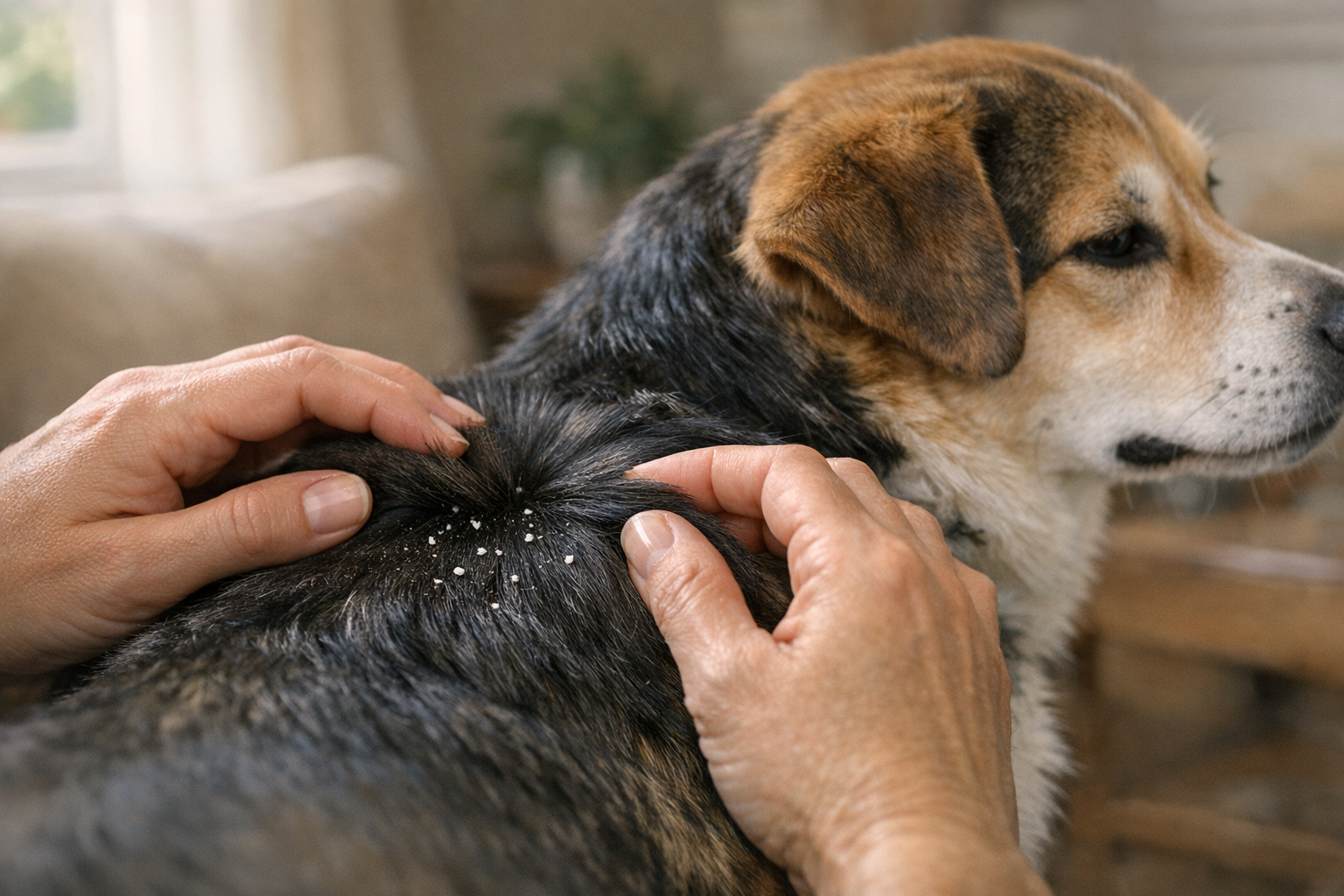
If you're asking why does my dog have dandruff, the short answer is this: flaky skin is usually a sign that something is drying out, irritating, or inflaming your dog's skin.
Sometimes it is simple. Dry winter air, too many baths, the wrong shampoo. Sometimes it is not simple at all. Fleas, allergies, mites, yeast, poor diet, obesity, and hormone problems can all show up as dandruff.
That is why I never tell owners to shrug off flakes as just a cosmetic issue. A little bit of white dust on the back after one dry week is one thing. Flakes plus itching, odor, hair loss, or red skin is a different conversation.
What dog dandruff actually is
Dog dandruff is made up of dead skin cells that shed from the outer layer of the skin. All dogs shed some skin cells, just like people do. You usually only notice it when the skin barrier is irritated or turning over too fast.
The flakes may be white and dry, or they may look greasy and yellowish. Dry flakes often point toward simple dryness or overbathing. Greasy flakes make me think more about seborrhea, skin infection, or an underlying problem that is changing the skin's oil balance.
Where the dandruff sits matters too. Flakes along the back can show up with dry skin or parasites. Flakes around the ears, belly, armpits, and feet push allergies higher on the list.
The most common causes
Dry skin and too much bathing
This is the most common reason dogs get mild dandruff.
Cold weather, indoor heating, low humidity, and frequent washing can strip the oils that normally keep the skin flexible. Even a healthy dog can get flaky after a bath if the shampoo is harsh or the coat is not rinsed well.
If you recently changed products, start there. Human shampoo is a frequent mistake. It is made for human skin pH, not dog skin, and it can leave dogs itchy and flaky fast.
If bath technique may be part of the problem, this guide on how to bathe your dog will help you clean the coat without making the skin angrier.
Fleas, mites, and other parasites
Parasites do not always announce themselves with obvious bugs crawling around.
Fleas can cause dandruff because the skin gets irritated from bites and scratching. Cheyletiella mites, sometimes called walking dandruff, can create flakes that seem to move. Demodex and sarcoptic mange can also cause scaling, itching, redness, and patchy hair loss.
This is one reason dandruff should not be treated as harmless if your dog is also scratching a lot. Parasites are common, and home remedies usually do not fix them.
Allergies
Allergic dogs often have more going on than flakes.
You may see itchy paws, rubbing the face on the carpet, recurrent ear infections, licking the belly, or chewing the rear end. Some dogs also do odd repetitive things when they are uncomfortable. If your dog has skin issues and keeps licking the floor, that is worth mentioning to your vet because allergies, nausea, and stress can overlap.
Food allergies are possible, but environmental allergies are more common. Pollen, dust mites, mold, and grass are frequent triggers.
Yeast or bacterial skin infection
When the skin barrier gets damaged, infection can move in.
Infected skin usually does not look like plain dandruff. It tends to come with redness, a sour or musty smell, greasy fur, scabs, pimples, tenderness, or darkened skin. This usually means a vet visit within 24 hours, especially if your dog seems uncomfortable.
A lot of owners want to dab on whatever is in the medicine cabinet. I would not do that without knowing what the skin problem actually is. Here is when Polysporin on a dog is and is not a good idea.
Diet, dehydration, and weight
Skin is a hungry organ. It shows poor nutrition early.
Dogs eating unbalanced homemade diets, low-quality foods, or too little food can develop a dull coat and dry, flaky skin. Dehydration can do it too. So can obesity, because overweight dogs often cannot groom themselves well, and inflammation tends to be worse in heavier dogs.
I am not saying every flaky dog needs a fancy diet. I am saying skin health depends on basic nutrition more than people think.
Stress and boredom
Stress does not directly create dandruff the way mites do, but it can make skin problems worse.
Anxious or under-stimulated dogs may scratch, lick, or chew themselves more, which irritates the skin. If your dog is restless and hard to settle, better daily activity and enrichment toys can help reduce the self-directed habits that keep mild skin irritation going.
Hormone and medical problems
If dandruff keeps coming back, especially in an adult or senior dog, I start thinking bigger.
Hypothyroidism, Cushing's disease, and other internal issues can change coat quality, oil production, and how fast skin cells turn over. These dogs often have other clues too, such as weight gain, low energy, recurrent infections, thinning hair, or a pot-bellied look.
Clues that help you narrow it down
A few simple observations can tell you whether this is probably mild dryness or something that needs an exam.
Ask yourself these questions:
- Is your dog itchy, or just flaky?
- Are the flakes dry and powdery, or greasy and sticky?
- Is there redness, odor, hair loss, scabs, or sores?
- Did this start after a bath, a shampoo change, or winter weather?
- Are other pets in the house itchy too?
- Is your dog acting sick in any other way?
Behavior changes matter. An itchy dog may rub on furniture, chew paws, or even nibble on you more than usual because the mouth becomes part of how they interact when they are uncomfortable.
Also pay attention to symptoms that do not sound skin-related at first. If your dog has dandruff and is suddenly drooling and shaking, that is not a dandruff problem. That is a same-day vet problem.
And if your dog has flaky skin but also shakes in his sleep, the two may be unrelated. I would not assume the dandruff explains every strange thing you are seeing.
What you can do at home first
If your dog has mild dandruff and otherwise seems comfortable, you can try a simple, sensible home plan for one to two weeks.
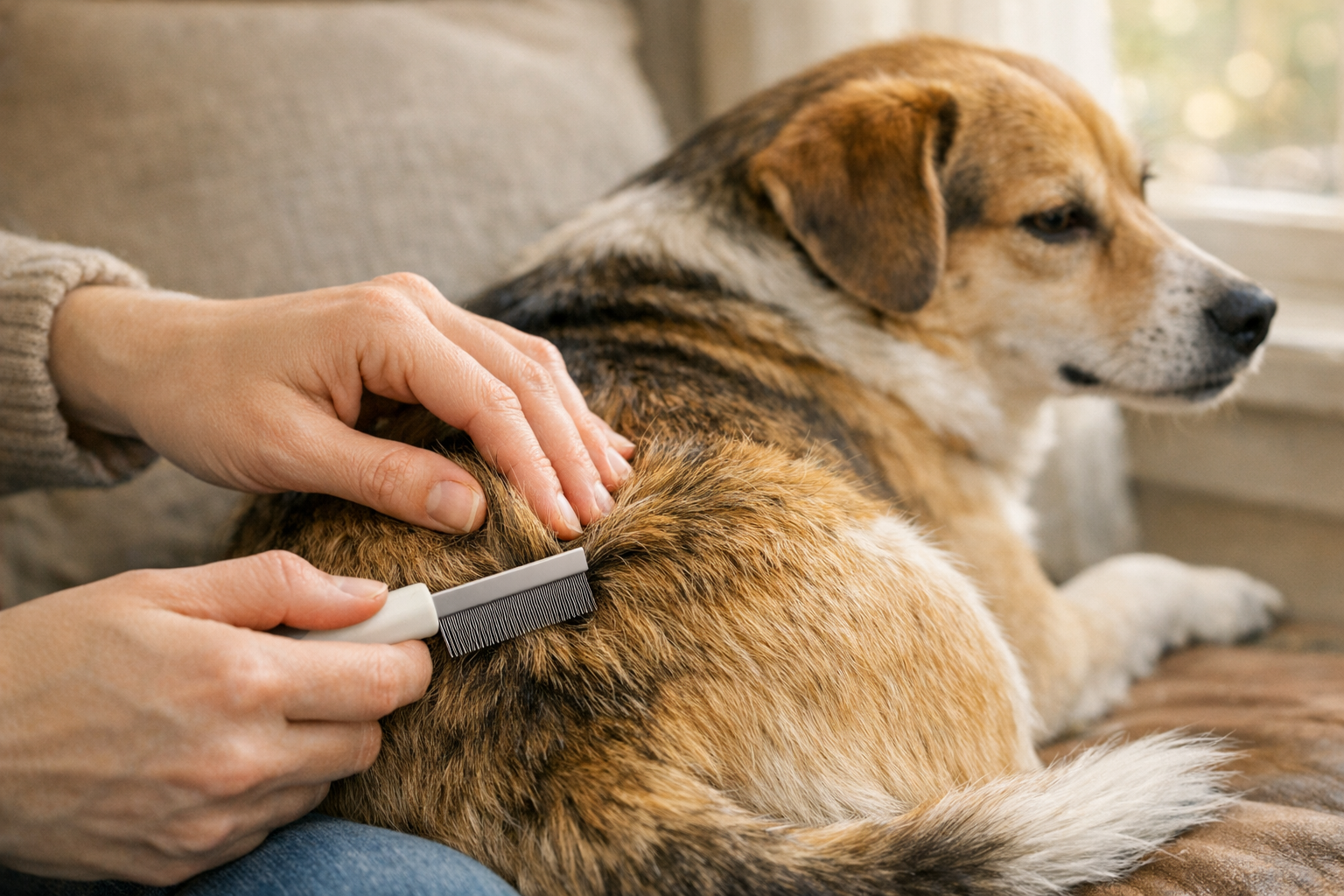
Brush the coat regularly, but gently. Brushing lifts loose skin, spreads natural oils, and helps you check for fleas, scabs, redness, or sore spots. Do not scrub at the flakes like you are sanding furniture. That just makes irritated skin worse.
Cut back on bathing if you have been washing your dog often. Most dogs do not need frequent baths unless they have a medical reason or a very messy lifestyle. When you do bathe, use a dog shampoo made for sensitive or moisturizing care, and rinse far longer than you think you need to.
Run a humidifier if your home air is very dry. This is especially helpful in winter.
Make sure your dog is drinking normally and eating a complete, balanced diet. If you feed homemade food, this is one of those times to review the recipe with your vet or a veterinary nutritionist. Skin problems are a common place where diet mistakes show up.
Check parasite prevention. If your dog is not on reliable flea control, that moves high on the list even if you do not see fleas.
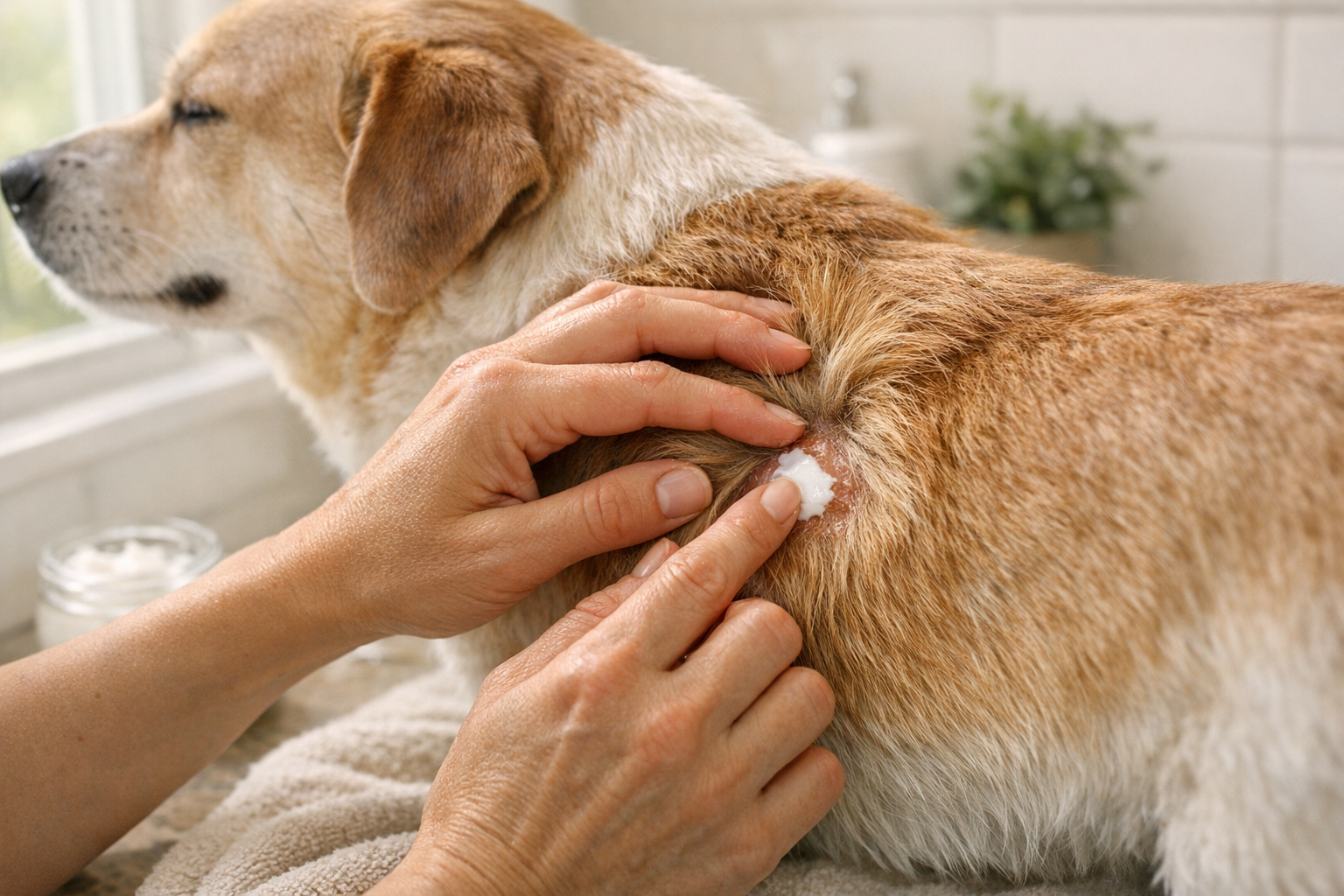
And do not start layering on oils, ointments, essential oils, or random supplements all at once. When owners try six things in two days, it becomes impossible to tell what helped and what made the skin worse.
When to call the vet
I would book a veterinary visit sooner rather than later if:
- your dog is very itchy
- the skin is red, greasy, smelly, or painful
- there is hair loss or patchy baldness
- you see fleas, black flea dirt, or moving flakes
- the dandruff keeps coming back
- your dog seems tired, heavier, hungrier, or otherwise off
- more than one pet in the house is itchy
Puppies, seniors, and dogs with existing allergies should get less wait-and-see time. They tend to tip from mild skin trouble into bigger trouble faster.
Your vet may do skin scrapings, flea combing, cytology, or sometimes bloodwork. That can sound like a lot for flakes, but it is often the quickest path to the real answer.
Some breeds show dandruff differently
Any dog can get dandruff, but coat type changes how obvious it is and how easy it is to manage.
A short-coated dog like a Basenji may show tiny white flakes across the back very clearly, even when the problem is fairly mild. Owners often spot it early, which is helpful.
A harsh-coated breed like the Scottish Terrier can trap dead skin close to the body. You may notice rough texture, musty skin, or irritation under the coat before you notice obvious flakes.
Heavy or corded coats are their own challenge. In a Komondor, flakes, moisture, and skin infection can hide deep in the coat, so regular hands-on skin checks matter more than what you can see from a distance.
And in fluffy double-coated dogs like the Volpino Italiano, dandruff often collects around the shoulders and along the back where undercoat is thickest.
This is why generic advice only gets you so far. The same skin problem can look very different depending on the dog standing in front of you.
A simple plan for the next 7 days
If your dog has mild dandruff and no major red flags, here is the practical version.
Day one, part the coat and really look at the skin in good light. Check the back, belly, armpits, ears, tail base, and feet. Take photos so you can compare later.
For the next week, brush gently, skip extra baths, use parasite prevention if needed, and avoid new products. Watch for itching, odor, redness, chewing, or spreading flakes.
If the dandruff is clearly improving, you were probably dealing with mild dryness or grooming-related irritation. If it is the same, worse, or paired with any of the warning signs above, book the vet.
That is the honest answer to why does my dog have dandruff. Sometimes it is dry skin and a small routine change fixes it. Sometimes the flakes are the first clue that your dog needs treatment, and catching that early is the smart move.