How to Bathe a Dog, Step by Step
Learn how to bathe a dog step by step, what to use, how often to do it, and how to keep bath time calm for puppies, seniors, and muddy adults at home safely.
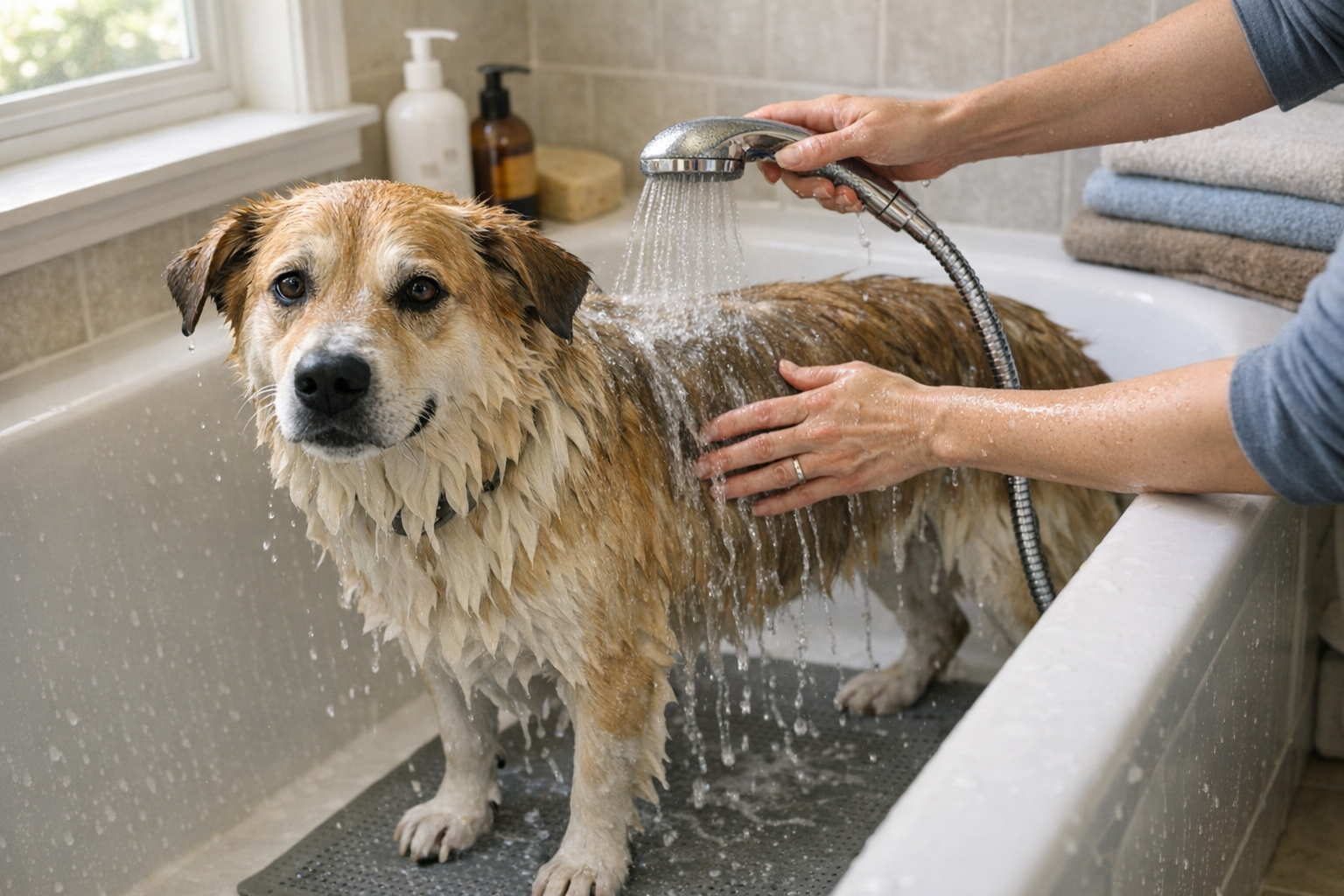
Bathing a dog sounds easy until you have a wet, slippery animal trying to climb onto your shoulders. Most of the stress comes from poor setup, not from the bath itself.
If you want to know how to bathe a dog, keep the basic plan simple. Brush first. Use lukewarm water. Shampoo gently. Rinse forever. Dry better than you think you need to.
What to get ready before you start
Set everything within reach before your dog sees the tub. Once the water is running, you do not want to be hunting for towels while your dog paces away dripping soap.
You need a dog shampoo, at least two towels, a brush or comb, and something for traction under your dog’s feet. A rubber bath mat works well. A folded towel works in a pinch, but it gets slippery fast.
If you have a handheld sprayer, use it. It makes rinsing much easier, especially on thick coats. If you do not, a plastic cup or pitcher is fine.
Treats help, but they are not magic. Use small, fast treats that your dog can swallow without much chewing, so bath time keeps moving.
Skip human shampoo. Dog skin has a different pH, and people products often dry the skin out or leave it itchy. Baby shampoo is not my first choice either unless your vet specifically says it is okay.
Brush your dog before the bath, not after. Water tightens tangles and mats, which makes them harder and more painful to remove later.
If you share the bathroom with a curious cat, wipe up shampoo drips and keep bottles closed. Cats lick residue off paws and fur, and if your cat keeps swallowing after nosing around grooming products, do not write it off as nothing.
How to bathe a dog step by step
Brush first, especially on long or thick coats
A quick brush is better than no brush, but a proper one is best. Focus on the chest, armpits, belly, behind the ears, and the tail area, where tangles love to hide.
If you hit a mat that is tight to the skin, do not yank at it with a slicker brush right before the bath. Work it out carefully with a comb and detangler, or ask a groomer for help if it is severe.
Make the space feel secure
Dogs hate losing their footing. A dog that panics in the tub often is not afraid of water, it is afraid of sliding.
Put down a non-slip mat and keep the room warm. Cold bathrooms make nervous dogs shiver before you even begin.
For small dogs, a sink can be easier than a bathtub if the sink is sturdy and you can keep one hand on the dog. For big dogs, a walk-in shower or an outdoor bathing station is often less of a wrestling match.
Use lukewarm water, not hot
Test the water on your wrist. It should feel warm, not steamy.
Hot water dries the skin and makes anxious dogs more uncomfortable. Cold water sounds refreshing in theory, but many dogs hate it and start fighting the process right away.
Wet the body thoroughly
Start at the shoulders and work backward. Leave the head for later.
This part takes longer than people expect, especially on dense coats. If the coat is not wet all the way to the skin, the shampoo will sit on top and you will waste time and product.
For nervous dogs, keep the sprayer pressure low. I do not like blasting a dog with full force water. It turns a manageable bath into a memory your dog will not forget.
Shampoo from neck to tail
Use a small amount first. You can always add more.
Work the shampoo into the neck, shoulders, chest, back, sides, belly, legs, and tail. Use your fingertips, not your nails, and massage down to the skin without scrubbing hard.
The feet deserve more attention than people give them. Mud, road salt, and old grime collect between the toes. Gently clean the paw pads, but do not pry at the webbing if your dog is already annoyed.
Clean the face with a cloth
Do not pour water or shampoo directly over your dog’s face if you can avoid it. Use a damp washcloth and wipe around the muzzle, cheeks, and forehead.
Be careful around the eyes. Tear-free dog shampoos exist, but eye irritation is still common when product slips where it should not.
Ears are another spot where owners get into trouble. Do not aim water into the ear canal, and do not shove cotton deep into the ears. If the ears are dirty or smelly, that is often a separate cleaning job, not something to solve by flooding them in the bath.
Rinse longer than feels necessary
This is the step people rush, and it is the step that causes a lot of post-bath itching. Rinse until the coat feels clean, then keep going another minute or two.
Check the armpits, groin, belly, under the collar area, and the base of the tail. Soap likes to hide there.
If the coat still feels squeaky in patches or a little sticky, there is probably residue left. Keep rinsing.
Towel dry, then dry the coat properly
Press the towel into the coat instead of rubbing like you are polishing a car. Hard rubbing tangles long hair and can irritate the skin.
Some dogs can air dry just fine. Others really should not, especially thick-coated dogs or dogs with skin folds.
If you use a dryer, keep it on a cool or low-warm setting. Hold it far enough away that the skin never feels hot. A high-heat human hair dryer can overheat skin faster than people realize.
Coat type changes the plan
Not every dog needs the same bath routine. A short-coated hound, a wrinkly little companion dog, and a dense northern breed are different projects.
Dogs with short, sleek coats often need less bathing and less shampoo. A hound with a coat like the dogs you read about Hanoverian Scenthounds usually cleans up quickly, but the ears and skin folds around the neck still need a check.
Wrinkly breeds need extra care after the bath, not just during it. If you have a flat-faced dog and want breed-specific context, read about the Pug. The wrinkles must be dried well, or you trade dirt for skin irritation.
Double-coated dogs are the ones owners underestimate. If you want a good example, look about Norwegian Elkhounds. Their coat can trap water near the skin, so a quick towel-off is rarely enough.
Long-coated dogs with feathering need patient rinsing and drying. You see that a lot about Shetland Sheepdogs. Shampoo left behind in the pants, chest, or behind the ears tends to cause itching fast.
Medium sporting coats can still hold debris in surprising places. Read about the Stabyhoun and you will notice the feathering on legs and tail, which often needs a good pre-bath brush so you are not washing twigs and burrs into a knot.
How often should you bathe your dog
Most dogs do not need a bath every week. Some barely need one every couple of months. Others seem determined to roll in something disgusting every Saturday.
A healthy indoor dog with a short coat often does well with a bath every one to three months. Active dogs, long-coated dogs, and dogs who swim, dig, or sleep in your bed may need one every four to eight weeks.
If your dog has allergies, seborrhea, or a medicated shampoo from your vet, follow that plan instead of general advice. Skin disease changes the rules.
A dog that smells bad again within a day or two usually does not need more bathing. That often points to ear trouble, skin infection, anal gland issues, or shampoo residue.
Bath day is also a smart time to check paws, ears, and nails. If you are never sure when to trim dog nails, pairing nail care with regular baths can make the routine easier to remember.
If your dog hates baths
Start by lowering the difficulty, not by holding your dog down harder. Restraint has its place for safety, but too much of it creates panic.
Let your dog step into the dry tub and get treats. Do that a few times before the first real bath. Then add the sound of water without spraying the dog. Then wet just the paws. Slow progress works better than one dramatic battle.
Peanut butter on a lick mat helps some dogs. So does one calm person doing the bath instead of three people crowding the bathroom.
For very anxious dogs, a shower hose is often less scary than cups of water coming from above. Keep one hand on the dog, talk less than you think you need to, and move steadily.
If your dog escalates to screaming, snapping, or frantic escape attempts, stop and rethink the plan. That dog may need a professional groomer, a fear-free training approach, or vet-prescribed medication for grooming days. There is no prize for finishing a home bath that leaves everyone rattled.
When not to bathe your dog at home
Skip the bath and call your vet if your dog has open sores, raw hot spots, widespread hair loss, or skin that smells yeasty or infected. Those dogs usually need diagnosis first, not lavender shampoo.
Be careful with elderly dogs, especially if they have arthritis or trouble standing. A long slippery bath can wipe them out. Short, supported bathing sessions or professional help may be kinder.
Puppies can be bathed at home, but keep it brief and warm. Chilled puppies crash fast.
If your dog gets hives, facial swelling, intense redness, or trouble breathing after a shampoo, rinse immediately and get veterinary help right away. That is not normal post-bath itchiness.
A good dog bath is not about making the coat smell fancy for three days. It is about getting the skin and fur clean without causing stress, dryness, or a wrestling match. Set up well, go slowly, and rinse like you mean it. Most dogs will forgive the whole thing by the time the zoomies start.