How Often Should You Trim Dog Nails? A Vet-Backed Guide
Most dogs need nail trims every 3–4 weeks. Learn how activity, surface type, and nail growth affect the schedule — and what overgrown nails do to your dog's joints.
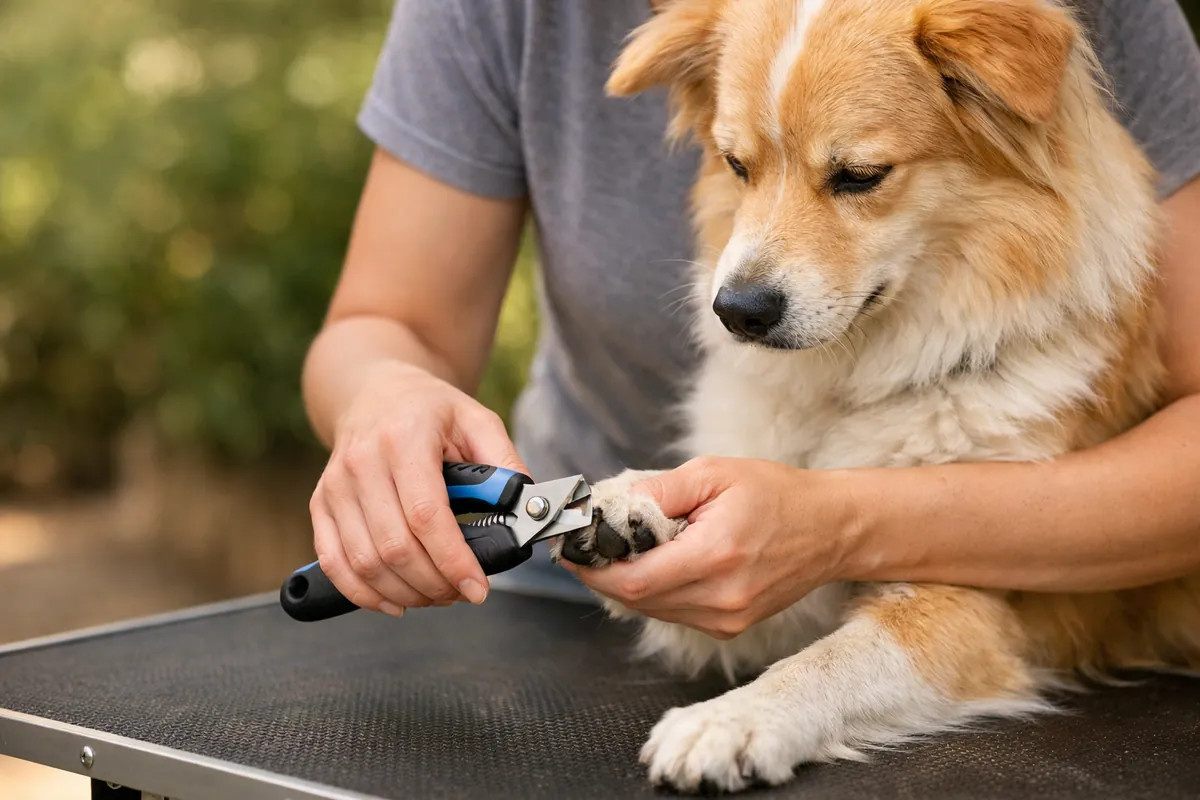
That clicking sound on hardwood floors isn't just annoying. It's your dog's nails hitting the ground before the paw does — pushing reverse pressure back into the nail bed with every step. Most dogs reach this point well before their owners notice anything wrong.
Nail care is one of the most skipped parts of dog grooming, yet overgrown nails cause measurable, lasting damage to posture and joints. The good news: staying ahead of it takes only a few minutes on a predictable schedule.
TL;DR: Most dogs need nail trims every 3–4 weeks. The simplest check: if you hear clicking on hard floors, the nails are overdue. Overgrown nails force dogs to shift their gait, stressing joints and — with long-term neglect — causing permanent postural changes, according to veterinary guidelines from VCA Animal Hospitals (2024).
How Often Should You Trim Dog Nails?
The standard veterinary recommendation is every 3–4 weeks for most adult dogs (VCA Animal Hospitals, 2024). Nail growth rate varies by breed, size, diet, and activity level, so the calendar is only a starting point. The real benchmark is function: nails should not contact the ground when your dog is standing still on a flat surface.
A simple way to check — place your dog on a hard floor and view the paws from the side. Any nail resting against the floor needs trimming. If you're already hearing clicks while the dog walks, you're at least a week past due.
Some dogs need attention closer to every 2–3 weeks. Small breeds, indoor dogs, and those who mostly exercise on grass tend to have faster apparent growth because their nails never wear down. Larger, more active dogs that walk daily on pavement may stay in the safe range for 4–6 weeks because friction gradually files the nail between sessions.
A check every 2–3 weeks — even if you don't always trim — beats waiting for the 4-week mark and finding the nails have grown past it.
What Do Overgrown Nails Do to a Dog's Health?
Overgrown nails cause structural problems that most owners don't connect to nail length because the damage accumulates slowly. When nails grow long enough to hit the ground before the paw does, they exert reverse pressure back into the nail bed with every step (Preventive Vet, 2024). The dog's nervous system registers this as discomfort and automatically adjusts posture to reduce it.
That postural adjustment is where the real harm begins:
- Splayed toes — the foot spreads to redistribute weight, weakening the structural integrity of the paw
- Joint overload — shifting weight away from the nail tips puts uneven stress on wrist, elbow, shoulder, and hip joints
- Arthritis acceleration — in older dogs or breeds already prone to joint issues, this compression speeds degeneration
- Spinal strain — altered foot posture changes the alignment of the entire kinetic chain up through the back
In cases of severe, long-term neglect, the joint shifts become permanent. Toe bones realign under continuous pressure, deforming foot structure and making normal standing posture genuinely painful.
Dewclaws are a separate concern. These nails on the inner side of the leg above the paw never contact the ground, so they never wear down naturally. Without trimming, they grow in a curve and can spiral into the pad, causing puncture wounds and infection.
What owners miss: The damage from borderline-long nails doesn't announce itself. Dogs compensate quietly for months — slightly stiff gaits, occasional reluctance on hard floors, subtle weight-shifting. By the time the behavior is obvious, the joint stress has been building for a while. Nails don't have to be dramatically overgrown to cause this; they just need to be long enough to make ground contact before the paw does.
For context on joint conditions that can develop when musculoskeletal stress goes unaddressed, see the 10 most common dog diseases.
How Do You Know When Your Dog's Nails Are Too Long?
The floor-contact test catches most cases, but several other signals confirm that trimming is overdue (PetMD, 2024):
The click test — Audible clicking on hard floors with every step means nails are contacting the surface. This is the most common first signal, and it means the nails are already past the safe threshold.
Visible curling — Nails that bend downward or sideways rather than growing in a straight forward arc have grown past the point where the tip is vertical. Curved nails snag on carpet, crack unevenly, and are harder to trim without cutting the quick.
Paw avoidance — Dogs with uncomfortable nail pressure often pull their paws away when you reach for them, even if they were previously tolerant of handling. A sudden change in paw-handling tolerance is worth noticing.
Dewclaw check — Inspect the dewclaw every single trimming session. It grows unchecked and doesn't give you the floor-contact signal the other nails do.
If you notice changes in nail color alongside length — white nails turning dark, or discoloration at the base — that can indicate a separate health issue. See why your dog's nails might be changing color for a detailed breakdown of what different nail color changes mean.
Does Activity Level Change the Trimming Schedule?
Yes, meaningfully. Dogs that walk regularly on pavement, concrete, or asphalt file their nails through friction with every step. A dog getting 45–60 minutes of daily sidewalk walking may stay in the safe zone for 4–6 weeks between trims because natural wear partially compensates for growth (Preventive Vet, 2024).
Dogs that spend most of their time indoors, on grass, or on carpet get no natural filing. For them, 2–3 weeks is a realistic upper limit before ground contact starts.
A few important exceptions to the activity-level rule:
- Dewclaws never wear down regardless of how active the dog is — they need manual trimming every session, no exceptions
- Front nails wear faster than rear nails because front paws bear more weight and push harder on the ground — rear nails may need attention sooner than front nails
- Grass provides no filing benefit — dogs that exercise exclusively on soft surfaces get zero natural wear, even at high activity levels
A common oversight: Active city dogs walked daily on sidewalks often have front nails that look fine while rear nails and dewclaws have grown well past the safe length. The front-nail click test misses this. Checking all nails — not just the prominent front ones — at a regular interval catches it before it becomes a problem.
How Do You Trim Overgrown Nails Without Hurting Your Dog?
The quick is the blood vessel and nerve running through the center of each nail. Cutting into it causes sharp pain and significant bleeding — and is the reason so many dogs develop strong aversions to nail trimming sessions.
In white or light nails, the quick appears as a pink area inside the nail and is easy to avoid. In black nails, it's invisible from the outside. Work from the tip inward in small increments: as you clip deeper, the exposed cross-section changes from white to a darker gray or tan center. That gray center is the edge of the quick — stop there.
For dogs whose nails are already significantly overgrown, the quick has grown longer along with the nail. You can't reach a healthy nail length in one session. Trying to do so will cut the quick. The correct approach is gradual recession:
- Trim only the tip — remove 1–2mm, well short of the quick
- Repeat every 3–4 days — not every few weeks. Short intervals allow the blood supply to the extended quick to gradually withdraw
- Take slightly more each session — as the quick recedes, each trim can safely go a bit further
- Shift to monthly maintenance once the nails reach a healthy length
Trimming every 3–4 days is the standard recommendation for quick recession (Groomer to Groomer, 2024). Once the nails are at a healthy length, maintenance frequency drops back to the normal 3–4 week schedule.
If you do nick the quick, styptic powder stops bleeding within seconds. Cornstarch works as an emergency substitute. Before reaching for any topical product, it's worth knowing whether Polysporin is safe for dogs — not all human antiseptics are appropriate for canine wounds.
According to VCA Animal Hospitals (2024), dogs who experience pain during nail trimming can develop lasting aversions that make future sessions more difficult. Keeping sessions short, trimming only one or two paws at a time if the dog is anxious, and rewarding heavily afterward all reduce the chance of an aversion forming.
Frequently Asked Questions
How often should I trim my puppy's nails?
Puppies generally need nail trims every 2–3 weeks — their nails grow faster than adult dogs' nails, and early, consistent handling builds the tolerance that makes lifetime grooming easier. Starting sessions at a few weeks old, even before much trimming is needed, is more valuable for habit formation than the trim itself (VCA Animal Hospitals, 2024).
Can I use human nail clippers on my dog?
No. Human clippers aren't built for the thickness or curvature of dog nails. They compress rather than cut cleanly, often splitting or cracking the nail and increasing pain. Guillotine-style or scissor-type dog nail clippers are the correct tools for any breed.
What if I can't see the quick in my dog's black nails?
Clip 1–2mm from the tip and look at the exposed cut surface. White or off-white means you're still in safe territory. A gray or dark tan center appearing in the cross-section means you're at the edge of the quick — stop trimming at that point. It takes a few sessions to get a feel for it, but the color signal is reliable.
Do dogs' nails wear down naturally on grass or dirt?
No. Soft surfaces provide no meaningful friction. Grass, dirt, and carpet don't file nails the way concrete and pavement do. Dogs exercising exclusively on soft surfaces need trimming on the same schedule as fully indoor dogs — approximately every 3 weeks.
Why does my dog hate nail trims?
Most nail aversions trace back to a past experience of the quick being cut. The pain is sharp and immediate, and dogs learn quickly. If the aversion is already established, very short sessions — trimming one nail at a time with high-value treats — can slowly rebuild tolerance over weeks. For strong aversions, a professional groomer or vet tech familiar with desensitization techniques often makes faster progress than pushing through at home.
Conclusion
Most dogs need nail trims every 3–4 weeks, but the schedule shifts based on how active the dog is and what surfaces they walk on. The functional benchmark matters more than the date: nails that touch the ground when the dog is standing need trimming.
Key takeaways:
- The click-on-floor test is the clearest everyday indicator nails are too long
- Overgrown nails shift posture, compress joints, and can cause permanent structural damage over time
- Dewclaws grow independently of activity level — check and trim them every session
- For dogs with severely overgrown nails, trim every 3–4 days to allow the quick to recede gradually
- In black nails, a gray cross-section appearing during clipping signals the quick's edge — stop there
For a broader look at the conditions that develop when structural issues go unaddressed over time, see the 10 most common dog diseases.