How to Apply Coconut Oil to Dog Skin Safely
Learn how to apply coconut oil to dog skin safely, where it helps, when to skip it, and which warning signs mean your dog needs a vet instead.
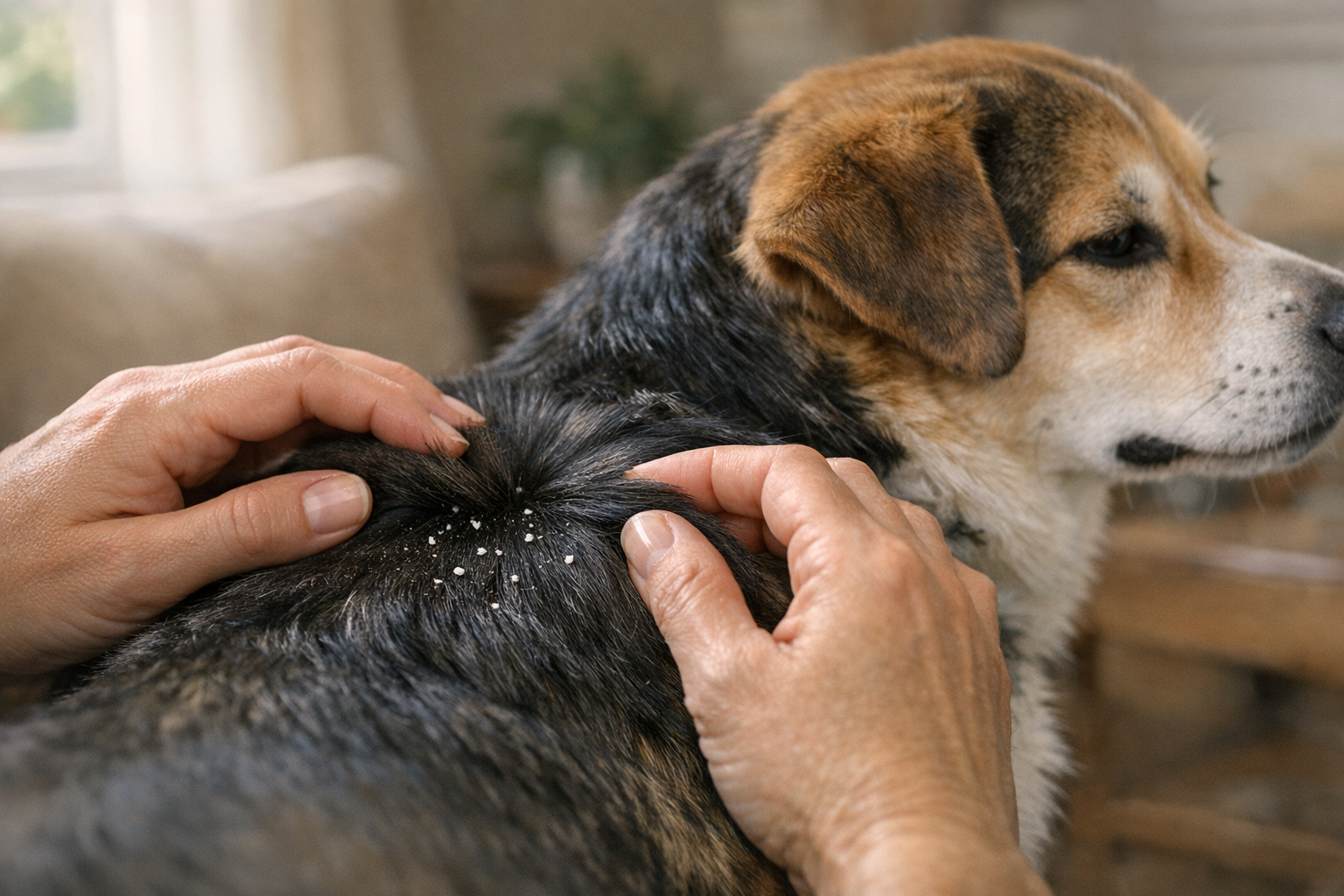
Coconut oil gets recommended for almost every dog skin problem online. That is too broad. It can help mild dry, flaky skin, but it will not fix allergies, mange, fleas, yeast, or an infected hot spot.
If you want to know how to apply coconut oil to dog skin, think small amount, clean skin, and a short test first. Most of the trouble comes from using too much, using it too often, or putting it on skin that needs a vet instead.
When coconut oil can actually help
Coconut oil is best for mild dryness. Think a flaky elbow, a rough callus, a dry patch on the belly, or skin that feels a bit ashy after bathing.
It may also help if your dog has skin that gets irritated by cold weather, low indoor humidity, or frequent bathing. In those cases, a thin layer can reduce water loss from the skin and make the area feel less tight and itchy.
What it does not do is treat the reason behind most chronic skin problems. If your dog has recurring itchiness, red paws, ear infections, or bald patches, the skin is usually reacting to something bigger. Allergies are common. Parasites are common too.
If you are seeing thinning fur or bald spots, start with hair loss causes before you reach for a jar of oil. Hair loss is often a clue, not a surface problem.
Some dogs with skin discomfort act dull or withdrawn. They sleep more, avoid touch, or stop acting like themselves. If your dog seems unusually down, itchy or painful skin may be part of the story.
When to skip coconut oil
I would not use coconut oil on hot, red, wet, or oozing skin. That usually needs medical treatment, not a home remedy.
Skip it if the area smells bad, feels sticky, or has yellow crusts. Those are common signs of infection. Oily products can trap heat and moisture, which is the last thing infected skin needs.
Do not put coconut oil inside the ears, close to the eyes, or deep between swollen toes. Those spots are easy to irritate and hard to keep clean.
Be careful with very itchy dogs that already lick or chew themselves raw. Coconut oil is edible enough that many dogs will obsess over it, and that can turn a mild irritation into a full-time licking problem.
Signs you need a vet soon
A skin issue usually moves into vet territory within 24 hours if you see any of these:
- red, inflamed skin that spreads
- pus, odor, or greasy discharge
- open sores or bleeding from scratching
- sudden facial swelling after you apply anything new
- nonstop licking, biting, or rubbing
- lethargy, vomiting, or diarrhea
If your dog seems distressed or is breathing heavy at rest, stop using the product and get help. That is not a normal response to a simple dry patch.
What kind of coconut oil to use
Plain, virgin, unrefined coconut oil is the safest choice for most dogs. It should have one ingredient, coconut oil.
Avoid products mixed with essential oils, fragrances, or herbal blends. Tea tree oil, peppermint, and some skin creams made for people can be a bad idea for dogs.
You also do not need a special pet coconut oil product if you already have a plain food-grade one at home. The ingredient matters more than the label.
How to apply coconut oil to dog skin
This is where people overdo it. Your goal is to lightly coat the skin, not marinate the dog.
1. Pick a small test area
Choose one dry patch, not the whole body. The inside of the hind leg, a dry elbow, or a small flaky spot on the side works well.
Apply a tiny amount first and watch that area for 24 hours. If it gets redder, itchier, or greasy, stop there.
2. Start with clean, dry skin
If the coat is dirty, wipe the area gently with a damp cloth and let it dry. Oil on top of dirt, saliva, or skin debris tends to make a mess and can clog the coat.
You do not need a full bath first unless the dog is actually dirty. In fact, bathing an itchy dog too often can make dryness worse.
3. Warm a very small amount in your fingers
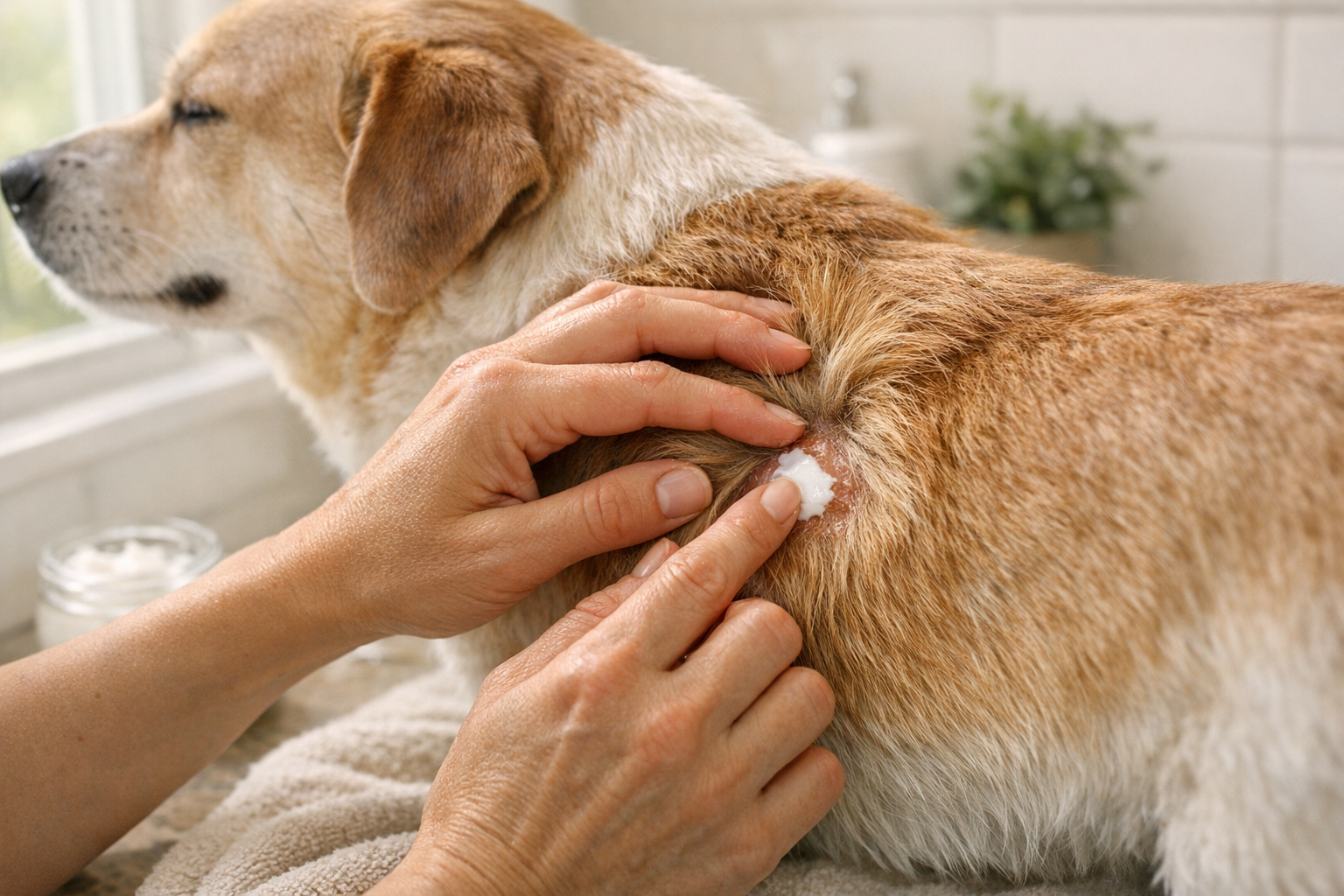
Use less than you think. For a patch about the size of a silver dollar, start with roughly a pea-sized amount.
Rub it between your fingertips until it softens. You want a thin film, not a scoop.
4. Part the fur and touch the skin, not just the hair
This matters most in medium and long coats. If you smear coconut oil on the topcoat, you mostly end up with greasy fur.
Use your fingers to part the coat so you can see the skin. Then dab the oil directly onto the dry area and massage it in for 10 to 20 seconds.
5. Blot off the extra
If the area looks shiny or wet, you used too much. Blot it gently with a clean towel or paper towel.
A good application should leave the skin slightly moisturized, not slick. Your dog should not look like they lost an argument with a frying pan.
6. Keep your dog busy for 10 to 15 minutes
Most dogs try to lick it off right away. A lick or two is usually not a disaster, but a lot of licking defeats the point and may upset the stomach.
This is a good time for a good enrichment toy, a short leash walk, or a calm chew session. Distraction helps the oil settle before the dog gets to work undoing it.
How much coconut oil is enough
For skin, tiny amounts work better than generous ones.
Here is a practical guide:
- Small dog, start with a pea-sized amount for one patch
- Medium dog, start with one to two pea-sized amounts total
- Large dog, start with about half a teaspoon for several small patches, not one big smear
Whole-body application is rarely a good plan. It gets greasy fast, attracts dust, and is almost guaranteed to end up in your dog's mouth.
For most dogs, once every other day on a dry patch is enough to test whether it helps. If you are not seeing improvement after a week, it is probably the wrong tool.
Breed and coat notes
Coat type changes how easy this is.
Hairless or nearly hairless dogs often show dryness clearly, and small amounts can help them more than heavily coated dogs. If you live with a Xoloitzcuintli skin needs, you still need restraint, because overapplying oil can clog pores and make the skin feel tacky.
Thin-coated dogs can get rough elbows, belly dryness, and weather-related flaking. You may notice this in a Pharaoh Hound skin type of coat, where there is not much fur to hide irritation.
Short-coated hounds and cur types can do well with spot treatment because the oil reaches the skin easily. The same basic approach works for a Treeing Tennessee Brindle coat, especially on elbows and chest where friction shows up.
Double-coated breeds are trickier. On a dense Czechoslovakian Vlciak coat, you need to part the fur carefully or the oil just sits on the outer coat.
The same goes for a heavy Central Asian Shepherd coat. Use less than you think, target the actual dry spot, and do not keep layering product into a thick undercoat.
What to expect after you apply it
If coconut oil is going to help, you usually see a mild change pretty quickly. The area may look less flaky within a day or two, and the skin may feel softer.
What you should not expect is a full cure for chronic itching. If the spot improves and then comes right back, the real issue may be allergies, parasites, a secondary infection, or simple overbathing.
Watch your dog more than the skin. If they scratch less and leave the area alone, that is a good sign. If they lick more, rub on furniture, or act irritated, stop using it.
Common mistakes that make coconut oil backfire
The biggest mistake is using too much. A thick coat of oil feels soothing to us, but on a dog it often turns into a lint trap.
Another common mistake is applying it to skin that is already inflamed. Dry and irritated are not the same thing. Dry skin can be calm and flaky. Inflamed skin is red, hot, and often painful.
People also forget to check for the cause. Fleas, food allergies, contact irritation from grass, shampoo residue, and yeast all get blamed on dryness when they are really separate problems.
And one more thing, do not assume that because coconut oil is natural, it is harmless in any amount. Some dogs get diarrhea from licking too much of it. Others break out more when oily products sit on the skin.
A simple routine that works for most dogs
If your dog has one or two mild dry spots, keep it boring. Test one area. Use a pea-sized amount. Reapply every other day for up to a week.
If the skin looks better, you can keep using it as an occasional spot treatment. If it does not improve, or if the area gets red, smelly, greasy, or more itchy, stop and book the vet.
That is the honest answer to how to apply coconut oil to dog skin. Use a little, use it on the right problem, and do not let a home remedy delay real treatment.