What Do Dog Fleas Look Like? Spot Them Fast
What do dog fleas look like? Learn how to spot adult fleas, flea dirt, and bite signs on your dog, plus when itching means a vet visit.
What dog fleas actually look like
If you are asking, "what do dog fleas look like," the short answer is this: adult dog fleas are tiny, dark, fast, and easy to miss.
Most are about 1 to 3 millimeters long. Think pinhead-sized. They are usually dark brown, reddish-brown, or almost black, with flat bodies that look narrow from the top. That flat shape helps them move through fur like little armored speed boats.
They do not look round and puffy. They do not have wings. And they do not sit politely where you can inspect them.
A live flea often looks like a moving black speck or a tiny sesame seed with legs. If you part your dog’s coat and suddenly see something zip away, that is classic flea behavior. Fleas are built to run through hair and jump off before you get a good look.
That speed matters. People often expect to find a flea sitting still like a tick. Usually it is the opposite. Ticks latch on and stay put. Fleas are restless.
If your dog has a light-colored or short coat, you might actually spot adult fleas. On darker, thicker coats, you are more likely to find evidence of fleas rather than the fleas themselves.
Flea dirt is often easier to spot than the flea
Here is the part many owners miss. You may never see an adult flea, but you might see flea dirt.
Flea dirt is flea poop. Not glamorous, but very useful. It looks like tiny black or dark rust-colored specks, a lot like ground pepper sprinkled at the skin. You will often find it around the base of the tail, lower back, belly, or groin.
The easy at-home test is a good one. Put the specks on a damp white paper towel. If they soften and smear reddish-brown, that is old blood from flea dirt. Plain dirt stays dark and gritty.
This is often the moment people realize they do have fleas after all. They were looking for a bug and overlooking the much more obvious clue.
Where fleas usually hide on a dog
Fleas can be anywhere on the body, but they have favorite hangouts.
Check these spots first:
- base of the tail
- lower back
- belly
- groin
- inner thighs
- behind the ears
- around the neck and armpits
These areas are warm, protected, and easy for fleas to reach.
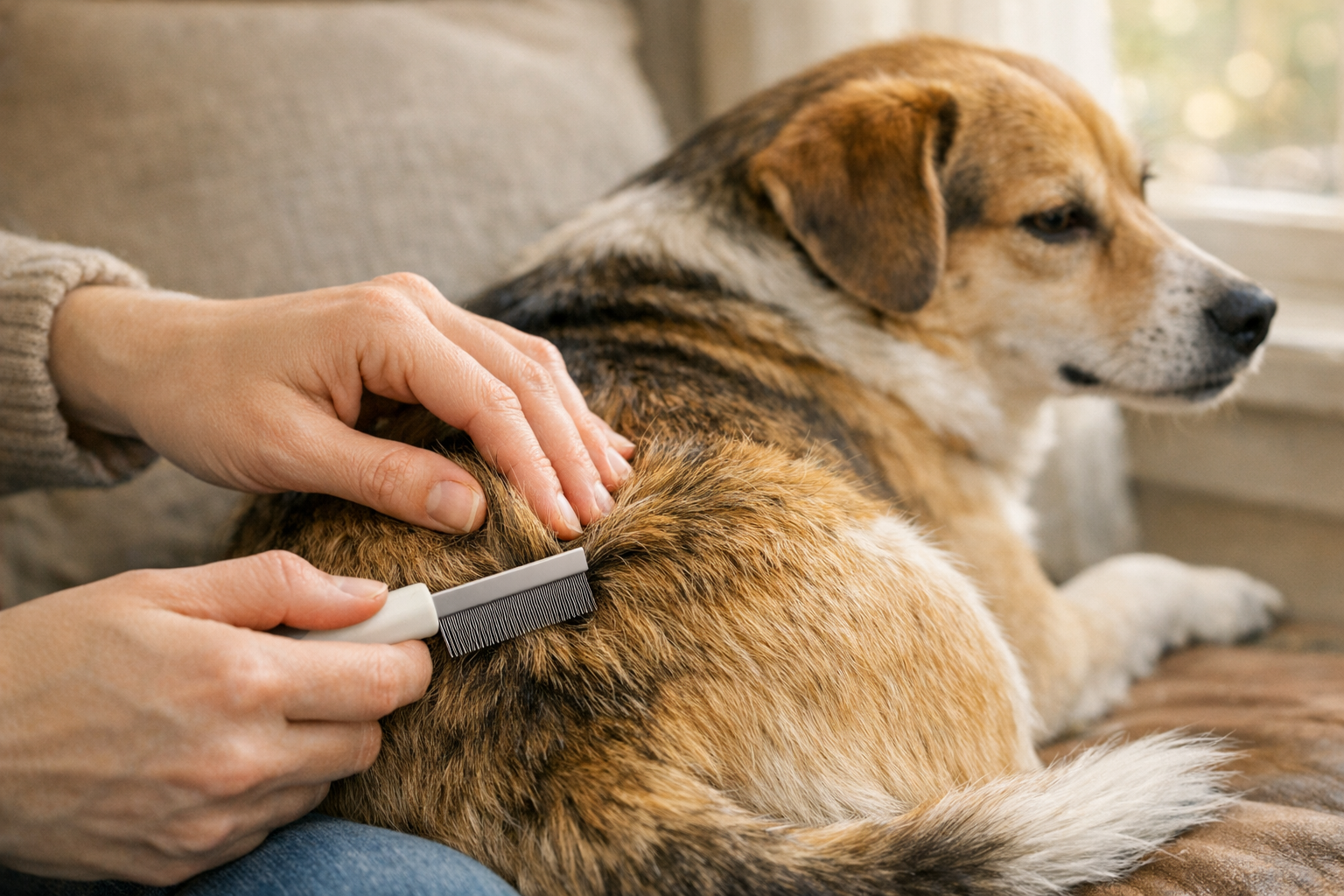
Use your fingers to part the coat all the way down to the skin. Good light helps. A flea comb helps even more. The fine teeth can catch both flea dirt and adult fleas that your eyes would miss.
Coat type changes the whole search. On the Porcelaine breed, with a short light coat, fleas and flea dirt are usually easier to spot. On the Puli breed, cords can hide skin problems for longer, so you may notice itching before you ever see a flea. The same goes for the Caucasian Shepherd, where the dense coat can make a full skin check slow work.
This is why some owners swear their dog cannot have fleas because they have not seen one. I would not trust that. If your dog has a heavy coat, fleas can stay out of sight for quite a while.
Signs your dog may have fleas, even if you never see one
You do not need a dramatic swarm to have a flea problem. Some dogs react strongly to just a few bites.
Common signs include:
- scratching, especially around the rump and back
- chewing or nibbling at the skin
- rubbing the face or body on carpets
- hair loss, often near the tail base
- red bumps or small scabs
- restless sleep
- irritated, raw skin from over-scratching
One of the biggest overreactions in dogs comes from flea allergy dermatitis. That means the dog is allergic to flea saliva, so even one or two fleas can set off major itchiness.
If the skin looks angry fast, do not assume it is a huge infestation. Some dogs are just very sensitive.
Puppies are a different story. Heavy flea infestations can make puppies weak or even anemic because fleas feed on blood. If you see lots of fleas on a puppy, or the puppy seems tired, pale, or not interested in food, that is not a wait-and-see problem. That usually means a vet visit within 24 hours, sooner if the puppy looks weak.
Also, fleas are not the only reason a dog moves oddly while resting. If your dog mostly twitches during naps and does not have obvious itching, bites, or flea dirt, look at other sleep shaking causes.
What people mistake for dog fleas
This happens all the time.
Dandruff, scabs, seeds, lint, and regular dirt get blamed for fleas. Sometimes owners even spot flea eggs online and expect to find those on the dog.
Here is the quick reality check:
Dandruff
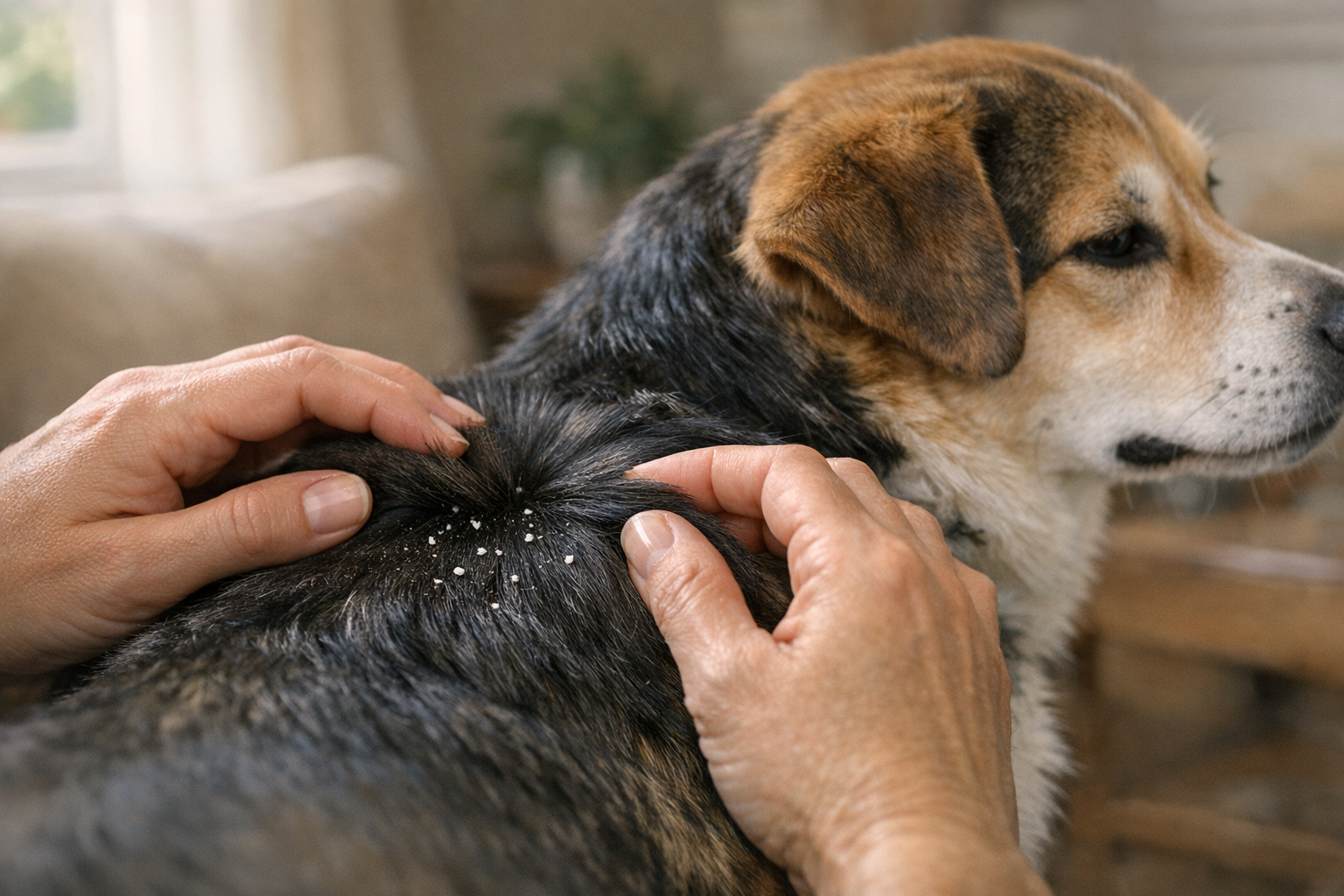
Dandruff is usually white or off-white, flaky, and irregular. It does not run away. It sits on the coat or lifts off easily.
Ticks
Ticks are usually rounder, slower, and attached to the skin. They often look like a small bean or bump. Fleas move much faster and are flatter.
Flea eggs
Flea eggs are tiny, white, and oval, more like grains of salt than bugs. You usually do not spot them clinging to the dog for long because they fall off into bedding, carpets, and cracks in the floor.
Scabs
Scabs can feel like little bumps when you run your fingers through the coat. But they are part of the skin. They do not jump, and they do not smear red on a wet towel.
Some itchy dogs also start pawing at blankets or digging at beds. That does not always mean fleas. And if your dog is still tearing up the yard after the flea problem is handled, you probably need separate help with digging.
How to check your dog for fleas at home
You do not need fancy tools. A basic flea check takes about five minutes.
Get these ready:
- a flea comb
- a white towel or paper towel
- a bowl of warm soapy water
- decent lighting
Start at the base of the tail. Comb from the skin outward. After each pass, tap the comb onto the white towel or into the bowl.
If you find black specks, do the damp towel test. If you see a tiny dark bug moving quickly, that is likely your answer.
Then move to the belly, groin, and behind the ears. Do not just skim the topcoat. Fleas live close to the skin.
If your dog hates being handled, keep the session short and calm. A treat can help, although I would skip random human snacks unless you know they are okay. If popcorn is your go-to bribe, check dogs and popcorn first.
One more tip. Check the places your dog sleeps. Flea dirt in bedding can be easier to find than flea dirt on the dog.
What to do if you find fleas
First, do not panic. Fleas are miserable, but they are common and treatable.
Second, do not stop at one bath.
A bath may knock off some fleas. It does not solve the whole problem. Fleas have a life cycle, and much of it happens off the dog, in carpets, furniture, bedding, and yard debris.
If you confirm fleas, do this:
- treat every dog and cat in the home
- use a vet-recommended flea product
- wash bedding in hot water
- vacuum floors, rugs, and furniture well
- empty the vacuum outside if possible
- keep up treatment for at least the full period your vet recommends
This is also why a new pet can restart the whole mess. If you are bringing home a cat or kitten, flea prevention should be part of your kitten to dog intro, not an afterthought.
Be careful with skin ointments too. Dogs with flea bites often scratch themselves raw, especially around the tail and thighs. If the skin is broken, infected-looking, or weepy, do not just reach for the medicine cabinet. Read about using Polysporin safely before you put anything on it.
I am not a fan of guesswork here. Over-the-counter flea products vary a lot, and some old-school remedies are either ineffective or risky. Your vet or pharmacist can tell you what is actually safe for your dog’s age, size, and health status.
When fleas mean a vet visit, not a home project
Some flea cases are simple. Others need help.
Call your vet if:
- your dog has open sores, pus, or a bad skin smell
- the itching is extreme or nonstop
- your dog is a puppy, very small, elderly, or sick
- the gums look pale
- you see signs of tapeworm segments near the rear end
- you used treatment correctly and fleas keep coming back
Repeated flea problems usually mean one of two things. Either the household treatment plan is incomplete, or the itching is not just fleas anymore and the skin has tipped into allergy or infection.
That is why the question "what do dog fleas look like" matters so much. Once you know what you are actually looking for, tiny dark adults, pepper-like flea dirt, and the pattern of itching they cause, you can act faster and waste less time chasing the wrong problem.
If you are still unsure after a home check, bring your dog to the vet or even just ask your groomer to take a look during the next visit. A second pair of eyes can save you a week of wondering.