Why Does My Dog Shake in His Sleep? Causes
Why does my dog shake in his sleep? Most sleep twitching is normal dreaming, but some shaking points to pain, fever, or seizures. Know the difference.
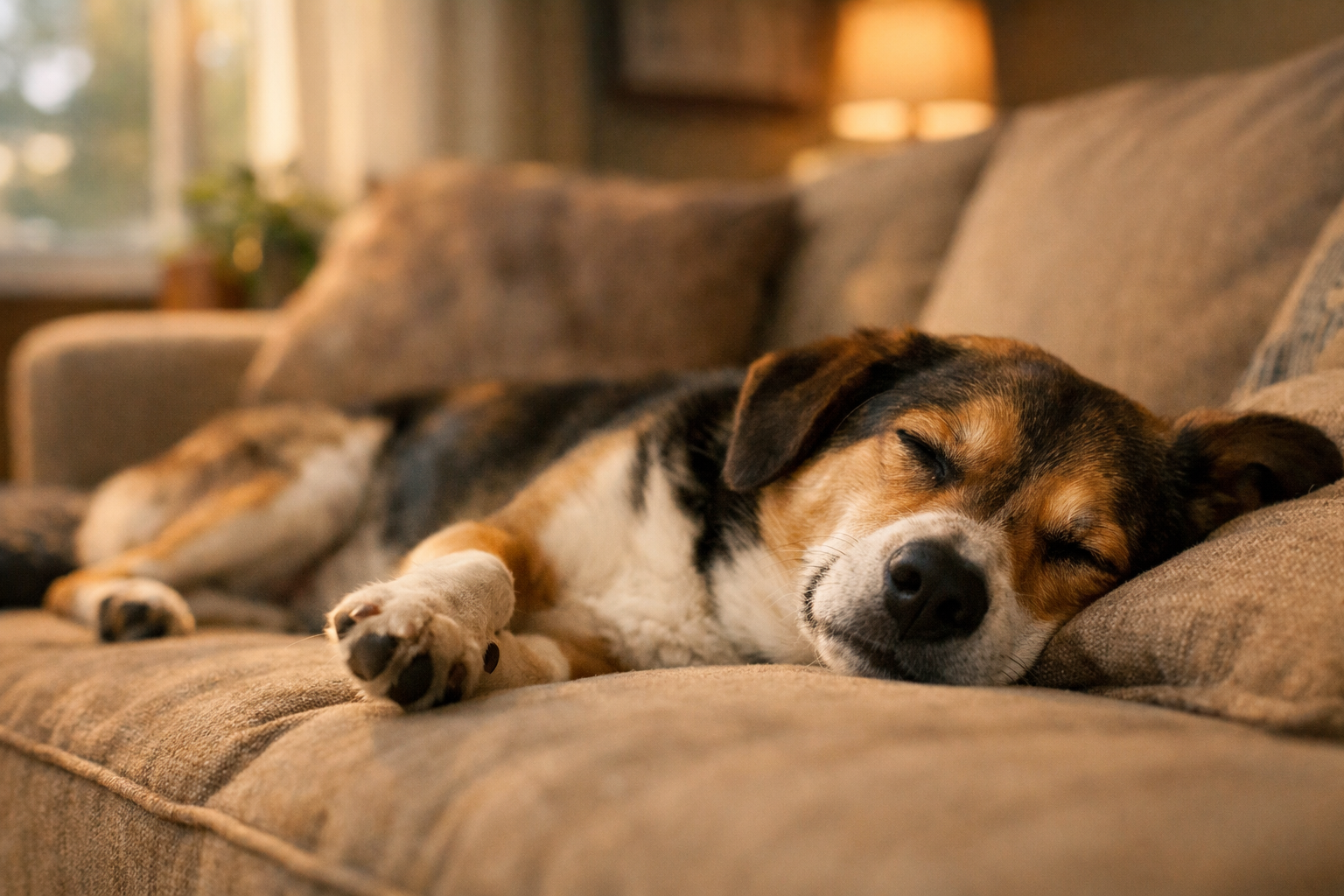
If you're up late watching your dog nap and suddenly his legs start paddling, his whiskers twitch, or his whole body gives a little shake, you're not overreacting by wondering about it. The short answer is that most dogs shake in their sleep because they're dreaming. That's normal.
But not all shaking is harmless. Sometimes it points to pain, fever, low blood sugar, a medication problem, or a seizure. The trick is figuring out what kind of movement you're seeing.
What normal sleep shaking looks like
Normal sleep movement is usually brief, light, and a little random. You might see paw twitches, ear flicks, tiny muzzle movements, soft whimpers, or legs that look like they're chasing something in a dream.
A lot of dogs do this during REM sleep, the deeper stage where dreaming happens. It often starts 10 to 20 minutes after they fall asleep, especially if they're really relaxed.
Most dogs keep breathing normally during these episodes. Their body is loose, not rigid. If you softly say their name or touch them gently, they may wake up and look annoyed that you interrupted a good dream.
I've seen plenty of owners panic over this, especially with puppies. Then the dog wakes, stretches, and goes right back to sleep like nothing happened.
Why dogs shake in their sleep
Dreaming
This is the big one. Dogs dream, and their brains stay active during sleep in ways that can cause little bursts of movement.
If your dog had a busy day, the sleep twitching can be more obvious. A long hike, a hard play session, a new environment, or lots of excitement can all lead to more dramatic dream activity that night.
Puppies have twitchier sleep
Puppies often twitch more than adult dogs. Their nervous systems are still developing, and they spend a lot of time in deep sleep.
They also process a ton of new experiences every day. More input in waking life often means busier sleep.
Cold or a drop in body temperature
Some dogs shiver in sleep because they're cold, not because they're dreaming. This is more likely if your home is chilly, your dog has a short coat, or he's sleeping on tile or near a draft.
This kind of shaking tends to look more like a steady shiver than random twitching. If you add a blanket or move him to a warmer bed and it stops, cold was probably the problem.
Stress and anxiety
An anxious dog may sleep lightly and move more in sleep. This is common after travel, fireworks, visitors, boarding, or any change in routine.
The body doesn't always switch fully into relaxed rest when a dog is wound up. That can show up as trembling, vocalizing, or restless sleep.
Sore muscles or joint pain
Dogs with muscle soreness or arthritis sometimes jerk or tremble when they shift positions in sleep. It isn't always true "sleep shaking." Sometimes it's a pain response while half asleep.
This matters more in older dogs, large breeds, and dogs recovering from heavy exercise. If your dog seems stiff in the morning, struggles to get up, or avoids stairs, pain deserves a closer look.
When sleep shaking is not normal
This is where context matters. The shaking itself is only part of the story. You want to look at the whole dog.
If your dog seems sick when awake, acts confused afterward, or has other symptoms, don't brush it off as dreaming.
Fever or illness
A sick dog may tremble in sleep because he feels lousy, has body aches, or is running a fever. You may also notice low energy, poor appetite, vomiting, diarrhea, or warm ears and paws.
If you suspect illness, it helps to know how to check for a fever. A dog who is shaking in sleep and also seems unwell usually needs a vet visit within 24 hours, sometimes sooner.
Stomach upset can show up at the same time too. If your dog has been grazing outside, this guide on why dogs eat grass can help you sort out whether it's a harmless habit or a sign of nausea.
Low blood sugar
Low blood sugar can cause tremors, weakness, wobbliness, and even seizures. It's more common in very small dogs, puppies, and dogs with diabetes or serious illness.
If your dog is shaky when awake too, seems weak, or collapses, this is urgent. Don't wait to see if the next nap looks better.
Pain
A dog in pain may tremble while resting and startle during sleep. Dental pain, back pain, abdominal pain, and joint pain can all do it.
Pain shaking usually doesn't stay neatly limited to sleep. You'll often see other clues, like panting at rest, guarding part of the body, limping, reluctance to jump, or a hunched posture.
Medication side effects or toxin exposure
Some medications can cause tremors or agitation. So can getting into something toxic, including certain human medications, xylitol, caffeine, chocolate, or recreational drugs.
This is one of those times when your memory of the day matters. If the shaking started suddenly after a new medication, a missed dose, or a chance to eat something weird, call your vet or poison control right away.
Neurologic disease or seizures
This is the concern most owners have, and sometimes they're right. A seizure can happen during sleep, but it usually looks different from ordinary dream twitching.
A seizing dog may have more intense full-body stiffening, repeated jerking that doesn't stop when you touch or call him, chomping motions, drooling, paddling, loss of urine or stool, and confusion afterward. Some dogs seem blind, disoriented, or exhausted once it ends.
Sleep twitching vs. seizure
The difference is not always obvious in the moment. Still, a few signs make the picture clearer.
Normal sleep twitching is usually:
- brief, often under a minute
- irregular and mild
- limited to paws, face, ears, or a few muscle groups
- seen during deep sleep
- followed by a normal wake-up
A seizure is more likely if the episode is:
- intense or violent
- paired with stiffening or full-body rigidity
- not interrupted by your voice or gentle touch
- longer than a minute or two
- followed by disorientation, pacing, drooling, or stumbling
If you're unsure, take a video. Vets love video for this kind of thing because descriptions like "he shook a lot" are honest but not very useful.
What to do when your dog starts shaking in his sleep
First, look before you act. If it looks like mild twitching and your dog seems deeply asleep, give it a few seconds.
A lot of normal dream movements stop on their own. Waking your dog every time it happens usually helps you more than it helps him.
If the movement looks stronger, say his name softly. You can also touch him gently on the shoulder or side, as long as it feels safe.
If he wakes quickly and acts normal, that's reassuring. If he doesn't respond, stiffens, drools, or seems out of it afterward, treat it like a medical issue.
A few things to note right away:
- how long it lasted
- whether the body was loose or stiff
- whether he could be woken
- any drooling, urination, or vocalizing
- what he was like afterward
- any new foods, meds, injuries, or illness signs that day
That information makes your vet's job much easier.
Puppies, seniors, and certain breeds
Age changes the odds. Puppies are much more likely to have harmless twitchy sleep. Seniors are more likely to have arthritis, pain, cognitive changes, or neurologic problems.
Breed can shape the picture too, just not in a simple way. Herding breeds like Collies can be sensitive to certain medications, so sudden tremors after a new drug deserve extra attention.
Big guardian breeds also tend to sleep hard after exercise, and their size makes even normal dream paddling look dramatic. If you live with a Great Pyrenees or a Tibetan Mastiff, a normal nap can look like a wrestling match from across the room.
That said, don't blame everything on breed. A giant dog can still have pain, fever, or seizures. A small dog can still just be dreaming about squirrels.
When you should call the vet
Call your vet soon, usually the same day or within 24 hours, if:
- the shaking is new and happens repeatedly
- your dog seems painful, tired, or sick when awake
- there is vomiting, diarrhea, weakness, or loss of appetite
- your dog is very old, very young, diabetic, or on new medication
- you cannot tell whether it was a dream or a seizure
Seek urgent care right away if:
- the episode lasts more than 2 to 3 minutes
- there are multiple episodes in a short period
- your dog is unconscious or not responsive
- he is confused, stumbling, or acting abnormal afterward
- you suspect toxin exposure
- he has trouble breathing, collapses, or his gums look pale or blue
A good rule is this. If the shaking only happens in sleep, lasts seconds, and your dog is totally normal the rest of the time, it's probably fine to monitor. If your dog looks wrong when he's awake, it's not just a sleep question anymore.
How to make sleep more comfortable
You can't stop normal dreaming, and you don't need to. But you can make sleep easier on dogs who seem restless or sore.
Make sure the bed is warm, padded, and away from drafts. Keep a consistent routine, especially for anxious dogs. Try not to schedule wild exercise right before bedtime if your dog gets overstimulated easily.
For older dogs, a supportive bed helps more than people think. If you suspect arthritis or pain, don't jump straight to human pain meds. Many are dangerous for dogs, and I still see owners make that mistake.
The bottom line
When people ask, "why does my dog shake in his sleep," the answer is usually simple. He's dreaming.
Normal sleep twitching is common, especially in puppies and after active days. But strong, repeated, or hard-to-interrupt shaking, especially with stiffness, drooling, confusion, or signs of illness, needs a vet's attention.
Trust the pattern, not a single weird nap. And if you can, get a video. It may be the fastest way to turn a scary moment into a clear answer.