How to Tell if Dog Has Ear Mites
Wondering how to tell if dog has ear mites? Learn the main signs, what ear mites look like, what to do next, and when to call your vet.
If you're trying to figure out how to tell if dog has ear mites, start with this simple truth: ear mites make dogs very itchy, but they are not the most common reason a dog scratches its ears.
That matters because a lot of owners see head shaking and dark wax, assume mites, and start treating the wrong problem. In dogs, yeast, bacteria, allergies, and even a grass seed stuck in the ear are often more likely. Ear mites do happen, especially in puppies, rescue dogs, and dogs that live closely with cats. You just do not want to guess.
What ear mites usually look like in dogs
The classic ear mite picture is intense itching plus dark, dry debris inside the ear. People often describe it as looking like coffee grounds. The ear may also look red and angry, and your dog may act like the ear is driving them crazy.
Most dogs with ear mites scratch hard, shake their heads a lot, and rub their ears on furniture or carpet. Some cry out when you touch the ear flap. Others just look restless and miserable.
Ear mites usually affect both ears, though one can look worse than the other. If only one ear suddenly becomes painful, especially in an active outdoor dog, I worry more about a foreign body or infection than mites.
The smell can help too. Ear mites can cause a dirty, unpleasant odor, but a strong sweet or rotten smell often points more toward yeast or bacterial infection.
The signs owners notice first
Head shaking and scratching
This is usually the first clue. Your dog shakes their head over and over, scratches with a back foot, then goes right back to it a few minutes later.
A little ear scratching once in a while is normal. Repeated scratching that leaves red skin, scabs, or hair loss around the ears is not.
Some dogs also rub one side of the face along the couch, carpet, or bed. That kind of frantic rubbing is a pretty good sign that the ear needs attention soon.
Dark debris in the ear
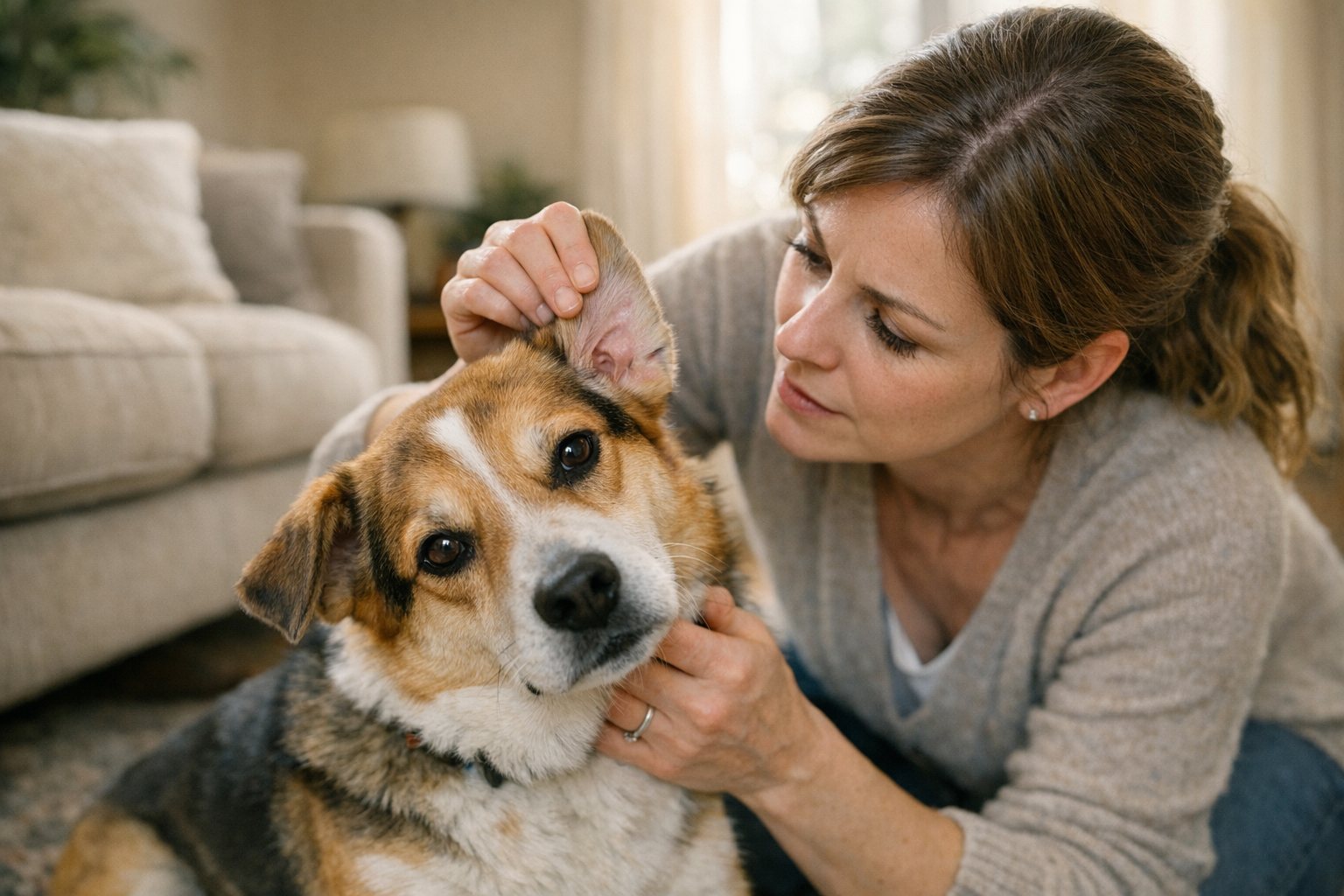
If you gently lift the ear flap and look into the visible part of the ear, you may see dark brown or black crumbly material. It often looks drier than typical wax.
Do not dig around to find it. You are only checking what is easy to see from the outside.
Redness and irritation
The ear flap may look pink to bright red. The opening of the ear canal can look swollen, and the skin may seem warm.
Dogs with lighter skin show this fast. Dogs with darker skin or heavier hair around the ears can hide it until the itch gets intense.
Crusts, scabs, and sore skin
A dog that scratches hard enough can damage the skin around the ears, neck, and cheeks. You may see little scabs from self-trauma, not from the mites themselves.
If the scratching keeps going, the ear flap can swell with blood and form an aural hematoma. That is a vet problem, not a wait-and-see problem.
Breed, coat, and ear shape change what you notice
What you see depends a lot on the dog in front of you. On a fluffy Havanese, dark buildup can hide under hair around the ear opening, so the first sign may be rubbing and fussing, not obvious debris.
In prick-eared breeds like the Cirneco dell'Etna or Portuguese Podengo, redness and crusting can be easier to spot early because the ear is more open and visible.
A little Portuguese Podengo Pequeno may start rubbing its head on rugs before you notice anything inside the ear. A farmy, busy Lancashire Heeler that spends time around other animals may have more chances to pick up parasites than a dog that mostly stays home.
And if you have a field dog like the German Longhaired Pointer, keep an open mind. Sudden, severe pain in one ear after a run outdoors is often something stuck in the ear, not mites.
Ear mites or something else?
This is the part owners usually need help with. Ear mites have a look, but they are not the only thing that causes black gunk and itching.
Here is how I think about it.
Ear mites are more likely if your dog is young, recently adopted, lives with cats, or has had close contact with untreated animals. They are also more likely if more than one pet in the house is itchy.
Yeast is more likely if the ear smells strong and the problem keeps coming back. Bacterial infections often bring pain, thicker discharge, and a dog who hates having the ear touched.
Allergies are more likely if your dog also licks paws, rubs the face, or gets repeated skin flare-ups. A foreign body is more likely if the problem came on fast, one ear is much worse, and your dog suddenly acts panicked.
This is also why home diagnosis goes wrong so often. The signs overlap.
How to check at home without making it worse
You can do a basic look. You cannot confirm mites at home with certainty.
Pick a calm moment and use good light. Lift the ear flap gently and look only at the outer ear and the visible entrance to the canal.
You are looking for:
- dark crumbly debris
- redness
- swelling
- scratch marks
- discharge
- bad odor
Do not stick cotton swabs into the ear canal. Do not pour peroxide, vinegar, oil, or random ear drops into the ear just because the internet said so. I have seen mild irritation turn into a much nastier ear once home remedies got involved.
If your dog pulls away, cries, snaps, or yelps, stop. Pain changes the plan. That usually means a vet visit within 24 hours, sometimes the same day.
When you should call the vet
Some ear problems can wait a day. Some should not.
Book a vet appointment soon if your dog has repeated scratching, dark debris, redness, or a new ear odor. The sooner you treat the real cause, the less miserable your dog will be.
Call the vet the same day if you see any of these:
- the ear is very painful to touch
- the ear flap is swollen
- there is blood or pus
- your dog has a head tilt
- your dog seems off balance
- your dog stops eating or seems unusually quiet
- one ear suddenly becomes severe after outdoor activity
A dog with balance problems or a head tilt may have deeper ear involvement. That is not a wait until next week situation.
How vets confirm ear mites
Vets usually diagnose ear mites by examining debris from the ear under a microscope. Sometimes they can also see the irritation pattern with an otoscope.
This matters because treatment depends on the cause. Mites need parasite treatment. Yeast and bacteria need different medication. A grass awn needs to be removed. Allergies need a longer-term plan.
If your household includes cats, mention that. Owners can get distracted by some odd cat grooming, but cats are often the real ear mite reservoir in a mixed-pet home.
What treatment usually looks like
If it is ear mites, treatment is usually straightforward. Your vet may clean the ears, prescribe medicated ear drops, or use a parasite product that kills mites over time.
Many vets also recommend treating every dog and cat in the home, even if only one pet looks itchy. If you skip housemates, the problem can circle right back.
Your dog may also need anti-inflammatory medication if the ears are very raw. Severe scratching can leave the ear canal swollen enough that pain relief matters just as much as killing the mites.
Do not use leftover medication from a different ear issue. And be very careful with cat products and dog products. Some ingredients are species-specific, and mistakes can get serious fast.
What you can do while your dog is recovering
Keep the ears dry unless your vet tells you to clean them. Wet, over-handled ears usually get angrier, not better.
Wash bedding, vacuum favorite resting spots, and clean soft surfaces your dog rubs against a lot. If your dog needs a good cleanup after all the rubbing and debris, this bath time routine is a sensible place to start.
Try to stop the scratch cycle. Some dogs need a cone for a few days so they do not shred the skin around the ear.
A calm reward after ear medication helps too. If you want an easy treat, this watermelon serving guide explains what is safe and how much is reasonable.
What not to assume
Not every itchy ear has mites. Not every black ear discharge is mites. And not every restless dog has a behavior problem.
That last one matters. Ear irritation can make a dog fussy, distracted, and harder to settle, but it does not usually explain yard destruction on its own. If the bigger issue at home is digging problems, that usually needs its own fix.
I also would not assume the problem is solved just because the scratching eases up after one dose of medication. Finish the treatment exactly as prescribed and go to recheck visits if your vet recommends them.
How to prevent ear mites from coming back
Prevention is mostly about paying attention and treating all exposed pets. Check your dog's ears weekly, especially if you have a puppy, a rescue dog, or a home with cats.
Keep regular parasite prevention up to date if your vet recommends a product that covers mites or reduces the risk of related infestations. And if one pet gets diagnosed, think house-wide, not just one set of ears.
If you remember one thing from this article, make it this: the best way to tell if a dog has ear mites is not just seeing dark debris. It is putting the full picture together, intense itch, classic discharge, pet-to-pet exposure, and a vet exam that confirms what is actually in the ear.
That saves time. It saves money. Most of all, it gets your dog relief faster.