How to Stop Dogs from Digging: 7 Proven Methods That Actually Work
Nearly 40% of dogs dig due to boredom or unmet needs. Learn 7 vet-backed strategies to stop dogs from digging — from designated dig zones to deterrents.
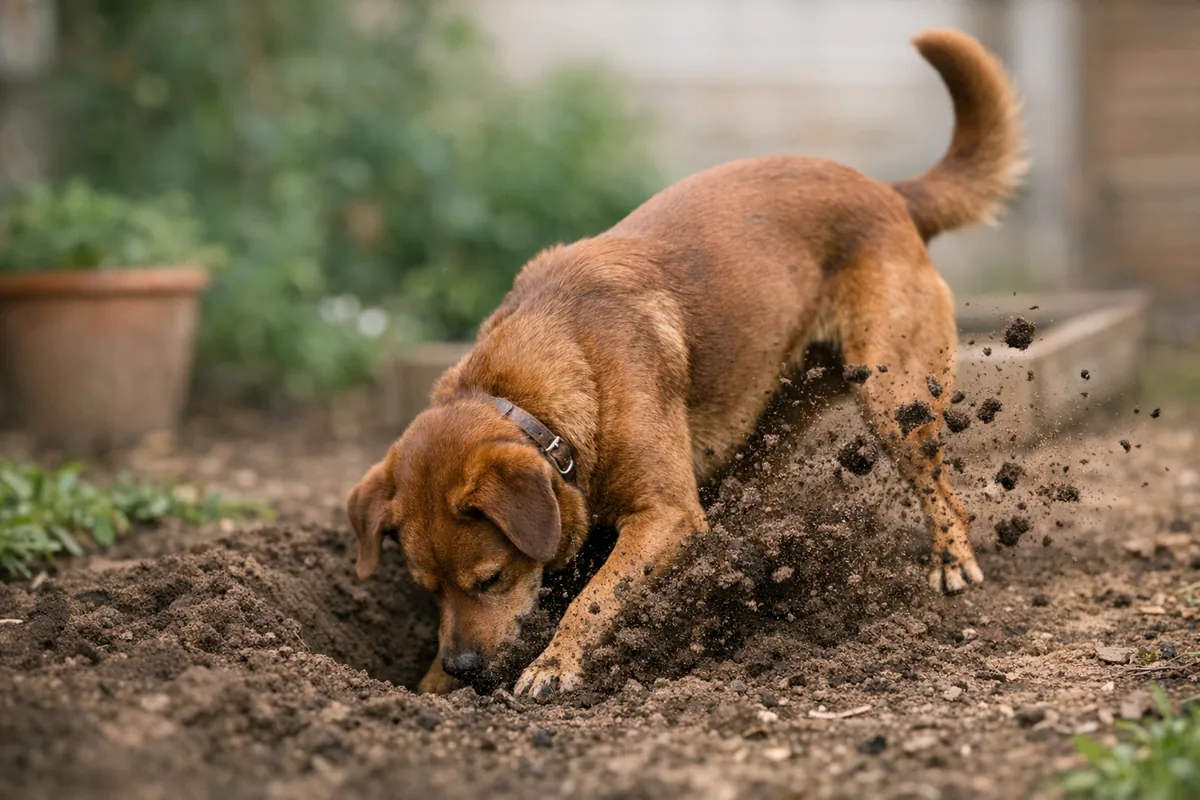
Your yard looks like a construction site. There are craters near the fence, holes under the rose bushes, and your dog is already working on a new one in the corner. Digging is one of the most common complaints from dog owners — and one of the most misunderstood.
The good news: digging isn't random. Dogs dig for specific reasons, and each reason has a specific fix. Understanding what's driving the behavior is the fastest route to stopping it.
TL;DR: Nearly 40% of dogs engage in destructive behaviors — including digging — when bored or understimulated (Vetster, 2024). The most effective fix depends on the cause: increase exercise for high-energy dogs, create a designated dig zone for breed-driven diggers, and address anxiety for dogs digging near fences or exits. Punishment doesn't work and often makes it worse.
For more on managing restless or bored behavior in dogs, see why does my dog look sad — many of the same root causes overlap.
Why Do Dogs Dig in the First Place?
Nearly 40% of dogs display destructive behaviors when they lack adequate mental and physical stimulation (Vetster, 2024). Digging is one of the most common outlets. But not all digging looks the same, and the cause tells you everything about the fix.
The six main reasons dogs dig:
- Boredom and excess energy — Dogs left alone in the yard for hours with nothing to do will dig to pass the time. This is the most common cause, especially in high-energy breeds.
- Instinct and prey drive — Dogs are descended from animals that hunted and cached food underground. Many still feel a strong pull to excavate, particularly when they smell small animals like moles, voles, or mice beneath the surface.
- Temperature regulation — On hot days, dogs dig to expose cool soil and create a cool resting spot. You'll see this most in thick-coated breeds like Huskies or Malamutes.
- Escape attempts — Dogs that dig along fence lines are often trying to get out — to explore, find a mate, or reach something interesting beyond the yard.
- Anxiety — Separation anxiety and general stress can trigger repetitive behaviors. An estimated 16% of dogs engage in repetitive behaviors triggered by frustration or anxiety (UC Davis School of Veterinary Medicine, 2024).
- Attention-seeking — Some dogs learn that digging gets an immediate reaction from their owner, even if that reaction is negative.
What most guides miss: Where your dog digs tells you more than how much. Digging near the fence means escape motivation or anxiety. Digging in shaded spots in summer means heat regulation. Digging in one specific garden bed means something is under there. Match the location pattern to the cause before choosing a solution.
Which Dog Breeds Are Most Likely to Dig?
Some dogs dig because boredom hit at the wrong moment. Others are hardwired to do it.
Terriers were selectively bred for centuries to dig vermin out of underground burrows. Breeds like Jack Russell Terriers, Cairn Terriers, and Airedale Terriers have an instinct that runs deeper than training can fully override. Nordic breeds — Siberian Huskies, Alaskan Malamutes, and Samoyeds — dig to regulate body temperature and cache food. Dachshunds were bred to pursue badgers into their dens. Beagles and Basset Hounds follow scent trails underground.
If you own one of these breeds, the goal isn't to eliminate digging entirely — it's to redirect it to an acceptable location. Complete suppression is both difficult and unfair. Providing an outlet is a more realistic and humane strategy.
For mixed-breed dogs, the cause is more likely environmental: boredom, heat, anxiety, or pest attraction. These cases respond well to behavioral fixes.
How to Stop Dogs from Digging: 7 Methods That Work
1. Increase Exercise and Mental Stimulation
This is the first fix to try because it addresses the most common cause. Most adult dogs need at least 30–60 minutes of active exercise daily, plus mental stimulation beyond basic walks (AKC, 2024). A dog that's genuinely tired doesn't have energy left for excavation projects.
Mental exercise burns energy faster than physical exercise alone. Training sessions, food puzzles, sniff walks, and interactive feeders all drain mental resources that would otherwise go into digging. A 15-minute training session can tire a dog out as effectively as a 30-minute walk.
If your dog digs most after being left alone, the issue is likely unspent energy. Add a long walk or active play session before you leave, and use puzzle feeders to occupy them while you're gone.
For specific enrichment ideas, see top 10 dog enrichment toys — several of these directly address boredom-driven behaviors.
2. Create a Designated Digging Zone
For breed-driven diggers, redirection works better than suppression. Pick a corner of the yard — ideally out of sight from your main garden — and make it the official digging zone.
Loosen the soil or fill the area with a soft sand-and-soil mix. Bury toys or treats just below the surface to make it rewarding. When your dog digs in the designated spot, praise them. When they dig elsewhere, redirect them firmly to the zone.
What trainers see in practice: Dogs that are given a dig zone almost always shift their behavior within 2–3 weeks when the process is consistent. The biggest failure is not making the zone appealing enough — it has to be more rewarding than the forbidden spots. Bury high-value treats and rotate them so the dog keeps finding surprises.
This method works especially well for terriers and other instinct-driven breeds where the digging urge isn't going away.
3. Use Physical Deterrents in Problem Areas
If your dog has favorite digging spots, make those spots unappealing. Several deterrents work well:
Chicken wire or L-footer: Lay chicken wire flat on the soil surface or at a 90-degree angle along the base of fences. Dogs dislike the texture on their paws. For fence-line digging, bury an L-shaped section of wire underground — they dig, hit the wire, and stop.
Rocks and rough mulch: Large flat stones, river rocks, or chunky pine bark create a surface that's uncomfortable to dig in. Pine cones work similarly. Arrange them in the spots your dog returns to most.
Safe scent deterrents: Citrus peels, diluted citronella, or commercially available dog deterrent sprays can discourage digging in specific garden beds. Reapply after rain. Note that cayenne pepper or chili powder — sometimes recommended — can irritate a dog's nose and eyes and should be avoided.
Deterrents work best combined with other methods. They discourage the behavior in specific spots but don't address the underlying motivation.
4. Address the Heat and Shade Problem
If your dog digs cool, shaded spots in summer, they're telling you something: they're hot and trying to self-regulate. The fix is environmental, not behavioral.
Provide adequate shade throughout the yard — not just a single sunny patch. A doghouse, shade sail, or large tree cover gives your dog an alternative to digging. Make sure fresh cool water is always available. A small wading pool or cooling mat gives high-energy or thick-coated dogs a proper way to cool down without excavating.
This cause is easy to overlook. Owners assume the problem is behavioral and apply training solutions when the dog simply needs a cooler place to rest.
5. Eliminate Pest Attractions
If your dog digs in erratic patterns across the lawn — nose down, frantic, in new spots each time — they're probably following a scent. Moles, voles, gophers, and ground squirrels leave scent trails that trigger strong prey drive, especially in scent-focused breeds.
Contact a pest control service to address the underlying problem. Once the animals are gone, the digging motivation disappears. Trying to train a dog off prey-drive digging while the prey is still there is a losing battle — the instinct is stronger than the correction.
6. Manage Fence-Line Escape Digging
Dogs that dig specifically at fence lines are escape-motivated. The question is: what are they trying to get to?
Intact male and female dogs will dig to find mates. Spaying and neutering dramatically reduces this motivation. A 2024 survey by the ASPCA found that spayed/neutered dogs display significantly fewer roaming and escape-related behaviors.
Beyond reproductive drive, dogs dig fences out of anxiety, boredom, or a strong desire to follow a scent or sound outside the yard. Review the environment: is there a dog or person they're fixating on beyond the fence? Are they isolated and distressed when left alone?
For dogs with separation anxiety, the digging is a symptom, not the core problem. Addressing the anxiety with a veterinarian or certified behaviorist is the right path. Learn more about the broader behavioral signals in the 10 most common dog diseases — anxiety-related behaviors often appear alongside other health indicators.
Physically, burying chicken wire L-footers along fence lines is the most reliable structural solution while you work on the behavioral side.
7. Consistent Positive Redirection — Not Punishment
Punishing digging rarely works. By the time you catch your dog in the act and correct them, they've already gotten a reward from the behavior itself. Interrupting and redirecting mid-dig is more effective than any after-the-fact correction.
When you catch your dog starting to dig in a forbidden spot:
- Use a firm "no dig" or "leave it" command
- Immediately redirect them to an approved activity — their designated dig zone, a toy, or a brief training session
- Reward the redirect with praise or a treat
The goal is building a clear association: digging here gets stopped, but digging there and doing this gets rewarded. Consistency across everyone in the household is non-negotiable — one person allowing it undoes weeks of work.
Don't use punishment-based tools like shock collars. Research shows aversive methods increase anxiety and stress, which can worsen digging rather than reduce it (VCA Animal Hospitals, 2024).
Persistent destructive behavior that doesn't respond to these methods may signal deeper anxiety. A dog that digs compulsively, especially alongside other repetitive behaviors, benefits from a veterinary behaviorist assessment. Some compulsive behaviors respond well to behavioral medication combined with training. For a broader look at behavioral issues that may relate to health, see how to keep dog off couch — many of the management strategies overlap.
What Doesn't Work (And Why)
A few commonly suggested "fixes" are ineffective or harmful:
Filling holes with the dog's own feces: This is sometimes recommended but doesn't address the motivation and is unhygienic. Most dogs simply dig in a different spot.
Booby traps or startling devices: These can create fear and increase anxiety — the opposite of what you want for an anxiety-driven digger.
Confining the dog permanently: Keeping a dog inside or in a small area to prevent digging doesn't solve the problem. It suppresses the behavior while the dog becomes more frustrated, which surfaces in other ways.
Shouting or chasing: A dog that digs for attention learns that digging works. Even negative attention reinforces the behavior if attention is what they wanted.
The pattern that consistently works: Pair increased exercise with a designated dig zone and one physical deterrent in the problem area. This three-part approach addresses energy, instinct, and location preference simultaneously. Dogs that get all three usually show clear improvement within 2 weeks.
Frequently Asked Questions
Why does my dog only dig when left alone?
Digging while unsupervised usually points to boredom, anxiety, or separation stress. A dog without outlets for energy will create their own entertainment. Increase pre-departure exercise, provide a food puzzle to work on while you're gone, and consider a camera to observe their behavior patterns — anxiety-driven digging tends to happen early in the alone period.
How long does it take to stop a dog from digging?
Most dogs show noticeable improvement within 2–4 weeks when the correct method is applied consistently. Breed-driven diggers (terriers, Nordic breeds) take longer and may not stop entirely — redirection to a designated zone is more realistic than full elimination. Anxiety-driven digging may require several months of behaviour work.
Do dogs grow out of digging?
Puppies and young dogs dig more due to excess energy and exploration drives. Many do dig less as they mature and settle. However, if digging is habit-formed by adulthood — or if it's instinct-based or anxiety-based — it won't resolve on its own. Adult digging needs active intervention.
Can I use coffee grounds or vinegar to stop dogs from digging?
Diluted white vinegar sprayed on soil can act as a mild deterrent in some cases — the acetic acid smell is unpleasant to many dogs. Coffee grounds are less reliable and can be mildly toxic in large quantities. Commercial dog-safe deterrent sprays tend to work more consistently than home remedies.
Should I see a vet if my dog digs obsessively?
Yes. Compulsive digging — especially when it appears sudden, intensifies over time, or happens alongside other repetitive behaviors like pacing or excessive licking — can indicate anxiety disorders or obsessive-compulsive behavior. A vet can rule out medical causes and refer you to a veterinary behaviorist if needed. Digging can also occasionally point to a sensory or neurological issue, so a check-up is worthwhile if the behavior seems out of character.
Conclusion
Digging isn't defiance — it's communication. Your dog is telling you they're bored, hot, anxious, following prey, or simply acting on a strong instinct bred into them over generations. The fix starts with reading that signal correctly.
Key takeaways:
- Identify where and when digging happens to find the cause
- Increase exercise and mental stimulation before trying anything else
- Redirect instinct-driven diggers to a designated dig zone
- Use physical deterrents (wire, rocks, mulch) in problem spots
- Address heat, pests, and escape motivation as environmental problems
- Skip punishment — consistent positive redirection outperforms every aversive method
- See a vet if digging is sudden, compulsive, or paired with other stress behaviors
For dogs that need more structured behavioral engagement, top 10 dog enrichment toys covers the best options for channeling energy into appropriate activities.