Why Is My Dog Licking the Floor? 8 Reasons (and When to Worry)
74% of dogs with compulsive floor licking have a GI disorder, per a University of Montreal study. Here are 8 reasons your dog licks the floor and when to see a vet.
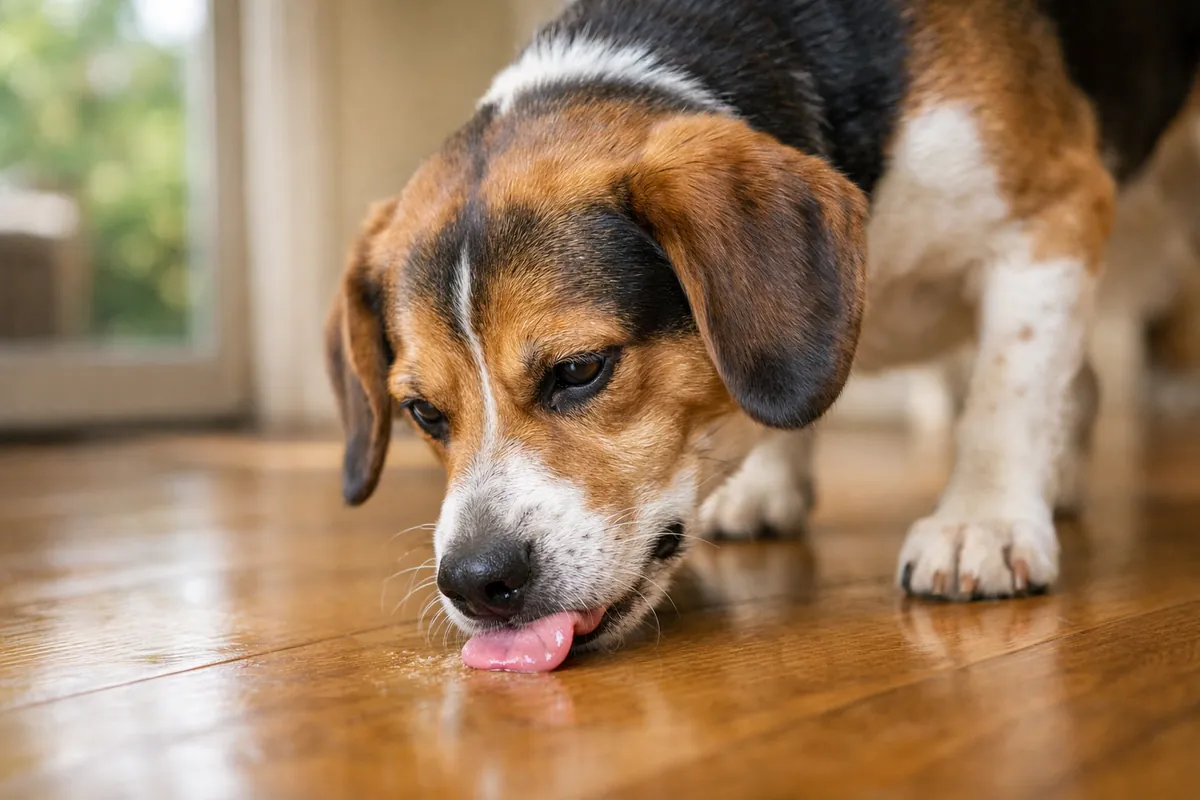
Your dog licks the floor occasionally, and usually it's harmless — they caught a scent from last night's dinner, or they're simply exploring their world. But if it's happening repeatedly, especially in the same spots or at the same time of day, it's worth paying attention. Floor licking can signal real discomfort.
A landmark study from the University of Montreal found that 74% of dogs with excessive floor licking — a pattern researchers call Excessive Licking of Surfaces (ELS) — had an underlying gastrointestinal disorder. Most improved once the GI issue was treated (Journal of Veterinary Internal Medicine, 2012). That's not a minor footnote. It means compulsive floor licking is often the body's signal that something is wrong inside, not just a quirky habit.
TL;DR: Dogs lick the floor for 8 main reasons — nausea, acid reflux, food residue, anxiety, boredom, nutritional deficiency, dental pain, and cognitive dysfunction. A 2012 University of Montreal study found 74% of compulsive lickers had GI disorders, and 53% fully resolved after treatment. Occasional licking is normal; daily or frantic licking warrants a vet visit.
Is Floor Licking Normal — or a Warning Sign?
The key word is excessive. A dog that briefly licks the kitchen floor after you've cooked is doing something completely normal. Dogs have up to 300 million olfactory receptors compared to about 6 million in humans — they're literally tasting the air on a surface.
Excessive licking looks different. It's repeated, hard to interrupt, often targets the same spots regardless of whether there's food there, and frequently happens after meals or at night. In the Montreal study, 16 of 19 ELS dogs engaged in the behavior daily, and most couldn't be easily redirected away from it.
So the first question isn't just why does my dog lick the floor — it's how often, and in what context? That distinction changes what you're dealing with entirely.
8 Reasons Your Dog Is Licking the Floor
1. Nausea and GI Upset
Nausea is the single most common medical driver of excessive floor licking. When a dog feels nauseous, they produce more saliva and often seek out surfaces to lick — a behavior researchers believe helps relieve the sensation of an unsettled stomach, similar to how humans might sip water or chew gum when queasy.
The Montreal study found GI abnormalities in 14 of 19 ELS dogs, including inflammatory bowel disease, delayed gastric emptying, and chronic pancreatitis. After treating the GI condition, 53% of dogs stopped licking entirely (Journal of Veterinary Internal Medicine, 2012).
Watch for floor licking that spikes after meals. Seven dogs in the study showed the behavior primarily in the post-meal window — a strong indicator that eating itself was triggering nausea or discomfort, not environmental curiosity.
For a broader look at conditions that cause this kind of internal distress, see the 10 most common dog diseases.
2. Acid Reflux or Bile Irritation
Acid reflux and bile reflux are closely related to nausea but distinct enough to call out separately. When stomach acid or bile backs up into the esophagus — especially on an empty stomach — dogs experience a burning, uncomfortable sensation that drives repetitive licking of floors, carpets, or walls.
This is most common first thing in the morning or late at night, when the stomach has been empty for hours. You might also notice your dog eating grass frantically, swallowing repeatedly, or producing yellow vomit (bile). These all point to stomach irritation rather than infection or inflammation.
A simple approach that helps many dogs: offer a small snack before bedtime to reduce overnight stomach acid accumulation. If symptoms are frequent or severe, a vet can confirm acid reflux and discuss antacid options.
To understand how digestion timing connects to these symptoms, see how long does it take a dog to digest food.
3. Food Residue and Interesting Smells
Sometimes the reason really is this simple: there's something on the floor. Dogs can detect food odors at concentrations far below what humans can perceive — a spill you wiped up an hour ago might still register strongly to a dog's nose.
This kind of licking is usually targeted to specific spots, brief, easy to interrupt, and not daily without a fresh trigger. If your dog licks the same tile corner every evening, check what happens near that area — cooking splatter, grease residue, or even scented cleaning products can draw persistent investigation. Some floor cleaners leave behind traces that dogs find irresistible.
4. Anxiety and Stress
Repetitive licking is a recognized displacement behavior in dogs — a way of channeling nervous energy when a dog feels anxious but can't address the source of stress. It's similar to nail-biting or pacing in people.
Anxiety-driven floor licking often tracks with identifiable stressors: thunderstorms, fireworks, guests visiting, schedule changes, or separation. The licking isn't about the floor itself — it's about the dog's internal state. Watch for accompanying signals: yawning, lip-licking, tucked tail, or low body posture.
What makes this tricky: Anxiety licking and GI licking look nearly identical from the outside. Timing and context are your best clues. If licking intensifies during stressful events but subsides once things calm down, anxiety is the more likely driver. If it's consistent regardless of what's happening around the dog, suspect a medical cause first.
Dogs showing persistent anxiety often appear withdrawn or low-energy alongside the licking. Why does my dog look sad covers the behavioral overlap between anxiety and depression in dogs.
5. Boredom and Under-Stimulation
A bored dog with nothing to do invents its own entertainment. Floor licking becomes a default activity when a dog isn't getting enough physical exercise or mental engagement. Unlike anxiety licking, boredom licking tends to be casual — slow, meandering, often accompanied by other low-energy behaviors like furniture chewing or aimless following.
The fix here is direct: more exercise and mental enrichment. Puzzle feeders, training sessions, and interactive toys all address the root cause rather than just suppressing the behavior. If floor licking disappears on days your dog gets a long walk or a good play session, under-stimulation is the likely culprit.
Top 10 dog enrichment toys covers effective options across different dog sizes and energy levels.
6. Nutritional Deficiency or Pica
Pica is the compulsive consumption of non-food substances — dirt, rocks, fabric — and it can include licking floors, especially those with mineral residue like concrete or unsealed stone. While true pica is less common than GI causes, nutritional deficiency is one pathway to it.
Deficiencies in iron, calcium, or other minerals can drive dogs to seek out surfaces that carry traces of those nutrients. This is more likely in dogs on unbalanced homemade diets, those with malabsorption conditions, or fast-growing puppies. If your dog specifically targets concrete, bare earth, or rough surfaces rather than smooth floors, nutritional imbalance is worth investigating. A blood panel and dietary review can confirm whether deficiencies are present.
7. Dental Pain or Mouth Discomfort
Pain in the mouth — from a cracked tooth, gum disease, an abscess, or an oral mass — can trigger repetitive licking as the dog tries to soothe discomfort. The licking isn't necessarily directed at the sore spot; dogs often generalize the behavior to nearby surfaces.
Signs that dental pain might be involved alongside floor licking:
- Dropping food while eating or preferring soft food over kibble
- Pawing at the mouth
- Bad breath beyond typical dog-breath
- Reluctance to chew toys they previously enjoyed
Dental disease affects an estimated 80% of dogs by age 3, making it one of the more commonly overlooked causes of sudden behavioral changes (American Veterinary Medical Association, 2023). A dental exam is quick and often reveals problems owners didn't suspect.
8. Cognitive Dysfunction in Senior Dogs
In older dogs — typically those over 8–10 years — cognitive dysfunction syndrome (CDS) can drive repetitive, purposeless behaviors including floor licking. CDS is essentially the canine equivalent of dementia, and it affects an estimated 22–68% of dogs over age 15 (Frontiers in Veterinary Science, 2019).
A pattern seen in senior dog owners: Compulsive floor licking in a dog over 10 that starts suddenly — without any prior history of the behavior — is frequently misattributed to dietary changes or household stress. When CDS is the cause, licking often happens at night, may alternate with aimless wandering or staring at walls, and intensifies gradually over weeks rather than staying stable.
Other CDS signs to watch for alongside licking: disorientation in familiar spaces, sleep-wake cycle reversal, decreased engagement with people and toys, and house-training lapses. If you're seeing several of these in a senior dog, bring them up at your next vet visit.
When Should You Be Worried?
Occasional floor licking isn't a crisis. But certain patterns need a vet's attention.
See a vet promptly if your dog:
- Licks floors daily, particularly after meals or overnight
- Can't be easily redirected away from licking
- Shows other symptoms — drooling, vomiting, diarrhea, weight loss, or repeated swallowing
- Is a senior dog and started this behavior suddenly
- Targets specific surfaces like concrete, soil, or walls (possible pica)
- Appears restless or uncomfortable before and after licking episodes
When licking pairs with drooling and shaking, GI distress or acute pain may be involved — why is my dog drooling and shaking covers the range of causes, including digestive emergencies.
What Can You Do at Home?
Once you have a sense of the cause, targeted action helps more than general redirection:
- GI upset / acid reflux: Feed smaller meals more frequently; add a small snack before bed to buffer overnight stomach acid; ask your vet about antacid support if symptoms recur
- Anxiety: Identify and reduce stressors where possible; try a pressure wrap or white noise for sound-sensitive dogs; consult a behaviorist for chronic anxiety
- Boredom: Increase daily exercise and add enrichment — puzzle feeders, scent games, and short training sessions address the root cause directly
- Nutritional deficiency: Get bloodwork done; review your dog's food for complete and balanced nutrition
- Dental pain: Schedule a dental exam — even dogs showing no obvious signs can have significant hidden disease
- CDS in senior dogs: No cure exists, but dietary support (omega-3s, antioxidants), environmental enrichment, and medication can slow progression and improve quality of life
The GI-first approach tends to pay off: Because most compulsive floor licking ties back to GI issues, many vets recommend a thorough GI workup — including dietary elimination trials, bloodwork, and sometimes endoscopy — before assuming a behavioral cause. Behavioral interventions alone have poor outcomes when an underlying medical condition is driving the behavior.
Frequently Asked Questions
Why does my dog lick the floor at night?
Nighttime floor licking often points to acid reflux or bile irritation. The stomach empties completely during a long overnight fast, and bile can back up and cause discomfort. Offering a small snack before bed reduces overnight acid accumulation and resolves this pattern in many dogs. If it continues, a vet check is warranted.
Is floor licking dangerous?
Occasional licking isn't dangerous. Compulsive licking can be — dogs that lick floors cleaned with toxic chemicals may ingest harmful residues, and pica-related licking can lead to ingestion of dangerous materials. The behavior itself also tends to signal an underlying condition that's progressing, so ignoring chronic licking carries its own risk.
Can I train my dog to stop licking the floor?
Training can redirect the behavior, but it works best paired with treating the root cause. If your dog has a GI disorder, training alone won't stop the licking — they return to it because the discomfort persists. Identify the cause first, then use redirection as a support tool rather than a standalone fix.
Does licking the floor mean my dog is hungry?
Not usually. Dogs don't typically respond to hunger by licking floors — they eat, beg, or seek out food sources. Floor licking is more commonly linked to nausea, discomfort, sensory interest, or anxiety. If your dog licks floors right before meals and then eats eagerly, mild hunger might contribute, but it's rarely the primary driver.
When should I take my dog to the vet for floor licking?
If licking is daily, can't be interrupted, or comes with other symptoms — drooling, vomiting, diarrhea, weight loss, or behavior changes — book a vet visit. In the Montreal study, 74% of dogs with compulsive ELS had an identifiable GI disorder. Medical evaluation should come before behavioral explanations when the pattern is consistent.
Conclusion
Most dogs lick the floor occasionally, and that's fine. When it becomes a daily pattern — especially after meals, through the night, or alongside other symptoms — it's worth investigating.
Key takeaways:
- 74% of dogs with compulsive floor licking have an underlying GI disorder
- Nausea, acid reflux, IBD, and delayed gastric emptying are the top medical causes
- Anxiety, boredom, dental pain, and cognitive dysfunction in seniors round out the list
- 53% of dogs stopped licking entirely after GI treatment
- Daily or hard-to-interrupt licking warrants a vet visit — not just behavioral redirection
The behavior is usually a signal. Signals are worth listening to.