Dog Drooling and Shaking: Causes and When to Worry
Dog drooling and shaking together can signal poisoning, pain, anxiety, or heatstroke. The ASPCA handled 451,000+ poison calls in 2024. Learn how to tell each cause apart fast.
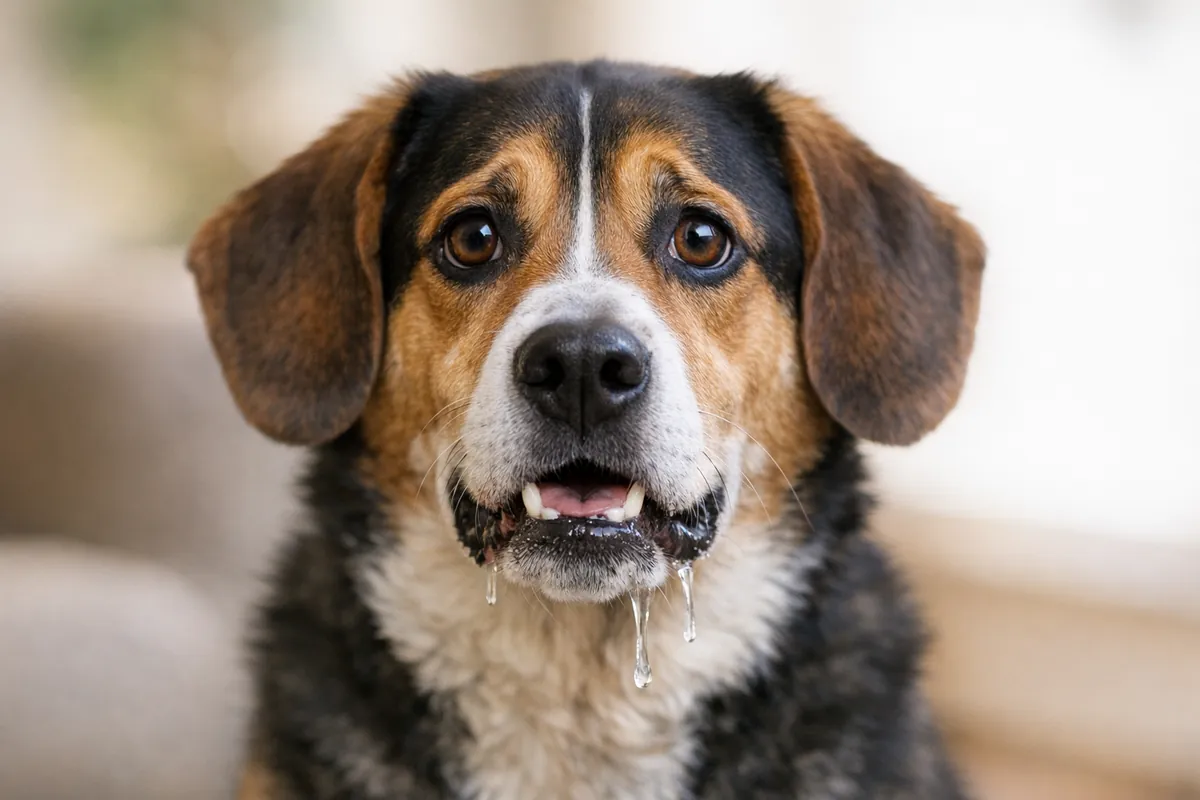
Your dog is drooling more than usual and shaking at the same time. Maybe it came on suddenly, or maybe it crept up over the last hour. Either way, the combination of both symptoms together — not just one — is what matters here.
Drooling alone has dozens of mundane explanations. Shaking alone does too. But when they occur together, the list of likely causes narrows significantly, and several of those causes require fast action. Toxin ingestion, severe pain, heatstroke, and neurological events can all produce this pairing — and some of them progress quickly.
This guide walks through every realistic cause of simultaneous drooling and shaking, what to look for alongside each, and a clear decision framework for when to rush to a vet versus when to monitor at home.
TL;DR: Dog drooling and shaking together most commonly signals poisoning, nausea, fear, or pain. The ASPCA Animal Poison Control Center handled over 451,000 calls in 2024 (ASPCA), making toxin ingestion a critical first thing to rule out. Sudden onset always warrants a vet call.
For context on other conditions that cause sudden symptoms in dogs, see the 10 most common dog diseases.
Could It Be Poisoning?
Toxin ingestion is the most urgent cause of combined drooling and shaking in dogs — and it's more common than most owners assume. The ASPCA Animal Poison Control Center responded to over 451,000 calls about toxic substance exposures in animals in 2024, a nearly 4% increase from the previous year (ASPCA, 2024). Over-the-counter medications accounted for 16.5% of all exposures, followed closely by food items at 16.1% — with chocolate, xylitol, grapes, and raisins among the most common culprits in dogs specifically.
Poisoning produces drooling and shaking through different mechanisms depending on the toxin: some cause direct GI irritation and nausea; others affect the nervous system directly, producing tremors; others both. The critical distinguishing feature is sudden onset. If your dog was fine an hour ago and is now drooling and shaking, and you can't identify another cause, poisoning has to be ruled out before anything else.
Other signs that point strongly toward toxin ingestion: vomiting, diarrhoea, disorientation or stumbling, pale or white gums, dilated pupils, muscle rigidity, or collapse. You don't need all of these for poisoning to be the cause — even drooling and shaking alone after a dog has had access to human medications, cleaning products, certain garden plants, or any unknown food source warrants an immediate call to your vet or the ASPCA poison hotline (888-426-4435).
A commonly missed risk: Xylitol — found in sugar-free gum, some peanut butters, and an increasing number of protein snacks — causes rapid hypoglycaemia in dogs within 15–30 minutes of ingestion. Drooling and shaking followed quickly by weakness and loss of coordination is a recognisable pattern for xylitol toxicity specifically. Check ingredient labels on any food your dog may have accessed.
If your dog also seems feverish, see how to tell if your dog has a fever.
Nausea and Gastrointestinal Upset
Nausea is one of the most common drivers of combined drooling and shaking, and it's almost always the cause when the episode develops gradually rather than suddenly. When a dog feels nauseous, the body floods the mouth with saliva in preparation for vomiting — producing visible drooling. Shaking or trembling often accompanies this as a physical stress response to the discomfort.
GI nausea in dogs has many causes: eating too fast, motion sickness, dietary indiscretion (eating something that disagrees with them), inflammatory bowel disease, pancreatitis, or a reaction to a new food or medication. The drooling and shaking is typically intermittent, the dog may repeatedly lick its lips or swallow, and the episode usually resolves with or without vomiting.
What separates nausea-driven symptoms from something more serious: the dog remains alert and responsive, gums look pink and moist, there's no loss of coordination, and the dog returns to normal within an hour or two after vomiting or resting. If vomiting is severe, repeated, or contains blood, that changes the picture.
If your dog is also licking the floor or carpets, that's another nausea signal — read more on why dogs lick the floor.
Fear, Anxiety, and Stress
Around 20–25% of dogs show significant fearfulness in response to new people, situations, or environmental triggers — and fear produces both trembling and excess salivation as direct physiological responses (PetMD, 2024). The trembling is caused by adrenaline-driven muscle activation; the drooling comes from the autonomic nervous system's stress response. Both are normal fear physiology — not signs of physical illness.
This cause is usually the easiest to identify because of context. Drooling and shaking that appears at the vet's office, during a thunderstorm, around fireworks, in the car, or after a specific frightening event is almost certainly anxiety-driven. The dog's body language tells the rest of the story: ears pinned back, tail tucked, whale eye (showing whites), yawning repeatedly, attempting to hide, or seeking contact.
What often confuses owners: Dogs that drool heavily in the car are frequently mistaken for being physically unwell. Motion sickness and car anxiety produce the same drooling-and-shaking combination — and the two can coexist. The distinction matters because treatment differs: motion sickness responds to anti-nausea medication, while car anxiety responds better to desensitisation and sometimes anti-anxiety medication.
If your dog's symptoms consistently appear only in specific situations and resolve once that situation ends, anxiety is likely the explanation. Persistent or worsening anxiety that's affecting your dog's quality of life is worth discussing with your vet — effective options exist, from behavioural modification to prescription anti-anxiety medications.
If your dog also seems low or withdrawn, see why dogs look sad.
Pain
Dogs in significant pain drool and tremble. This is a stress response — the same adrenaline-driven mechanism as fear — but triggered by physical rather than psychological distress. The pain can be acute (a sudden injury, a broken tooth, a muscle spasm) or chronic (advanced arthritis, a tumour pressing on tissue, an internal condition reaching a crisis point).
Pain-driven drooling and shaking is often accompanied by reluctance to move, guarding a specific body part, yelping when touched in a particular area, a hunched posture, reduced appetite, or a glazed expression. The dog may be restless and unable to settle, or conversely may go very still and refuse to engage. Panting without physical exertion is another signal.
The difficulty with pain is that dogs are instinctively good at hiding it. By the time drooling and shaking appear, the pain is typically significant rather than mild. A dog that's shaking and drooling with no clear environmental trigger — and who seems withdrawn rather than alert — should be assessed for pain. Don't assume it's anxiety if the dog's usual anxiety triggers aren't present.
Heatstroke
Heatstroke in dogs produces a recognisable trio: heavy panting, excessive drooling (often thick and ropy), and weakness or trembling as muscles begin to fail under thermal stress. It can develop within minutes in a hot car, during intense exercise in warm weather, or in any poorly ventilated environment — and it progresses rapidly to organ failure if not treated.
The body temperature at which heatstroke begins causing organ damage is around 40.5°C (105°F). Gums shift from pink to brick red or pale. The dog may become unsteady, collapse, or lose consciousness. Unlike fear or nausea, heatstroke symptoms worsen quickly rather than holding steady.
If heatstroke is suspected: move the dog immediately to a cool, shaded environment. Apply cool (not ice cold) water to the neck, armpits, and groin. Offer small amounts of cool water if the dog is conscious and can swallow. Get to a vet as soon as possible regardless of whether cooling seems to be working — internal damage may not be visible externally.
Hypoglycaemia (Low Blood Sugar)
Low blood sugar causes trembling, weakness, drooling, confusion, and in severe cases, seizures. It's most common in small-breed dogs (Chihuahuas, Toy Poodles, Yorkshire Terriers), puppies of any breed, and diabetic dogs on insulin therapy who've had their dose miscalculated or missed a meal.
Hypoglycaemic shaking looks different from fear shaking — it's often more generalised and muscle-based, and the dog appears weak or disoriented rather than alert and frightened. Offering a small amount of glucose (a tiny bit of honey rubbed on the gums) can briefly stabilise a mild episode, but veterinary assessment is still needed to identify and address the underlying cause.
Neurological Conditions
Focal or generalised seizures, vestibular disease, and brain inflammation can all produce trembling and drooling simultaneously. Seizure activity — even partial seizures that don't involve full convulsions — may look like trembling, repetitive chewing, or drooling without obvious cause. Vestibular disease (sudden dysfunction of the balance organ) produces dramatic head tilting, circling, and trembling alongside nausea-driven drooling.
Neurological causes tend to produce symptoms that don't fit neatly into other categories: they may appear very suddenly, be accompanied by abnormal eye movements (nystagmus), asymmetry in the dog's face or gait, or a strikingly altered consciousness. If the dog's shaking or trembling has a rhythmic, repetitive quality — or if it's accompanied by paddling, jaw clamping, or loss of consciousness — call a vet immediately.
For more on shaking without a waking cause, see why dogs shake in their sleep.
When Does This Need Emergency Care?
Call a vet or emergency line immediately if:
- Symptoms started suddenly and you can't identify a cause
- Your dog may have eaten something toxic (any medication, food, plant, or chemical)
- Gums are pale, white, blue, or brick red
- Your dog is unsteady, collapsing, or losing consciousness
- There is rigid muscle trembling rather than shivering
- Symptoms are rapidly worsening rather than stable
- Heatstroke conditions were present (hot car, outdoor exercise in heat)
Book a same-day or next-day appointment if:
- Symptoms have been present for more than a few hours and aren't clearly anxiety or travel-related
- Your dog is off food alongside the symptoms
- This is a recurring pattern you've noticed more than once
Monitor at home if:
- The episode was brief, clearly triggered by fear (thunderstorm, fireworks), and your dog has returned to normal
- Your dog vomited once, seems relieved, and is back to their usual self
- Motion sickness during a car journey is the obvious explanation
A useful decision shortcut: The combination of drooling + shaking + something else (pale gums, collapse, disorientation, visible distress) is always a vet call. Drooling + shaking with no other symptoms and an obvious trigger (storm, car ride, vet visit) is usually manageable. When in doubt, call your vet — describing the symptoms over the phone takes two minutes and can clarify whether you need to come in urgently.
Frequently Asked Questions
Is it normal for dogs to drool and shake at the same time?
Occasional drooling and shaking together during a stressful event (vet visit, thunderstorm, car journey) is normal and reflects anxiety or motion sickness. Around 20–25% of dogs show fearfulness regularly (PetMD, 2024). What's not normal is the combination appearing suddenly without a clear trigger, or continuing beyond the stressful event.
What should I do if my dog is drooling and shaking right now?
Check for an obvious cause first: is there a storm, did you just get home from the vet, is it very hot? If yes, address the stressor. If there's no clear cause, check gums for colour (should be pink and moist), assess how alert the dog is, and think about what they might have had access to. If anything is unclear, call your vet immediately.
Could my dog have eaten something toxic?
If symptoms started suddenly and your dog had access to any human medications, certain human foods (chocolate, grapes, xylitol), garden plants, or household chemicals, toxin ingestion is a genuine possibility. The ASPCA handled 451,000+ poison exposure calls in 2024 (ASPCA, 2024). Don't wait to see if they improve — call your vet or ASPCA poison control (888-426-4435).
Why does my dog drool and shake in the car?
The most common explanations are motion sickness and car anxiety, and they can occur together. Motion sickness triggers nausea-driven drooling and shaking; anxiety triggers a stress-driven version of the same symptoms. A vet can help identify which is driving it and recommend specific interventions for each.
Can pain cause drooling and shaking in dogs?
Yes. Dogs in significant pain release adrenaline, which causes both trembling and hypersalivation. If your dog is drooling and shaking without a clear environmental trigger, and seems withdrawn, reluctant to move, or is guarding any part of their body, pain is a likely cause that warrants a vet check.