Can You Put Polysporin on a Dog? Vet Advice on When It's Safe
Polysporin can be used on minor dog wounds, but the Pain Relief formula contains lidocaine, which is toxic to dogs. Learn when it's safe and when to skip it.
Your dog has a small cut or scrape and there's Polysporin in the medicine cabinet. It seems like a straightforward fix — but is it actually safe to put on a dog?
For small, surface-level wounds, standard Polysporin is generally safe with a few important precautions. But there are specific situations where it can cause real harm, and one version of the product — Polysporin Plus Pain Relief — should never go anywhere near your dog. Knowing which is which matters before you open that tube.
TL;DR: Standard Polysporin (bacitracin + polymyxin B) can be applied to minor dog wounds in a thin layer. The main risk is licking — the ASPCA handled over 451,000 animal poison calls in 2024, with OTC medications accounting for 16.5% of cases (ASPCA, 2024). Never use Polysporin Plus Pain Relief on dogs; it contains lidocaine, which is toxic.
For context on common dog health conditions, see the 10 most common dog diseases.
What Is Polysporin and How Is It Different from Neosporin?
Polysporin contains two active antibiotic ingredients: bacitracin zinc and polymyxin B sulfate. Bacitracin targets gram-positive bacteria while polymyxin B targets gram-negative bacteria — together covering a broad range of wound contamination risks on the skin surface.
Neosporin contains those same two ingredients plus a third: neomycin. That addition matters for dogs. Neomycin has been linked to hearing loss and kidney damage in animals, and it's also a more common source of allergic contact reactions in dogs than the other two antibiotics (AKC, 2024). Polysporin is considered the safer of the two for dog use — not because it's a veterinary product, but because it omits the ingredient most associated with harm.
What most articles miss: Polysporin Plus Pain Relief — the version with a red label — adds lidocaine as a topical anaesthetic. Lidocaine is toxic to dogs even in small amounts, causing neurological symptoms including muscle tremors, seizures, and in severe cases cardiac arrhythmias. The standard double-antibiotic Polysporin (white or yellow label) is the only version worth considering for dogs.
Always read the full label before applying anything from your medicine cabinet. "Polysporin" on the packaging doesn't guarantee it's the standard formula.
Is It Safe to Put Polysporin on a Dog?
For minor, superficial wounds, standard Polysporin is generally safe for short-term use. Bacitracin was shown in a 1989 controlled study to significantly reduce post-surgical infection rates in dogs compared to untreated controls (AKC, 2024). Polymyxin B is also used in veterinary-prescription ophthalmic ointments routinely prescribed for dogs — so neither ingredient is foreign to veterinary medicine.
That said, "safe" here means safe for the wound site — not necessarily safe for the whole dog. The product is formulated for human skin and doesn't account for the reality that dogs will almost certainly lick the treated area. A small amount of Polysporin licked off once is unlikely to cause serious harm. But repeated ingestion from persistent licking causes gastrointestinal upset: nausea, vomiting, and diarrhoea. Dogs with sensitive stomachs can flare up even from small repeated exposures.
Wound depth is the other hard limit. Polysporin sits on the skin surface; it doesn't penetrate deep tissue. For puncture wounds, bite wounds, or any laceration that may involve deeper layers, a surface ointment creates a false sense of security while doing nothing to prevent internal infection. These wounds need a vet, not a home remedy.
For a complete breakdown of safety factors, see is Polysporin safe for dogs.
What Types of Dog Wounds Can You Treat with Polysporin?
Standard Polysporin is appropriate only for a narrow category of wounds. Understanding that boundary prevents the ointment from being used where it genuinely can't help — or where it might delay proper care.
Suitable wounds:
- Small, clean surface cuts and scrapes from minor abrasions (gravel, pavement, rough vegetation)
- Superficial nicks from nail trimming or grooming accidents
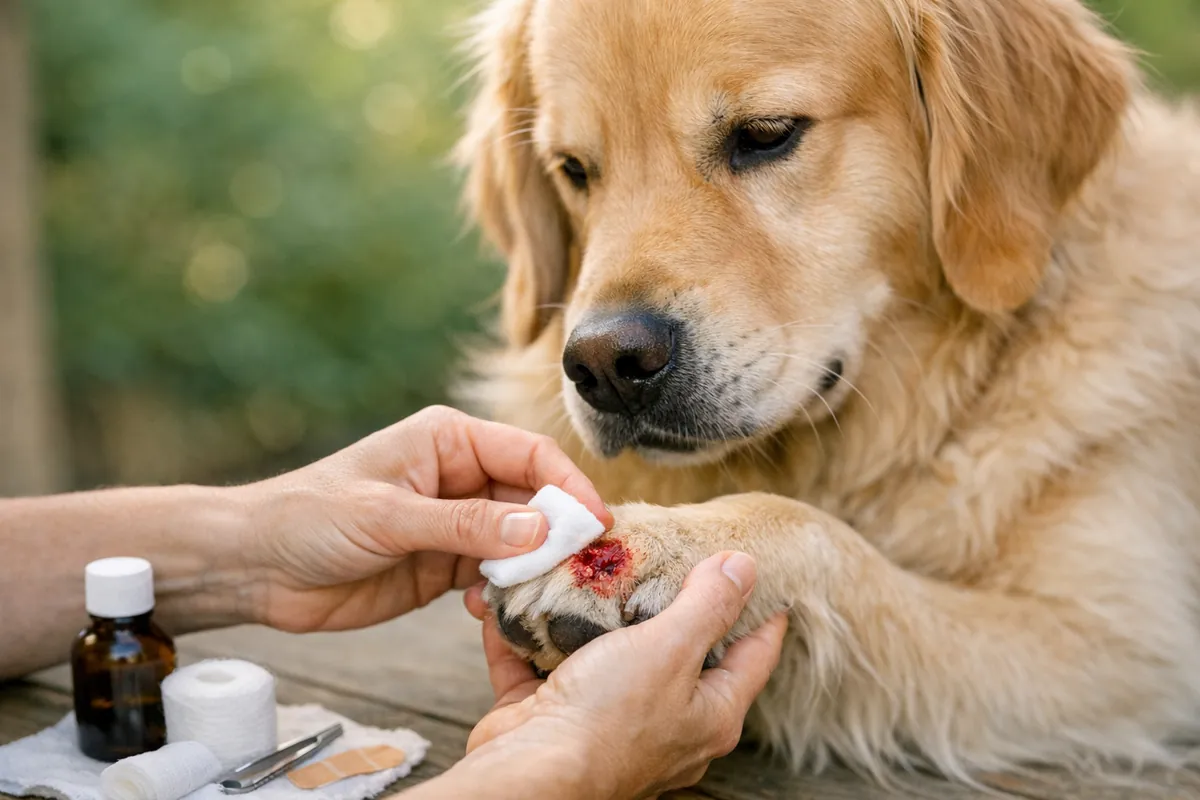
- Minor paw pad grazes that haven't broken into deeper tissue
- Small skin fissures or chafed areas that are dry and not infected
Wounds that need veterinary care instead:
- Puncture wounds from bites, thorns, or sharp objects — these seal over quickly at the surface and trap bacteria inside
- Lacerations longer than about 2 cm, or any wound with visible deeper tissue
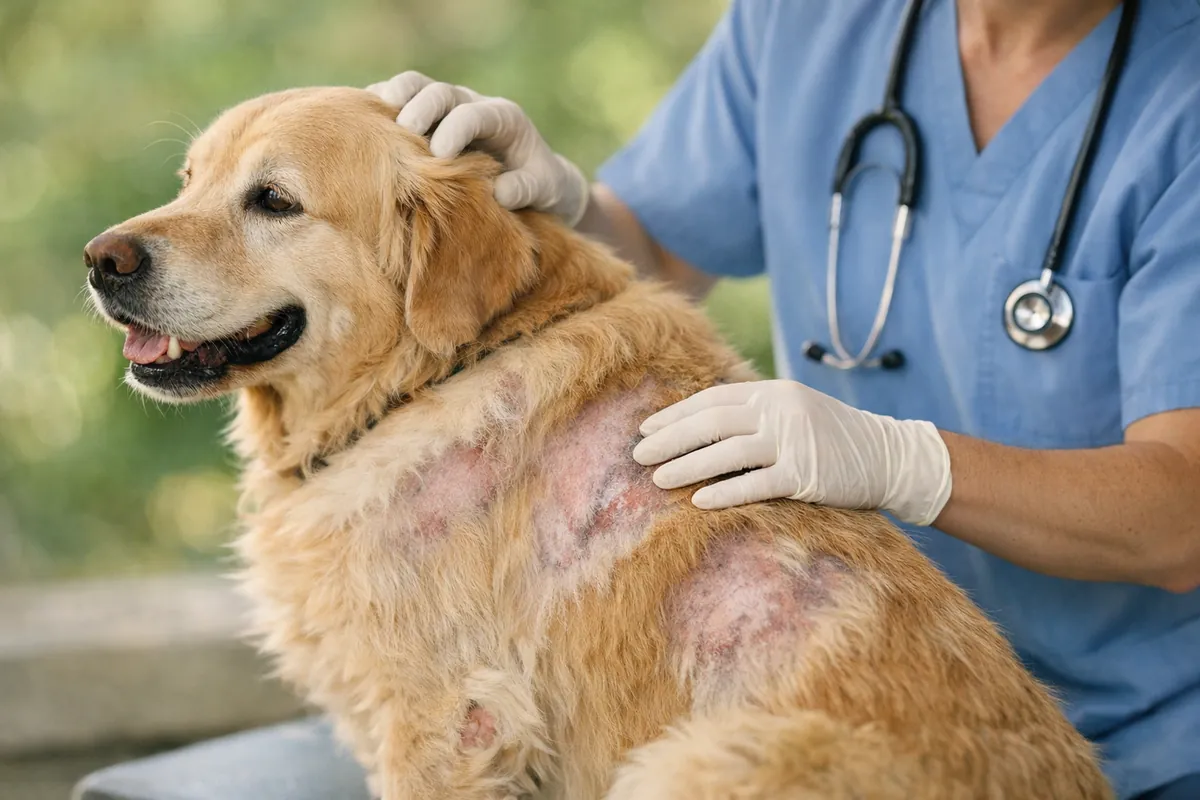
- Wounds showing signs of existing infection: swelling, heat, discharge, or odour
- Any wound on the face, near the eyes, or on the genitals
- Wounds your dog has been licking or chewing for more than a few hours
A pattern seen in vet clinics: Owners apply Polysporin to a bite wound because the surface looks clean, the dog licks it off overnight, and the dog presents two days later with a subsurface abscess. Bite wounds in particular should never be managed at home — the tooth creates a deep puncture channel that closes over within hours, trapping bacteria underneath. (Dr. Dobias Healing Solutions, 2024)
If the wound causes significant discomfort, appears swollen, or your dog develops a fever alongside it, those are signs of infection that need professional treatment. See how to tell if your dog has a fever for what to watch for.
How to Apply Polysporin to a Dog Wound Safely
If the wound is minor and superficial, here's how to apply it correctly. The process matters as much as the product.
Step 1: Clean the wound first. Rinse with lukewarm water for 1–2 minutes to flush out debris and surface bacteria. Mild soap can be used around the edges — not inside the wound. Avoid hydrogen peroxide; it damages healthy tissue and slows healing. Pat dry with clean gauze or a cloth.
Step 2: Apply a thin layer. Use a clean fingertip or cotton swab to apply a small, thin layer directly over the wound. Thicker isn't better — excess ointment doesn't improve the antibiotic effect and gives your dog more to lick off.
Step 3: Prevent licking immediately. This is the most important step. An Elizabethan collar (cone) is the most reliable option. For wounds on limbs, a loose breathable bandage secured with medical tape works well — don't wrap too tight and check it every few hours. Socks secured with medical tape are a practical option for paw wounds if you don't have a cone.
Step 4: Apply once or twice daily for 2–3 days. Don't continue beyond that. Surface wounds that are healing don't benefit from prolonged antibiotic application, and repeated exposure increases the chance of skin sensitisation.
Step 5: Monitor for improvement. A healing wound closes progressively and should be visibly better by day 2–3. If it's not improving, is worsening, or the surrounding skin becomes warm or swollen, stop applying Polysporin and have a vet assess it.
When Should You Not Use Polysporin on a Dog?
Beyond wound type, a few situations make Polysporin a poor choice regardless of how minor the injury looks.
The dog is a persistent licker. Some dogs are relentless about any wound, regardless of cones or coverings. For these dogs, chlorhexidine solution is a safer alternative — it's not harmful in the small amounts licked from a wound surface, and vets use it routinely for exactly this reason.
The wound is near the eyes. Don't apply standard Polysporin near the eyes. Ophthalmic antibiotic preparations formulated for dogs exist, but they're only appropriate under veterinary guidance. Drug concentrations safe in human eyes may not be right for dogs.
Your dog has a known skin sensitivity. Dogs prone to hot spots, allergic skin conditions, or recurrent skin irritation may be more susceptible to contact reactions. If you notice increased redness, swelling, or scratching at the application site, stop immediately. Reactions to topical antibiotics can sometimes look worse than the original wound.
If your dog is losing fur near the wound or elsewhere on the body, that's worth investigating separately — see why your dog is losing hair.
You can't reliably prevent licking. Without consistent licking prevention, applying Polysporin becomes a cycle of repeated ingestion rather than effective wound treatment. A clean wound left to air and monitored carefully is a better option than an ointment your dog immediately removes.
Better Alternatives to Polysporin for Dog Wounds
Veterinarians typically recommend these options over Polysporin for home wound care — they're either safer, more effective, or both.
Chlorhexidine solution (0.05%): The gold standard for home dog wound care. It's broadly antimicrobial, safe if small amounts are licked, and doesn't carry the ointment licking problem. Dilute to 0.05% before use — the concentrate is too strong and will damage tissue. Available from most pet stores.
Vetericyn Plus Wound Spray: A pet-specific antimicrobial spray that many vets recommend for home use. It won't harm dogs if licked, works well on surface bacteria, and doesn't require rubbing application — useful for dogs that resist having wounds touched.
Saline solution (0.9%): Effective for cleaning minor cuts before dressing. It won't prevent infection as well as chlorhexidine, but it's ideal as a first-step flush and is completely safe.
Veterinary-prescribed topical antibiotics: For wounds that genuinely need antibiotic intervention — infected skin, post-surgical sites, hot spots — a vet can prescribe mupirocin or silver sulfadiazine-based products formulated for animals. These are more targeted and appropriate than any human OTC product.
Our recommendation: Chlorhexidine at 0.05% outperforms Polysporin as a default dog wound treatment because it works on contact, doesn't require preventing licking, and has a longer track record in veterinary settings. Reserve Polysporin for situations where chlorhexidine isn't available and the wound is clearly minor and superficial.
Frequently Asked Questions
Can I put Polysporin on my dog's paw?
Yes, for minor paw pad abrasions, a thin layer of standard Polysporin is generally safe. Paw wounds are harder to keep clean since dogs walk on them — clean the area thoroughly, apply a thin layer, and cover loosely with a sock secured with medical tape. Check every few hours and use a cone if your dog tries to lick it.
What happens if my dog licks Polysporin off a wound?
A small amount licked once is unlikely to cause serious harm. Repeated ingestion causes gastrointestinal upset — vomiting and diarrhoea are the most common signs. The ASPCA handled over 451,000 animal poison exposure calls in 2024, with OTC medications accounting for 16.5% of cases (ASPCA, 2024). If your dog ingested a large amount, call your vet.
Can you use Polysporin Plus Pain Relief on dogs?
No. Polysporin Plus Pain Relief contains lidocaine, a local anaesthetic that is toxic to dogs. Even small amounts can cause neurological symptoms including tremors and disorientation. Only use standard double-antibiotic Polysporin (bacitracin + polymyxin B), and always check the label before applying any version of the product.
Is Polysporin or Neosporin safer for dogs?
Polysporin is generally considered safer for dogs. Neosporin contains neomycin, which has been linked to hearing loss and kidney damage in animals (AKC, 2024) and is more likely to cause allergic skin reactions. Standard Polysporin's two-ingredient formula avoids those risks.
How long should I apply Polysporin to my dog's wound?
Apply once or twice daily for no more than 2–3 days on minor surface wounds. If the wound isn't clearly improving by day 3, stop applying and have a vet assess it. Prolonged application isn't beneficial for healing and can increase the chance of skin sensitisation over time.
Conclusion
Standard Polysporin — the double-antibiotic formula with bacitracin and polymyxin B — is a reasonable option for minor surface dog wounds when used correctly: thin layer, licking prevented with a cone or bandage, applied for 2–3 days maximum.
The risks come from breaking those rules. Using Polysporin Plus Pain Relief, applying it to deep or infected wounds, or failing to prevent licking are the decisions that turn a simple first-aid call into a vet visit. When in doubt, chlorhexidine solution is the safer and vet-endorsed alternative.
For anything beyond a small, clean surface scrape — bite wounds, punctures, large cuts, or any wound showing signs of infection — skip the medicine cabinet and call your vet directly.
Key takeaways:
- Standard Polysporin is safe for minor surface wounds only
- Never use Polysporin Plus Pain Relief — it contains toxic lidocaine
- Always prevent licking with a cone or covering
- Chlorhexidine 0.05% is the preferred vet-recommended home alternative
- Any wound not improving within 2–3 days needs a professional assessment