How to Tell if Your Dog Has a Fever at Home: Signs, Symptoms & What to Do
A dog's fever starts at 103°F — above 106°F is life-threatening. Learn how to spot the signs, take your dog's temperature correctly, and when to call a vet.
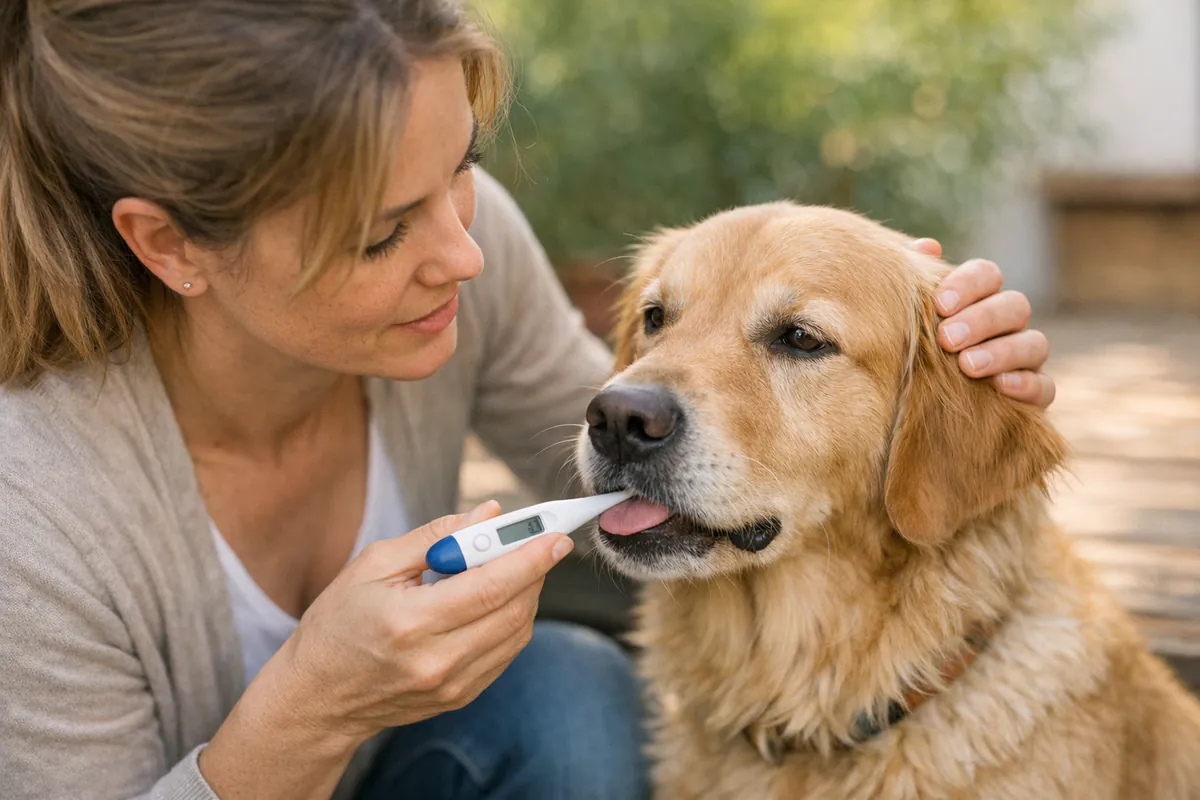
Your dog is quieter than usual, skipping food, and something just feels off. You're wondering: does my dog have a fever? It's not always obvious — dogs can't tell you what's wrong, and the classic "feel the nose" test isn't reliable. But there are real signals to look for, and one accurate method you can do at home in under two minutes.
Knowing the difference between a mild fever that can be monitored and a dangerous one that needs immediate vet care could save your dog's life.
TL;DR: A dog's fever starts at 103°F; anything above 106°F is a medical emergency. The only reliable way to confirm a fever at home is with a rectal or ear thermometer. Key symptoms include lethargy, loss of appetite, shivering, warm ears, and red eyes — but always verify with a thermometer (AKC, 2024).
For dogs that are also shivering or trembling alongside other symptoms, see why is my dog drooling and shaking — there's significant overlap with fever-related causes.
What Is a Normal Dog Temperature?
A healthy dog's body temperature sits between 101°F and 102.5°F — significantly higher than a human's normal range of 97.6°F to 99.6°F (AKC, 2024). This means what feels warm on your dog's skin may be completely normal. Any reading above 103°F is considered a fever. A temperature of 106°F or higher is a medical emergency that can cause organ damage, seizures, or death if not treated promptly.
Understanding this range matters because many dog owners try to judge fever by touch alone. A dog that feels warm isn't necessarily sick — and a dog that feels "normal" to the touch can absolutely have a fever.
Temperature reference:
- 99°F–102.5°F — Normal range
- 103°F–104°F — Mild fever; monitor closely, call your vet
- 104°F–106°F — Moderate to high fever; vet visit needed
- 106°F+ — Emergency; seek care immediately
What Are the Signs of a Fever in Dogs?
Behavioral and physical changes are often the first indicators of fever in dogs. A high percentage of dogs show multiple overlapping signs rather than just one, which makes it easier to recognize when something is genuinely wrong (PetMD, 2024). None of these signs alone confirms a fever — but several together are a strong signal to reach for a thermometer.
Common signs of fever in dogs:
- Lethargy — Your dog is noticeably low-energy, reluctant to move, sleeping more than usual, or uninterested in activities they normally enjoy
- Loss of appetite — Refusing meals or showing no interest in food or water
- Shivering or trembling — Even in a warm room; the body shivers during fever as part of its temperature regulation response
- Warm ears — Noticeably hotter than usual when you touch the inner ear flap; not diagnostic alone, but often present
- Warm, dry nose — A healthy dog's nose varies naturally between wet and dry, so this alone means little, but a hot, cracked nose alongside other signs is worth noting
- Red or glazed eyes — Bloodshot, glassy-looking, or partially closed eyes can accompany a fever
- Runny nose or nasal discharge — Can signal an upper respiratory infection driving the fever; see why does my dog have a runny nose for more detail
- Vomiting or diarrhea — GI symptoms often appear alongside fever, especially with infectious causes
- Rapid breathing or panting — The body attempts to cool itself through panting when temperature rises
What most owners miss: Lethargy is a more reliable early indicator than warm ears or a dry nose. If your dog is uncharacteristically still, flat, or disengaged — especially if combined with food refusal — that combination warrants a temperature check more than any single physical sign.
How to Take Your Dog's Temperature at Home (Step by Step)
The only way to confirm a fever is with a thermometer. A rectal thermometer gives the most accurate reading, followed by an ear (aural) thermometer. The armpit method is the least reliable but useful if your dog won't tolerate either alternative (VCA Animal Hospitals, 2024).
Rectal Method (Most Accurate)
What you need: A digital thermometer with a flexible tip, water-based lubricant or petroleum jelly, disposable gloves, and disinfectant wipes.
- Apply lubricant generously to the tip of the thermometer
- Have a second person hold your dog gently but securely — this prevents sudden movement
- Lift your dog's tail and insert the thermometer tip approximately 1 inch into the rectum
- Hold it in place until it beeps (most digital thermometers take 10–60 seconds)
- Remove, wipe, and read the temperature
- Disinfect the thermometer before storing
Your dog may pull away or sit down — stay calm and try again if needed. Never use a glass thermometer; flexible digital tips are safer.
Ear Method (Good Alternative)
An aural (ear) thermometer reads the infrared heat from the eardrum. It's faster and less stressful for many dogs, though slightly less precise than rectal.
- Gently pull the ear flap upward and back to straighten the canal
- Insert the probe angled toward the opposite side of the jaw
- Push it in as deep as it fits comfortably — a shallow read gives a false low result
- Hold until the reading is complete
What vets see at home visits: Ear thermometers are most commonly misread because owners don't insert the probe deep enough into the horizontal ear canal. A reading of 99°F or 100°F from an ear thermometer, when the dog is clearly unwell, usually means the probe wasn't seated correctly. When in doubt, confirm with a rectal reading.
Armpit Method (Least Accurate)
Place the thermometer under your dog's front leg where the limb meets the body. Hold the leg against the thermometer until it beeps. Add 1°F to the reading to estimate core temperature — though this method is too variable for confident diagnosis.
What Causes a Dog Fever?
Fevers don't happen randomly — they're a symptom of an underlying condition. In a retrospective study of 50 dogs with fever, 48% were diagnosed with non-infectious inflammatory disease, and only 18% had a confirmed infectious cause (PMC / Journal of Veterinary Internal Medicine, 2012). A larger analysis found immune-mediated disease present in 32% of dogs with fever.
Common causes include:
- Infections — Bacterial, viral, or fungal infections, including common illnesses covered in the 10 most common dog diseases
- Immune-mediated disease — The body's immune system attacking its own tissue, causing systemic inflammation
- Tick-borne disease — Rocky Mountain spotted fever, Lyme disease, and ehrlichiosis all cause fever in dogs
- Urinary tract infections (UTIs) — Common in female dogs; fever is often the first external sign
- Tooth abscess or dental infection — Frequently missed; a single infected tooth can cause a systemic fever
- Post-vaccination reaction — A mild, short-lived fever (up to 104°F) in the 24–48 hours after a vaccine is normal and self-limiting
- Ingestion of toxins — Certain plants, human medications (ibuprofen, acetaminophen), and foods can cause a toxic fever response
- Fever of unknown origin (FUO) — In roughly 19–28% of cases, no definitive cause is found after standard diagnostics
According to a study published in the Journal of Veterinary Internal Medicine, fever of unknown origin accounts for a significant share of presentations in referral hospitals, underscoring that fever is often a marker for complex underlying disease rather than a simple infection (PMC, 2012). Any fever lasting more than 24 hours or recurring without a clear cause warrants veterinary bloodwork.
When Should You Call a Vet for Dog Fever?
Some fevers can be monitored at home for a short window. Others need immediate veterinary attention. Here's how to decide (Merck Veterinary Manual, 2024):
Call your vet immediately if:
- Temperature is 106°F or higher — this is an emergency
- Fever is accompanied by seizures, collapse, or loss of consciousness
- Your dog is a puppy, elderly, or immunocompromised
- Vomiting or diarrhea is severe or bloody
- Your dog cannot stand or is extremely weak
Call your vet within a few hours if:
- Temperature is 104°F–106°F and not dropping
- Fever has lasted more than 24 hours
- Your dog is refusing all food and water
- You notice unusual symptoms like joint swelling, rapid breathing, or yellow-tinged gums
Monitor at home and call if it worsens if:
- Temperature is 103°F–103.5°F and your dog is mildly lethargic but drinking water
- Symptoms appeared in the 24 hours after a vaccination
- Your dog seems uncomfortable but alert
A useful benchmark: Most mild post-vaccination fevers resolve on their own within 48 hours without treatment. Any fever that hasn't dropped to normal range within 48 hours of onset — regardless of cause — warrants a vet call. Don't wait past that window hoping it will resolve.
What You Should Never Do When Your Dog Has a Fever
Don't give your dog human fever reducers. This is the most dangerous mistake owners make. Acetaminophen (Tylenol) is toxic to dogs at any dose. Ibuprofen (Advil, Motrin) causes gastric ulcers and kidney failure in dogs, even in small amounts (ASPCA Animal Poison Control Center, 2024). Aspirin is occasionally used under veterinary supervision but is not safe to give without guidance.
Avoid:
- Acetaminophen (Tylenol) — toxic to dogs
- Ibuprofen (Advil, Motrin) — toxic to dogs
- Naproxen (Aleve) — toxic to dogs
- Applying ice or cold water immersion — this can cause shock and vasoconstriction that traps heat internally
Safe home steps while you wait for vet guidance:
- Encourage your dog to drink cool (not ice cold) water
- Use a damp cool cloth on the paw pads and inner ear flaps — this helps dissipate heat gently
- Keep the room temperature moderate and offer a cool resting surface
- Monitor temperature every 30 minutes
If your dog refuses water entirely and seems increasingly weak, this escalates the urgency — dehydration compounds fever effects rapidly.
If you're unsure whether something your dog ingested might be causing the fever, you can check with a vet before reaching for any home remedy. For general wound-related questions about topical products, see is polysporin safe for dogs — related questions often come up alongside fever assessment.
Frequently Asked Questions
Can you tell if a dog has a fever by touching their nose?
No. A dog's nose varies naturally between wet and dry throughout the day depending on hydration, sleep, and environment. A dry or warm nose alone is not a reliable indicator of fever. The only way to confirm a fever is with a thermometer — rectal or ear methods are the most accurate.
What temperature is too high for a dog?
Any temperature above 103°F is considered a fever. A reading of 106°F or higher is a medical emergency requiring immediate veterinary care. At 106°F, dogs risk brain damage, organ failure, and death if the temperature isn't brought down quickly.
What should I do if my dog's temperature is 104°F?
Call your vet. At 104°F, your dog needs veterinary evaluation to identify the cause. While waiting, offer cool water, apply a cool damp cloth to the paw pads, and keep your dog calm and comfortable. Don't give any human pain medications or fever reducers.
Can dogs get fevers from stress or anxiety?
Yes. Emotional stress can cause a mild elevation in body temperature in dogs — sometimes called "excitement fever" — which is typically short-lived and resolves on its own. It usually doesn't exceed 103.5°F and isn't accompanied by other illness signs. A dog that runs and shakes afterward is covered in more detail in why does my dog shake in his sleep.
How often can I take my dog's temperature?
You can check your dog's temperature every 30–60 minutes if monitoring a mild fever at home. More frequent checks aren't necessary unless the temperature is rising rapidly. Always use a clean, lubricated thermometer and record each reading with the time so you can report trends to your vet.
Conclusion
A fever in your dog is always a signal — it's the immune system doing its job, but the job has gotten harder than it can handle alone. Catching it early, confirming it correctly, and knowing when home monitoring is enough versus when a vet is needed makes a real difference in outcomes.
Key takeaways:
- Normal dog temperature: 101°F–102.5°F; fever starts at 103°F; emergency at 106°F+
- Don't rely on nose or ear touch alone — only a thermometer confirms a fever
- Rectal thermometers are the most accurate; ear thermometers are a reliable alternative
- Key signs: lethargy, appetite loss, shivering, warm ears, red or glazed eyes
- Never give human fever reducers — acetaminophen and ibuprofen are toxic to dogs
- Any fever above 104°F or lasting more than 24–48 hours requires a vet visit
- Fever causes in dogs are often non-infectious — immune-mediated disease and inflammation are more common than bacterial infection
For broader context on illnesses that commonly present with fever, the 10 most common dog diseases covers the most frequent diagnoses your vet will want to rule out.