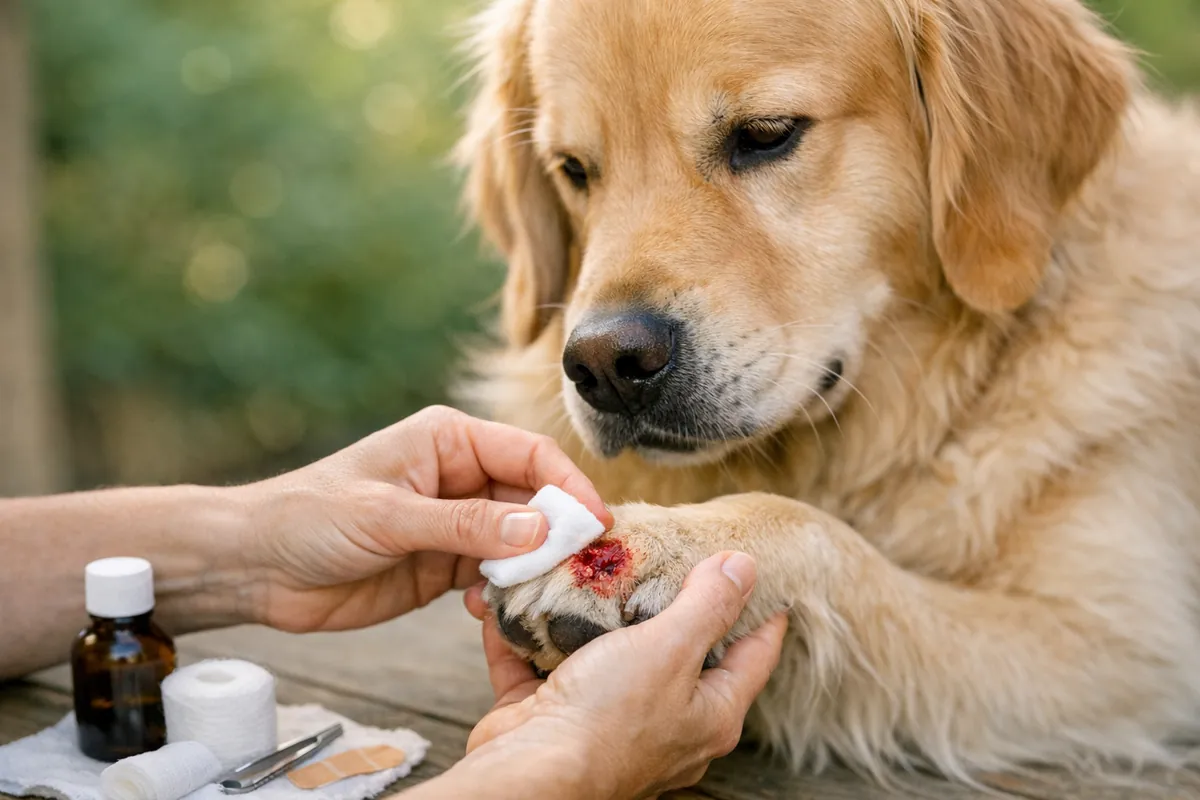
Why Is My Dog Losing Hair? Causes, Patterns & Treatments
Up to 20% of dogs develop allergic skin conditions that cause hair loss. Learn the 6 most common causes, what the pattern reveals, and how to treat each one.
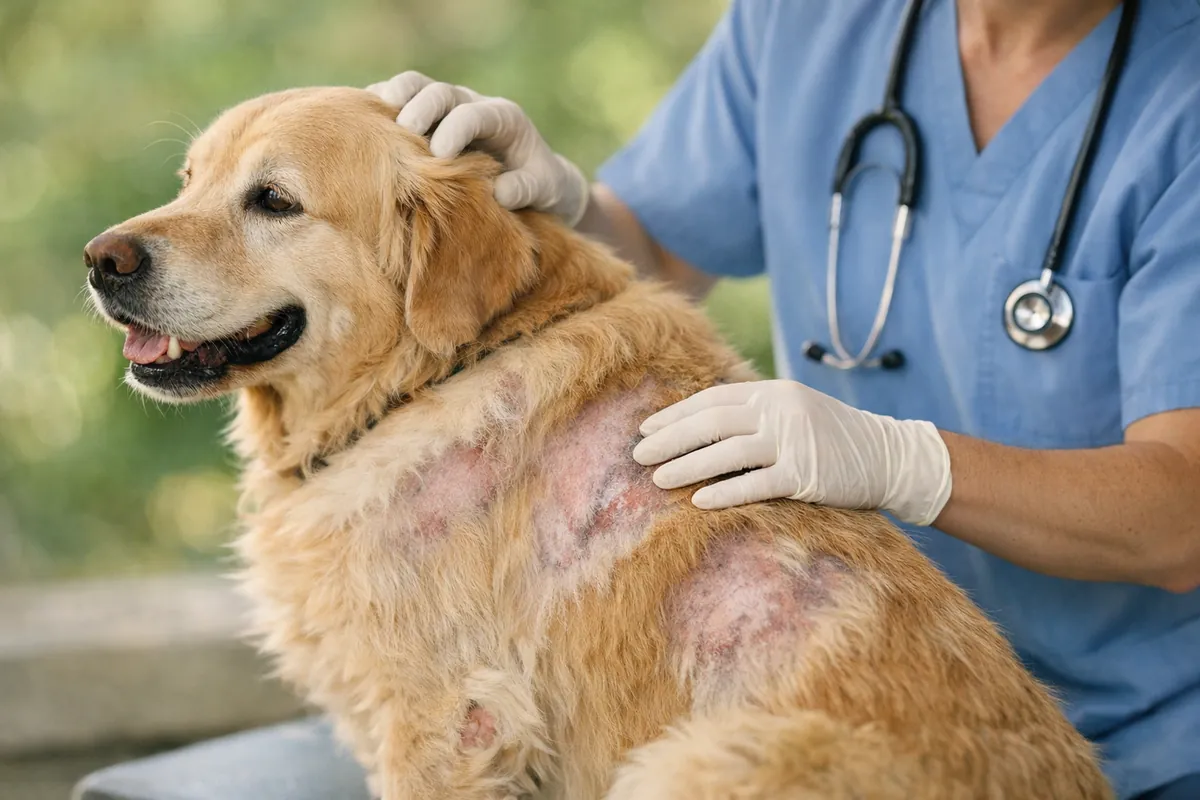
You notice a bald patch on your dog's coat, or fur coming out in clumps well beyond the usual daily shedding. It's one of the more alarming things to spot — but it's also one of the most common reasons dog owners visit a vet.
Hair loss in dogs (alopecia) has many causes, ranging from minor seasonal issues to conditions that need medical treatment. The good news is that most causes are identifiable and treatable — and the pattern and location of the hair loss can give you meaningful clues before you even reach the vet.
This guide covers the six most common causes of dog hair loss, what the location of the loss typically signals, and what you can actually do about it.
TL;DR: Up to 20% of dogs develop allergic skin conditions that lead to hair loss, making allergies the leading cause (American College of Veterinary Dermatology, 2024). Other common causes include parasites (mange, fleas), hormonal imbalances (hypothyroidism, Cushing's disease), and ringworm. Dogs treated early for allergies see a 60% improvement in hair regrowth within six months — so identifying the cause quickly matters.
For context on the full range of conditions that can affect your dog's health, see the 10 most common dog diseases.
Is My Dog's Hair Loss Normal Shedding or Something Else?
All dogs shed — it's how the coat cycles through natural growth phases. Heavy seasonal shedding in spring and autumn is expected, especially in double-coated breeds like German Shepherds, Huskies, and Golden Retrievers. That's not alopecia.
The difference between normal shedding and a real problem comes down to pattern and skin condition. Normal shedding is uniform across the body and the underlying skin looks healthy. Alopecia presents as patches, thinning in specific locations, broken hair, or areas where skin is visible, irritated, or thickened. If you're seeing bald spots, symmetrical thinning, crusty skin, or your dog's scratching and biting the same areas repeatedly, that's a sign something's driving it.
Worth knowing: The location of hair loss is one of the strongest diagnostic clues — often more useful than a general description of "losing fur." Symmetrical trunk thinning points almost directly at hormonal causes, while hair loss at the base of the tail almost always implicates fleas. Noting exactly where the loss is happening before your vet appointment can significantly shorten the diagnostic process.
Alopecia can be congenital (a dog born with a predisposition to hair follicle problems) or acquired (hair loss developing after birth from an underlying cause). Almost all cases that prompt a vet visit are acquired — meaning there's usually an identifiable, treatable root cause.
What Are the Most Common Causes of Dog Hair Loss?
Allergies
Allergies are the single most common driver of hair loss in dogs. Up to 20% of dogs develop allergic skin conditions during their lifetime (American College of Veterinary Dermatology, 2024). The three main types are environmental allergies (pollen, dust mites, mold), food allergies, and flea allergy dermatitis.
The hair loss from allergies isn't direct. What happens is the allergic response triggers intense itching, and the dog scratches, chews, and rubs the affected areas until the fur breaks or falls out. The skin beneath often looks red, inflamed, or thickened from repeated trauma. Allergies typically develop between the ages of 1 and 5, so dogs in that window showing coat changes are strong candidates for allergy testing.
Dogs receiving early personalized allergy treatment show a 60% improvement in hair regrowth and reduced scratching within six months (ACVD, 2024). The longer allergies go unmanaged, the more cumulative skin damage builds up — early diagnosis makes a real difference to recovery.
Parasites and Mange
Flea allergy dermatitis (FAD) is the most common skin disease in dogs in the United States, with flea allergy prevalence rising 12.5% between 2008 and 2018 (Banfield Pet Hospital State of Pet Health Report, 2018). Dogs allergic to flea saliva lose hair mainly at the base of the tail, on the hindquarters, and along the belly. You don't need to see live fleas to diagnose this — flea dirt (tiny black specks of dried blood) in the coat is often the only evidence.
Mange is a separate parasitic cause. Sarcoptic mange (from Sarcoptes scabiei mites) produces intense itching and hair loss on the ears, elbows, legs, and face. Demodectic mange (Demodex mites) tends to appear as localized bald patches on the face and front legs, particularly in puppies. Localized demodectic mange in young dogs often resolves without treatment; generalized mange in adult dogs needs treatment.
Hormonal Imbalances
Two hormonal conditions are strongly associated with dog hair loss: hypothyroidism and Cushing's disease. Hypothyroidism occurs when the thyroid gland produces too little thyroxine. It's the most common endocrine disease causing hair loss in dogs, diagnosed in 0.2–0.8% of the overall dog population annually (MSD Veterinary Manual, 2024).
Hair loss from hypothyroidism is typically symmetrical, appearing on the trunk and flanks while sparing the face and legs. The coat becomes dull and brittle first, then the hair loss follows. Cushing's disease (excess cortisol from an overactive adrenal gland) produces similar symmetrical thinning, plus increased thirst and urination, pot-bellied appearance, and lethargy. If your dog also seems unusually tired or is drinking noticeably more water, a hormonal workup is worth requesting. Dogs with Cushing's sometimes show shaking or trembling alongside their coat changes.
Ringworm (Fungal Infection)
Ringworm isn't a worm — it's a fungal infection (dermatophytosis) that attacks the hair shaft, causing circular patches of hair loss with a crusty or scaly border. It's more common in puppies and immunocompromised dogs, and it can appear anywhere on the body, though the face, ears, and limbs are most frequently affected.
Ringworm is zoonotic, meaning it spreads from dogs to humans, so prompt treatment matters for the whole household. Antifungal treatment — topical shampoos, creams, or oral medication depending on severity — resolves most cases in 4–8 weeks.
Stress and Behavioral Causes
Chronic stress or anxiety leads some dogs to lick or chew repeatedly at the same spots (psychogenic alopecia), causing hair loss on areas they can easily reach — typically the paws and lower legs. The skin beneath often looks normal initially, then becomes thickened and darkened over time from the repeated trauma.
Underlying causes include separation anxiety, boredom, chronic pain, and major environmental changes. Treating the anxiety — through behavioral modification, increased enrichment, or medication — is the only way to resolve this type of hair loss. See top 10 dog enrichment toys for ways to reduce boredom-driven behaviors at home.
Poor Nutrition
Nutritional deficiencies contribute to a dull, thinning coat and can worsen existing hair loss. Insufficient protein, omega-3 fatty acids, zinc, or vitamin E are the most common dietary culprits. Biotin deficiency is sometimes mentioned but is rare in dogs eating a complete commercial diet.
Switching to a lower-quality food or a diet that doesn't match your dog's life stage can show up in coat condition within weeks. If nutrition is suspected, upgrading to a life-stage-appropriate food with a named animal protein as the first ingredient is the first step before adding supplements.
How Common Is Each Cause? A Visual Breakdown
What Does the Location of Hair Loss Tell You?
The pattern and location of hair loss is one of the most useful diagnostic tools — often before any lab work is done.
Base of tail and hindquarters: Almost always points to fleas or flea allergy dermatitis. Check for flea dirt (tiny black specks resembling ground pepper) in the coat, even if you don't see live fleas. One flea bite is enough to trigger a reaction in allergic dogs.
Symmetrical thinning on the trunk and flanks: Strongly suggests a hormonal cause — hypothyroidism or Cushing's disease. The bilateral symmetry is the key signal; parasites and environmental allergies rarely produce a perfectly mirrored pattern.
Circular, crusty patches anywhere on the body: Points to ringworm. The ring shape and scaly border are characteristic. Most common on the face, ears, and limbs.
Ears, elbows, and face: Sarcoptic mange. These are the areas where the mite population is typically heaviest, and the itching from sarcoptic mange is usually intense — dogs will scratch until the skin is raw.
Face and front legs in puppies: Demodectic mange. Young dogs with localized facial patches are a classic presentation. Most resolve without treatment.
Paws and lower legs with thickened, darkened skin: Repeated licking from allergies or anxiety. Brown staining of the fur between the toes (from saliva) is a common giveaway for chronic yeast overgrowth alongside the licking.
A pattern seen in vet clinics: Dogs presented with "unexplained" symmetrical trunk hair loss almost always come back with a hormonal diagnosis after bloodwork. Owners often assume it's allergies because that's the most common cause overall — but the symmetry rules it out quickly. If your dog's bald patches look like a mirror image on both sides, request a thyroid panel and cortisol test before pursuing allergy treatment.
How Is Dog Hair Loss Diagnosed?
Your vet will start with a physical exam and history — how long it's been happening, which areas are affected, and what other symptoms are present. From there, the most common diagnostic steps are:
Skin scraping: Surface skin cells are collected and examined under a microscope for mites. This is the standard first test when mange is suspected.
Fungal culture: A few hairs are cultured to check for dermatophytes (ringworm). Results take 2–4 weeks, so treatment often begins before results are back if ringworm looks likely clinically.
Blood panel: A complete thyroid panel and cortisol testing identify hormonal causes. Many vets run a full chemistry panel at the same time to check for other systemic issues.
Allergy testing: Intradermal skin testing or blood-based allergen panels identify environmental triggers. Food allergy diagnosis typically requires an 8–12 week strict elimination diet trial — there's no reliable blood test for food allergies in dogs.
Skin biopsy: Used for complex or unresponsive cases. A small sample of affected skin is sent for histopathology and gives the most definitive diagnosis for unusual presentations.
If your dog develops a fever alongside the hair loss, that changes the urgency — same-day vet care is warranted.
How Is Dog Hair Loss Treated?
Treatment depends entirely on the cause. Treating for allergies when the real problem is mange won't help and delays relief.
Allergies: Environmental allergies are managed with antihistamines, medicated shampoos, omega-3 supplementation, and for moderate-to-severe cases, immunotherapy (allergy injections or sublingual drops) or targeted medications like Cytopoint or Apoquel. Food allergies require a strict elimination diet to identify the offending protein, then permanent avoidance.
Fleas and flea allergy: Consistent monthly flea prevention for every pet in the household, plus treating the environment (bedding, carpets, soft furniture). The flea life cycle means environmental infestation can persist for months without treatment. Flea prevention is the only long-term solution for flea allergy dermatitis — no amount of treating the skin resolves it if flea exposure continues.
Mange: Sarcoptic mange is treated with antiparasitic medications — ivermectin, selamectin, or the newer isoxazoline-class drugs (fluralaner, sarolaner). Demodectic mange in puppies often resolves without treatment; generalized cases in adult dogs need longer antiparasitic courses plus management of any underlying immune suppression.
Hormonal conditions: Hypothyroidism is managed with daily levothyroxine supplementation. Most dogs show visible improvement in coat quality within 4–8 weeks of starting treatment. Cushing's disease requires medications that suppress cortisol production (trilostane or mitotane) and regular blood monitoring.
Ringworm: Antifungal shampoos (miconazole, ketoconazole) applied twice weekly, combined with oral antifungals (terbinafine, griseofulvin) for widespread cases. Disinfect the home environment — the fungal spores are hardy and can reinfect from bedding and carpets.
Stress or behavioral: Resolving the underlying anxiety through behavioral modification, increased enrichment, and — in severe cases — anti-anxiety medication. Physical treatment of the affected skin doesn't address the root cause.
Nutritional: Upgrading food quality and adding veterinary-recommended omega-3 fish oil supplements. Results in coat condition typically show within 6–8 weeks.
If your dog has minor skin wounds from scratching, be careful about what you apply to irritated skin. See is Polysporin safe for dogs before reaching for anything from the medicine cabinet.
What actually moves the needle: In practice, the cases that resolve fastest are those where owners present with specific information — exactly where the hair loss is, when it started, and what other symptoms appeared alongside it. Vague descriptions like "losing fur everywhere" require more diagnostic steps. A photo log of the affected areas, started before the vet visit, is one of the most useful things you can bring to the appointment.
Frequently Asked Questions
Why is my dog losing hair in patches?
Patchy hair loss — as opposed to uniform thinning — usually points to parasites, ringworm, or a localized allergic reaction. Circular patches with crusty edges suggest ringworm. Irregular patches on the hindquarters almost always implicate flea allergy dermatitis. Patchy hair loss warrants a vet visit rather than home treatment, since the cause determines what works.
Can a dog lose hair from stress?
Yes. Chronic stress or anxiety triggers repetitive licking and chewing, leading to hair loss on areas the dog can reach — typically the paws and lower legs. The skin beneath often looks healthy initially, then thickens and darkens over time. Treating the anxiety (through enrichment, behavioral work, or medication) is the only way to stop it.
Is it normal for dogs to lose hair in spring?
Heavy seasonal shedding in spring is normal for double-coated breeds — it's coat cycling, not alopecia. The fur comes out uniformly and the skin beneath looks healthy. If seasonal shedding produces visible bald spots, skin irritation, or your dog seems itchy, it's moved beyond normal shedding and needs investigation.
What deficiency causes hair loss in dogs?
Protein deficiency, zinc deficiency, and insufficient omega-3 fatty acids are the most common dietary causes. Biotin deficiency is sometimes cited but is rare in dogs eating a complete commercial diet. Switching to a life-stage-appropriate food with high-quality animal protein as the first ingredient is the starting point if nutrition is suspected.
When should I take my dog to the vet for hair loss?
See a vet promptly if: hair loss comes with itching, redness, or thickened skin; bald patches appear suddenly or grow quickly; your dog seems lethargic, is drinking more water than usual, or has other symptoms alongside the hair loss; or the coat isn't improving after 2–3 weeks. Dogs with a fever alongside hair loss need same-day care.
Conclusion
Most dog hair loss has a treatable cause — the challenge is identifying which one before treating blindly. Start by noting exactly where on the body the hair loss is occurring, what the skin looks like underneath, and any other symptoms that appeared at the same time. Those details often point directly at the cause before your vet runs a single test.
Key takeaways:
- Allergies are the most common cause, affecting up to 20% of dogs over their lifetime
- The location of hair loss is a strong diagnostic signal — use it
- Symmetrical trunk thinning almost always indicates a hormonal condition
- Hair loss at the base of the tail almost always means fleas
- Dogs treated early for allergies see 60% better hair regrowth outcomes
- Never treat hair loss without identifying the cause — wrong treatments delay recovery
For a broader look at health conditions that can accompany hair loss, see the 10 most common dog diseases.