How to Teach a Dog to Lay Down
Learn how to teach a dog to lay down with simple reward-based steps, common fixes, and practical tips for puppies, adults, and stubborn dogs.
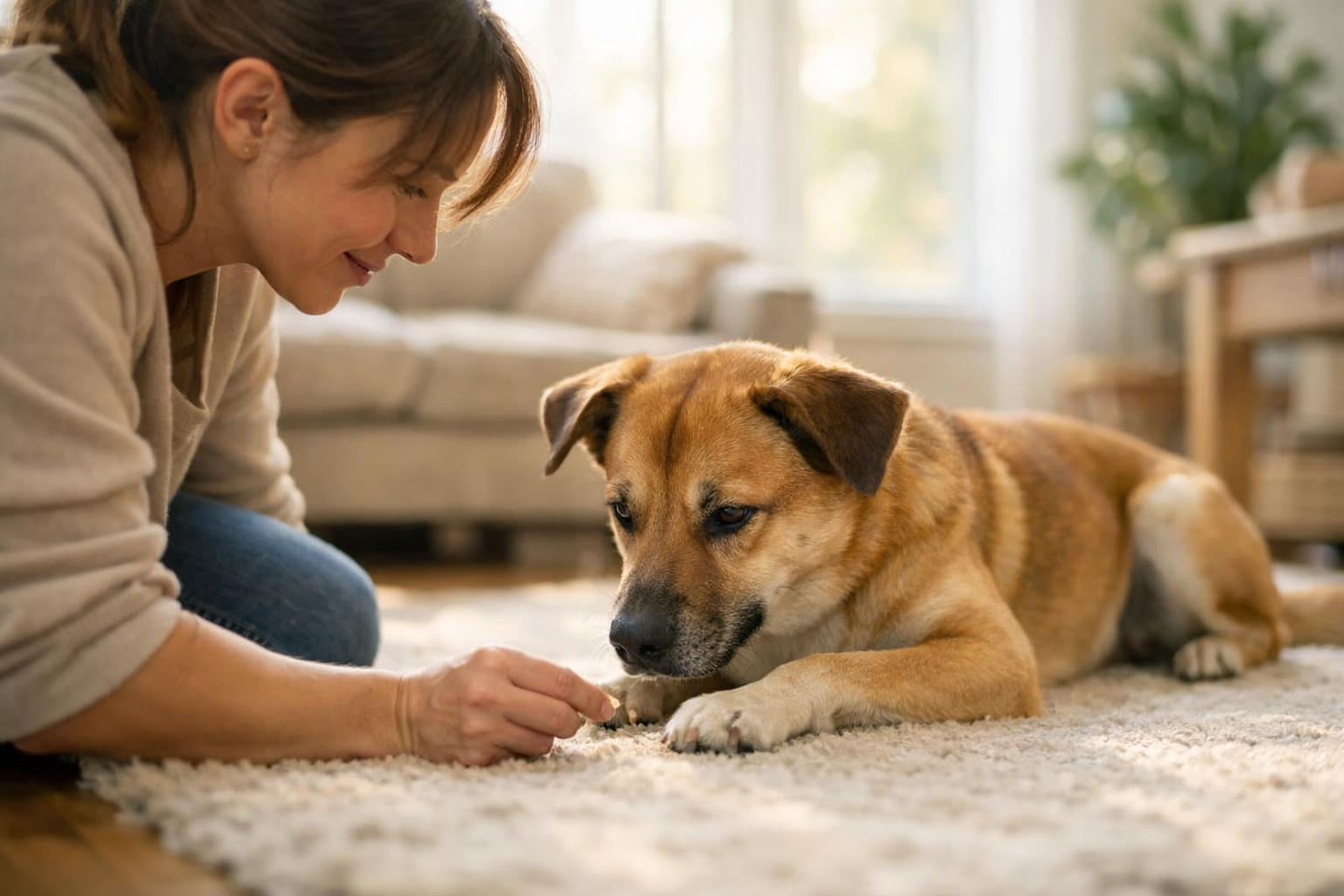
Teaching a dog to lie down is one of those basics that pays off fast. It helps with calm greetings, vet visits, settling in public, and everyday impulse control. It is also a cue that a lot of dogs find harder than sit, so if your dog looks confused at first, that is normal.
The big thing to know is this. “Down” should be comfortable, clear, and worth your dog’s effort. You are not pushing your dog into position. You are showing them that putting elbows and chest on the floor makes good stuff happen.
Some dogs learn this in five minutes. Others act like you have asked them to do taxes. Both are common.
Before you start
Pick a quiet spot with decent footing. A rug, yoga mat, or carpet usually works better than slick tile, especially for puppies, senior dogs, and dogs with long legs.
Have 10 to 15 tiny treats ready. Tiny matters. You want lots of repetitions without turning the session into a full meal.
If your dog is happy to work for kibble, use part of dinner. For some dogs, that is enough, especially if they are already eager about meals and doing well on something like this Diamond Naturals review. If your dog loses interest after two reps, bring out something better, like chicken or soft training treats.
Timing matters more than people think. Train when your dog is a little hungry, not stuffed after dinner and not wild with hunger either. If treats seem to trigger burping, loose stool, or lip licking, back off and figure out how to settle an upset stomach before you do another long session.
Make sure your dog is physically comfortable. A dog with sore hips, knee pain, a tender paw, or itchy skin may not want to lie down, and that is not stubbornness. If your dog suddenly refuses a cue they used to know, yelps, limps, or lowers themselves very carefully, that usually means a vet visit within a day or two.
Comfort includes the coat and skin too. If bath day left your dog irritated, skip training until they are settled. In a mixed-pet home, remember that dog shampoo on cats is not a safe shortcut when you are grooming everyone.
How to teach the down cue
Start with a lure
Most dogs learn down fastest from a sit, but not all. If your dog tends to pop up from sit or has a very tall, awkward build, you can start from a stand instead.
Hold a treat right at your dog’s nose. Slowly move it straight down toward the floor, then slightly out along the ground, like you are drawing a small letter L. A lot of dogs will follow the treat with their nose, fold their elbows, and slide into a down.
The second your dog’s elbows and chest hit the floor, mark it with “yes” or a click, then give the treat. Be quick. If you wait until they pop back up, you may reward the wrong part.
If your dog lies halfway down, reward that for now. I would rather reward honest effort than keep repeating a lure that makes the dog frustrated.
Reward the pieces if needed
Some dogs do not flow smoothly into a full down right away. They may bow, crouch, back up, paw at your hand, or stare at you like you have lost your mind.
That is fine. Reward small steps. Nose follows treat down, reward. Elbows bend, reward. One elbow touches the floor, reward. You are building the behavior instead of waiting for perfection.
This matters a lot for thoughtful or cautious dogs. If you keep withholding payment until the final position, some dogs quit trying.
Keep sessions short
Do five to eight reps, then stop. That is enough for one session.
A bored dog does not learn well. A fried dog learns even worse. If your dog still has energy, give them a short sniff break or swap in enrichment toys that work between sessions so training does not turn into repetitive nagging.
Add the word after the movement is easy
Do not say “down” over and over before your dog understands it. That just teaches them that the word is background noise.
Once your dog is following the lure smoothly, say “down” once, pause half a second, then make the same hand motion. Mark and reward when they lie down.
After several successful reps, your dog will start connecting the word to the action. This is the point where people get excited and rush. Try not to. A clean cue now saves a lot of sloppiness later.
Fade the lure
A lure is useful, but you do not want to live there forever. Otherwise your dog learns, “I lie down only when I see food glued to your fingers.”
Use the same hand motion without a treat in that hand. When your dog lies down, mark, then give the treat from your other hand or pocket.
If your dog stalls, go back one step for a rep or two, then try again. Fading the lure is usually a small zigzag, not a straight line.
Build duration slowly
Once your dog can lie down on cue, start rewarding them for staying there. Count one second, mark, reward. Then two seconds. Then three.
Do not jump from one second to thirty. That is where dogs start popping up and owners start repeating “down, down, down.” Build it like a staircase, not a cliff.
You can also add a release word, like “okay” or “free.” That tells your dog the exercise is over, which makes staying down much clearer.
If your dog will not lie down
This is where a lot of owners assume the dog is being difficult. Sometimes that is true in the sense that the dog has opinions. More often, the setup is the problem.
The floor may be the issue
Cold tile, slick wood, gravel, wet grass, and rough concrete put plenty of dogs off. Try a mat or towel and see if the behavior suddenly appears.
I have seen this go wrong with dogs who knew the cue perfectly indoors, then “forgot” it outside. They had not forgotten anything. They just did not want their elbows on damp grass.
Your lure may be too fast
If your dog keeps popping up, backing away, or pawing at your hand, slow down. Really slow down.
A lot of people move the treat to the floor, then immediately pull it away. For many dogs, that feels like a chase game, not a body-position cue. Pause near the floor long enough for your dog to think.
Try from a stand
Big dogs, long-backed dogs, and some puppies actually find down easier from standing than from sitting. From a stand, move the treat straight down between the front paws, then slightly forward.
If your dog tends to scoot forward instead of lowering, reward the tiniest bend of the elbows. You can shape the rest from there.
Some breeds need a different pace
Breed does not decide everything, but it can change how you train. Independent terriers may ask why this game is worth playing, while bouncy social dogs may throw every behavior they know in your face.
For example, dogs with terrier streaks like those in our Skye Terrier guide often do better with very short, high-payoff sessions. Northern breeds from our Samoyed feeding guide can be cheerful learners, but they are also world-class distractible when the environment gets interesting.
Sensitive working breeds in the Hovawart breed guide often respond best to calm timing and low-pressure repetition. Strong, enthusiastic dogs like the ones in our American Staffordshire guide usually benefit from clear criteria and a handler who stays boring in the best possible way.
Outdoor distractions change the game
Once you move outside, your dog may suddenly care more about smells than snacks. That does not mean training is ruined. It means you are competing with the whole world now.
If yard practice turns into nonstop grazing, read about why dogs eat grass. Sometimes it is just a distraction, and sometimes your dog is telling you their stomach feels off.
Taking the cue into real life
A dog who lies down in your kitchen does not automatically know how to do it on a sidewalk, at the park, or in your friend’s house. Dogs are bad at generalizing. That is normal and very fixable.
Practice in one new place at a time. Living room. Hallway. Backyard. Front porch. Then a quiet patch of park.
When you start practicing outdoors, put a harness on if your dog might get excited or wander. It keeps things safer and gives you more control without grabbing at the collar.
Lower your expectations in new places. Ask for one quick down, reward heavily, then move on. New environments are hard, and treating them like easy mode slows progress.
Use down for real-life moments your dog can actually understand. Before opening the door. While you clip the leash. Under the café table for ten seconds. On a mat while you answer the door.
This is also where release words matter. If your dog hears “down,” lies down, then gets up because nothing else was explained, that is not disobedience. That is a communication gap.
What not to do
Do not push your dog’s shoulders down. Many dogs hate that, and some will start avoiding your hands altogether.
Do not yank the leash downward. That adds pressure without teaching the body movement you want.
Do not repeat the cue five times. Say it once, help if needed, then reward the correct response.
And do not assume slow progress means your dog is dominant, spiteful, or trying to win. Most training problems are just messy timing, weak rewards, confusing steps, or a dog that is uncomfortable.
When to get help
If your dog has had a week or two of short, fair sessions and still seems lost, a good trainer can clean things up fast. This is especially true if your dog gets frantic around food, shuts down when corrected, or has a history of handling sensitivity.
Get your vet involved sooner if your dog resists all lowering movements, sits crooked, bunny-hops, licks one joint a lot, or used to do down easily and now will not. A training issue should not come with pain signals.
For most dogs, though, this cue is very teachable. Good footing, clear timing, tiny rewards, and low pressure will get you there. Keep it simple, pay well, and quit while your dog still wants one more round.