Can a Dog Eat Watermelon? Safe Serving Guide
Can a dog eat watermelon? Yes, if it's seedless and rind-free. Learn safe portions, benefits, risks, and when watermelon means a vet call.
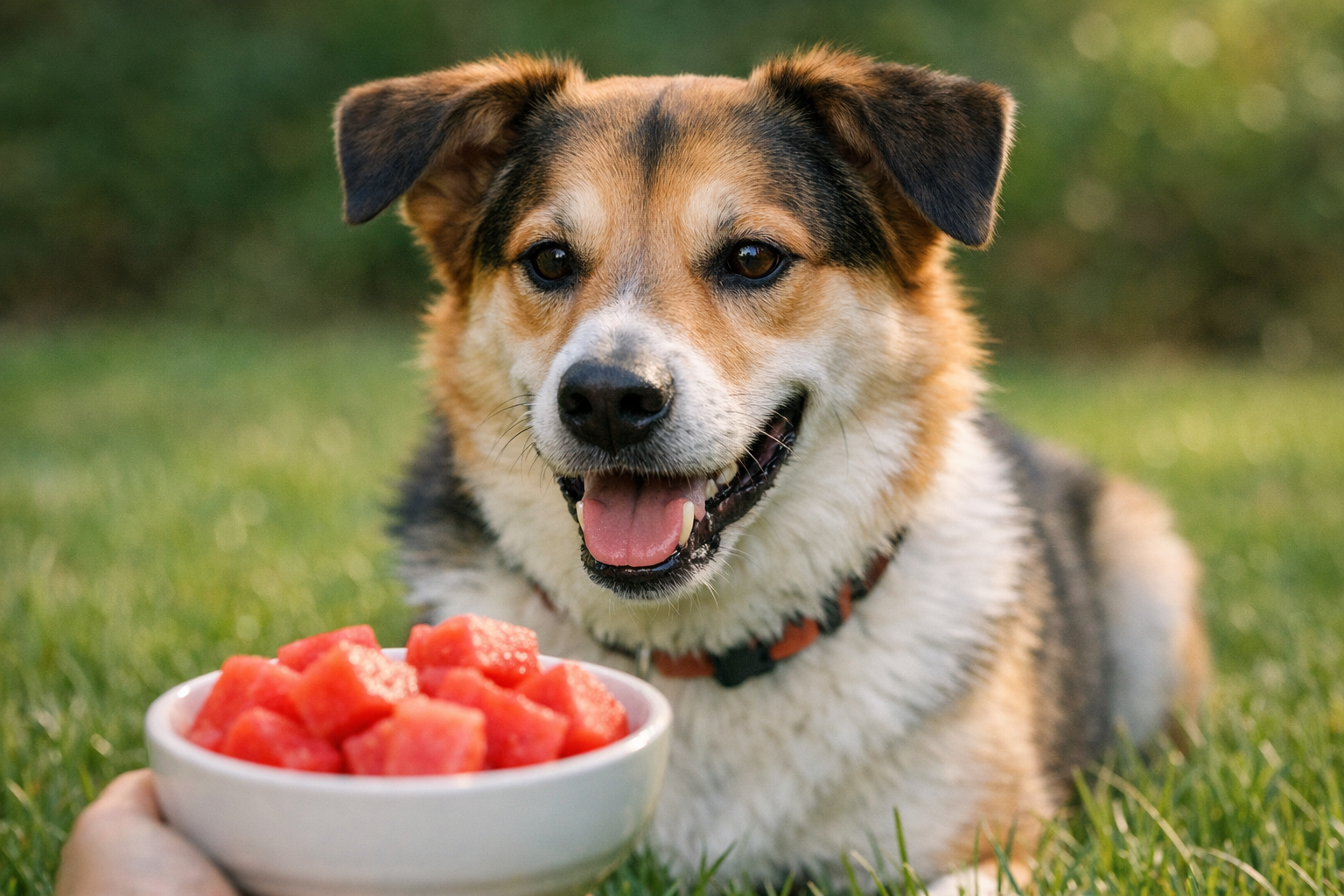
Yes, a dog can eat watermelon, but only the safe parts and only in sensible amounts. The short version is simple: seedless flesh, no rind, small portions.
Watermelon is one of those treats that sounds healthier than it really is. It is fine for most dogs, and it can be a nice hot-weather snack, but it is still a treat. If your dog steals half a melon, that is not a cute summer story. That is a stomach upset waiting to happen.
Is watermelon safe for dogs?
For most healthy dogs, yes. Plain watermelon flesh is non-toxic and usually easy to digest when you serve a little at a time.
What gets dogs into trouble is not the fruit itself. It is the size of the portion, the rind, the seeds, or the extras people add. Watermelon with lime, salt, syrup, or in a fruit salad is not the same thing as a few plain cubes from a cutting board.
If you are careful, watermelon can be a low-calorie treat compared with many store-bought snacks. It is mostly water, which is part of why dogs often enjoy it in hot weather.
Still, "safe" does not mean "unlimited." Some dogs have iron stomachs. Others get loose stool from a few bites of anything new. I have seen both.
Why some dogs do well with it
Watermelon has a few practical upsides.
It is very high in water, so it can feel refreshing on warm days. It also contains small amounts of vitamins A and C, plus potassium. That sounds nice, and it is, but I would not oversell it. Your dog's regular balanced food should be doing the heavy lifting nutritionally.
The real benefit is that watermelon is usually lighter than richer treats. If your dog begs when you are cutting fruit, a few tiny cubes are often a better choice than scraps from your plate.
That said, it does not replace fresh drinking water. If your dog has been outside, exercising, panting hard, or acting off, watermelon is not a hydration plan. It is just a snack.
How to serve watermelon safely
The safest way is boring. That is usually the best way to feed dogs.
Start with plain, ripe watermelon flesh. Remove the rind. Remove the seeds. Then cut it into small pieces your dog can chew easily instead of gulping.
A good prep routine looks like this:
- use plain watermelon only
- remove all black seeds you can find
- skip the rind completely
- cut into bite-sized cubes
- offer a small test amount first
If your dog has never had it before, give one or two small pieces and wait. No need to make a full fruit plate on day one.
Portion guide by dog size
These are reasonable treat amounts for a healthy dog, not daily requirements.
- Extra-small dogs: 1 to 2 small cubes
- Small dogs: 2 to 4 small cubes
- Medium dogs: 4 to 6 cubes
- Large dogs: a small handful
Treats, including fruit, should stay under about 10 percent of your dog's daily calories. For a tiny dog, that limit comes up fast.
If you also share other people foods, keep the total picture in mind. A dog that gets cheese at lunch, a biscuit in the afternoon, and fruit at night is not really having "just a little" of anything.
If you are comparing snack choices, our piece on dogs and popcorn is worth a read too. People foods vary a lot, and some that seem harmless come with more salt, fat, or choking risk than you might expect.
What parts of watermelon should dogs avoid?
Two parts matter here: seeds and rind.
A few small white soft seeds are unlikely to cause a crisis in a big dog, but black mature seeds are best avoided. In large amounts, they can irritate the gut. In smaller dogs, they can be more of a concern simply because everything going through the intestines is happening on a smaller scale.
The rind is the bigger problem. It is tough, fibrous, and hard to digest. Dogs do not chew it the way you would hope. Many gulp chunks, then end up vomiting, straining, or feeling miserable.
Do not feed these either:
- watermelon rind
- canned watermelon in syrup
- watermelon candy
- watermelon sorbet with xylitol or other sweeteners
- fruit salad with grapes or raisins mixed in
- watermelon with salt, chili, or seasoning
The xylitol point matters. Some sugar-free products are dangerous for dogs even in small amounts. If a "watermelon treat" came from a package, read the label before your dog gets anywhere near it.
What if your dog ate watermelon seeds or rind?
Context matters.
If your large dog swallowed a couple of seeds and is acting normal, you can usually watch closely at home. Offer water, keep meals plain, and monitor for vomiting, diarrhea, belly pain, or trouble passing stool over the next day.
If your dog ate a chunk of rind, especially a big chunk, I would take that more seriously. The risk is blockage, and blockages can turn into an emergency.
Call your vet the same day if your dog has any of these signs after eating rind:
- repeated vomiting
- pacing or obvious stomach pain
- a hard or bloated belly
- straining to poop
- lethargy
- refusing food
- repeated swallowing or lip licking
If your dog is heavily salivating, trembling, or looks distressed, do not wait it out. Those can be pain or nausea signs, and our guide to drooling and shaking signs can help you judge how urgent it looks.
What too much watermelon usually looks like
The most common problem is simple stomach upset.
A dog that ate far too much watermelon may get loose stool, gas, mild vomiting, or need to go outside several times. That is annoying, but it often settles with rest and a return to normal feeding.
A vet visit within 24 hours is the safer call if your dog is very young, very old, has a history of gut problems, or cannot keep water down.
Which dogs should have less, or skip it entirely?
Watermelon is fine for most dogs, but not all.
Be more cautious if your dog has diabetes, is on a strict weight-loss plan, or has a sensitive stomach. Watermelon is not wildly sugary compared with many desserts, but it still contains sugar. For some dogs, even healthy sugar is still sugar.
If your dog has chronic digestive trouble, pancreatitis history, or a prescription diet, ask your vet before making fruit a regular thing. One tiny cube as a test is different from making watermelon a daily summer habit.
Dogs with dental pain or who gulp food fast may also need more supervision. Cold chunks can disappear quickly.
And if your dog suddenly seems unwell after eating watermelon, do not blame the fruit automatically. Coincidence happens. If there is nasal discharge, sneezing, or breathing changes, check our runny nose guide because you may be dealing with a separate issue.
Does breed change the answer?
The basic rules do not change by breed. Seedless, rind-free, small amounts still applies across the board.
What does change is size, eating style, and energy level. A toy breed needs much less. A fast, athletic dog may burn more calories, but that still does not mean fruit should pour in by the bowlful.
If you live with a tiny Havanese, think very small pieces and very small portions. A few cubes goes a long way.
With a Portuguese Pointer or a Belgian Tervuren, you may be dealing with a dog that grabs food fast after activity. Slow the moment down. Hand-feed pieces one at a time if needed.
A lean, heat-sensitive dog like a Sloughi in summer may enjoy chilled fruit, but watch for gulping if the pieces are too big.
And if you have a Thai Bangkaew, which can be more wary or selective than some easygoing breeds, do not force a new food just because another dog loves it. Plenty of dogs hear "special fruit treat" and simply walk away.
Easy ways to offer watermelon without causing problems
Plain cubes are perfect. You do not need to turn this into a project.
A few good options:
- fresh seedless cubes after a walk
- mashed watermelon frozen in a lick mat
- a couple of chilled pieces tucked into a food puzzle
- tiny bits used as a high-value reward outside
Just do not freeze huge chunks rock-hard and hand them over unsupervised. For enthusiastic chewers, that can be more hassle than help.
In a multi-pet home, keep the fruit prep controlled. Dogs are opportunists, cats are curious, and a whole cut melon left on a low table can turn into chaos fast. If you are juggling species and setup, our kitten and dog intro guide covers the kind of management that keeps food, toys, and personal space from becoming a problem.
When watermelon is not the real issue
Sometimes owners ask about watermelon because their dog seems thirsty, hot, or off food, and they are hoping a favorite snack will help.
That is understandable, but it can distract from the real question. If your dog is weak, vomiting repeatedly, panting hard indoors, or not acting like themselves, skip the treat experiment and call your vet. A dog with heat stress, belly pain, or a blockage does not need fruit. They need an exam.
The bottom line
So, can a dog eat watermelon? Yes, most dogs can.
Keep it plain, seedless, rind-free, and modest. A few small pieces are a treat. A pile of fruit is a stomach ache.
If your dog eats rind, a lot of seeds, or starts vomiting, drooling, or acting painful afterward, treat that as a real problem, not a wait-and-see summer mishap. In dog feeding, the simple version usually wins.