How to Introduce a Kitten to a Dog Safely
Learn how to introduce a kitten to a dog with calm, safe steps, body language tips, and mistakes to avoid for a smoother first meeting.

Bringing home a kitten when you already have a dog can feel exciting and a little nerve-racking. The good news is that most dogs and kittens can learn to live together peacefully when the introduction is slow, safe, and carefully managed.
If you are wondering how to introduce a kitten to a dog, the biggest secret is simple, do less, not more. Rushing the first meeting is what causes most setbacks.
Set things up before they ever meet
A smooth introduction starts long before your dog and kitten see each other. A little prep helps both pets feel safer and gives you more control.
Make sure both pets are feeling well
Try not to schedule the first introductions if your dog seems unwell, overly tired, or unusually irritable. If your dog feels warm, sluggish, or off in any way, it is smart to pause and check how to tell if your dog has a fever at home before moving ahead.
Do the same for your kitten. Stress can cause odd little behaviors, but if your kitten keeps gulping, lip licking, or repeatedly swallowing, it helps to read about common reasons a cat keeps swallowing so you know when it may be more than nerves.
Give your kitten a safe room
Your kitten should start out in a quiet room with the door closed. Include food, water, a litter box, a bed, a hiding spot, and something tall to climb, like a cat tree or sturdy shelf.
This room is your kitten's safe base. It lets your kitten settle in first, without having to deal with a curious dog at the same time.
Help your dog arrive calm, not hyped up
A tired, mentally satisfied dog usually makes much better choices. Before any introduction session, take your dog for a walk, do a short training game, or offer one of these dog enrichment toys that actually keep dogs busy.
If your dog already struggles with boredom or frustration, you may notice other outlet behaviors too, like yard digging. In that case, these ways to stop a dog from digging can help you spot whether your dog needs more mental activity before meeting the kitten.
Fast, bright breeds often need a little extra support here. If you live with a Brazilian Terrier, Lancashire Heeler, or American Eskimo Dog, plan on shorter sessions and more calm outlets between them.
Trim nails and gather basic tools
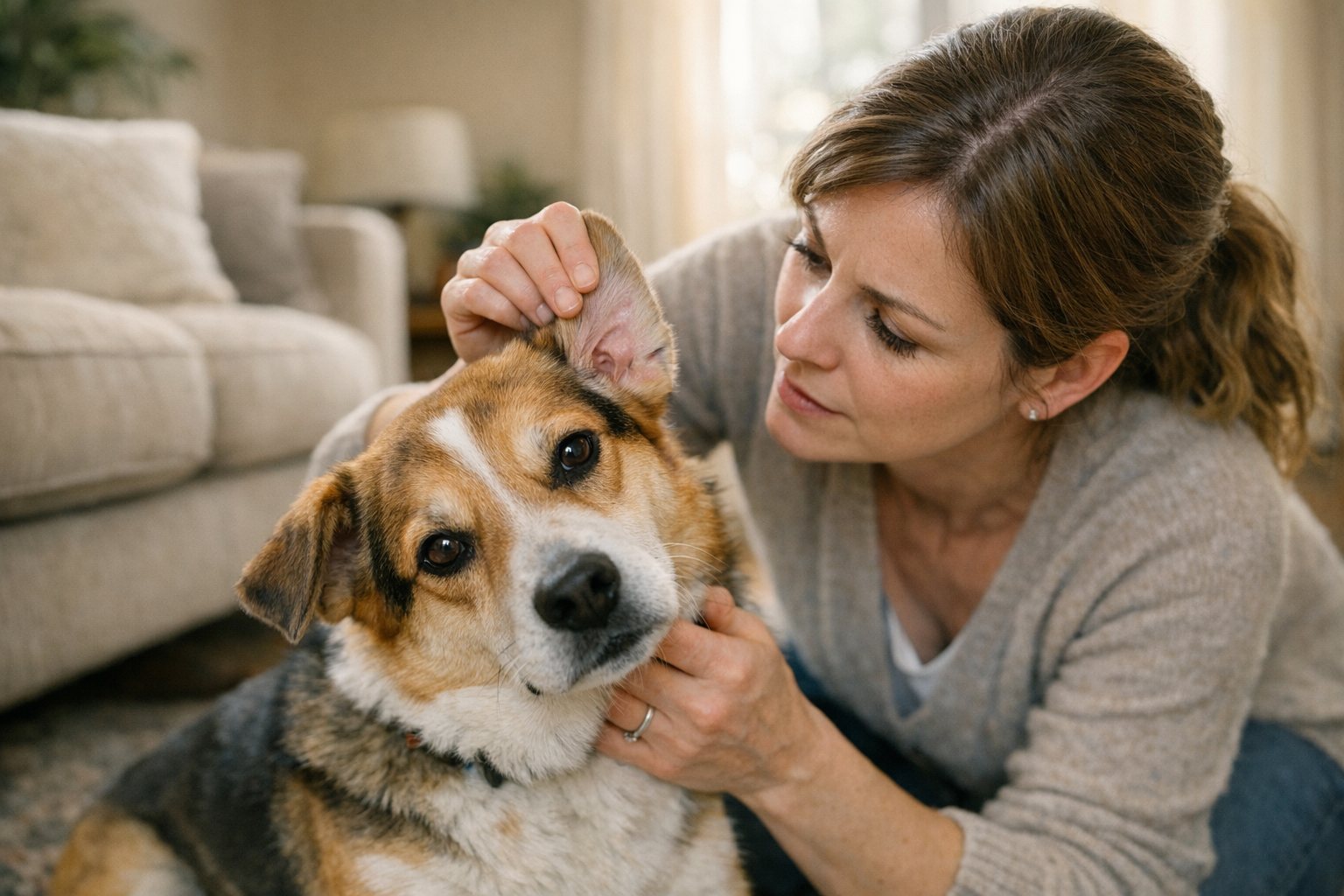
Even a friendly dog can accidentally scratch a tiny kitten in a wiggly moment. Before face-to-face meetings, it is worth brushing up on how often to trim dog nails so your dog's nails are neat and less likely to cause injuries.
While you are checking paws, take a quick look at nail color and texture too. If anything seems unusual, this guide on why a dog's nails might be turning white is useful to read.
You will also want a leash, treats, a baby gate or pen, and a calm attitude. Your job is not to force friendship, it is to create safe, boring, predictable experiences.
How to introduce a kitten to a dog, step by step
The best introductions happen in stages. Each stage should feel easy before you move on.
1. Start with scent only
For the first day or two, keep them fully separated. Let your dog sniff around the kitten's room door, and let your kitten smell blankets or toys that carry your dog's scent.
You can also swap bedding between them. Another easy trick is rubbing each pet gently with a soft cloth, then leaving that cloth near the other pet's resting area.
The goal is simple, each animal learns that the other's smell is now part of the home. No pressure, no staring, no chasing.
2. Feed them on opposite sides of a closed door
Once both pets seem settled, feed meals or offer treats on opposite sides of the closed door. This helps them build a positive link, the other pet appears, and nice things happen.
Keep enough distance at first if either pet seems tense. Over several sessions, you can gradually move bowls a little closer to the door.
If your dog whines, scratches, or fixates, move the bowl farther back. You want curiosity and calm, not frantic excitement.
3. Let them see each other through a barrier
After scent work and calm door sessions, let them see each other through a baby gate, screen, crate divider, or slightly opened door with a barrier in place. This first visual stage should be very short, often just a minute or two.
Keep your dog on leash if needed, and reward every calm glance away from the kitten. Looking at the kitten is fine, but staring hard, lunging, whining, or bouncing at the barrier means the session is too difficult.
For your kitten, give lots of escape options. A kitten should never feel trapped in the open with a dog staring at them.
4. Reward calm behavior, not excitement
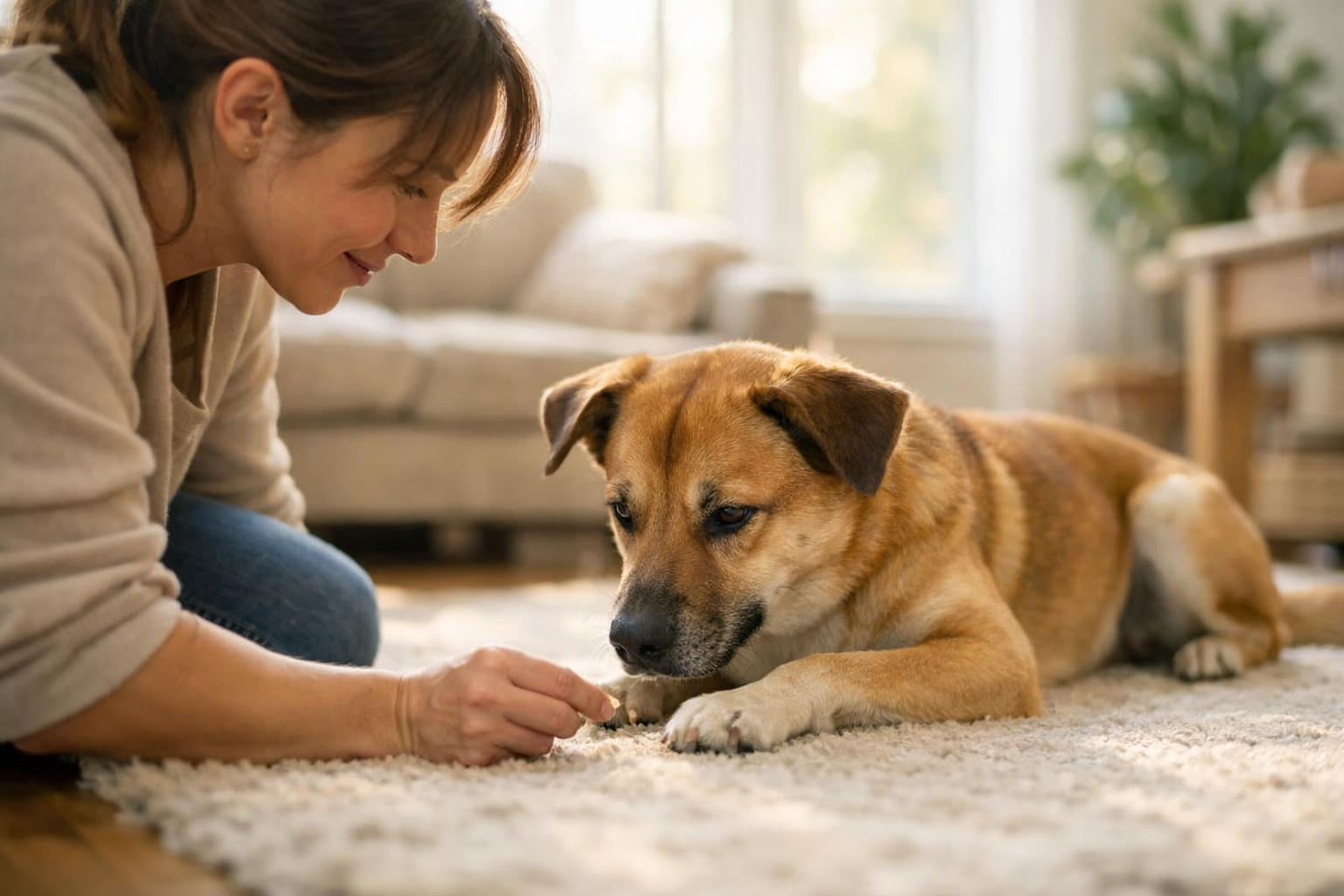
This part matters more than many people realize. When your dog sees the kitten and then looks back at you, softens their body, or sniffs the floor, calmly praise and give a treat.
You are teaching your dog that being relaxed around the kitten is what pays off. If your dog gets overly aroused, end the session before it escalates.
With the kitten, reward any relaxed curiosity. Sniffing the barrier, sitting at a distance, or playing normally in view of the dog are all great signs.
5. Try the first same-room meeting carefully
When both pets can stay calm through the barrier, you can try a short in-room introduction. Keep your dog on leash, and let the kitten move freely with access to high places and exits.
Do not carry the kitten up to the dog's face. Do not hold the kitten in place. Your kitten should always be able to choose distance.
Keep this meeting brief, often just a few minutes. End while everyone is still doing well.
6. Repeat short sessions, many times
One good first meeting does not mean they are ready to spend all day together. Short, easy sessions repeated often are much more effective than one long, stressful session.
A lot of dogs do best with several tiny meetings per day. Think in terms of building a history of calm moments, not one big milestone.
7. Increase freedom slowly
Once your dog can stay loose, responsive, and calm around the kitten on leash, you can start adding a little more freedom. Some families move to a lightweight house line for extra control, while others keep the leash on for longer.
Let the kitten continue to set the pace. If the kitten still prefers distance, that is fine.
8. Do not leave them alone too soon
Even if they seem to get along, unsupervised time should wait. A playful swat, a sudden chase, or a startled reaction can change the whole relationship.
Many dogs and kittens need weeks before they are truly trustworthy together. Some homes need longer, and that is completely normal.
What calm body language looks like
Body language tells you far more than barking or hissing alone. Try to watch the whole pet, not just one signal.
Signs your dog is coping well
A dog who is handling the introduction well usually has a loose body, soft eyes, and a relaxed mouth. They may sniff, glance at the kitten, then easily look away or respond to you.
Other good signs include taking treats gently, lying down, turning away on their own, or showing casual interest without trying to rush over.
Signs your dog is too aroused
Watch closely for stiff posture, closed mouth, intense staring, whining, trembling, stalking, lunging, or repeated attempts to chase. Even if the dog is silent, hard focus can be a big warning sign.
Some dogs look playful when they are actually too intense for a kitten. A bouncy dog who keeps rushing into the kitten's space still needs more distance and structure.
Signs your kitten is coping well
A comfortable kitten may explore, groom, play, eat, or approach and retreat calmly. A neutral tail, upright ears, and normal curiosity are all encouraging signs.
Many kittens will be cautious at first, and that is okay. Confidence often grows once they learn they can safely leave whenever they want.
Signs your kitten is stressed
Flattened ears, puffed fur, hissing, growling, crouching, hiding for long periods, or refusing food all suggest the process is moving too fast. A frightened kitten should never be pushed into another meeting right away.
Go back to an easier stage and rebuild confidence. Slowing down now is much better than trying to fix a bad scare later.
How long does it take for a kitten and dog to get used to each other?
Some dogs and kittens relax around each other in a few days. Others need several weeks, and a few need months of careful management.
Age, personality, past experience, prey drive, and energy level all matter. A calm older dog and confident kitten may progress quickly, while a young, excitable dog may need a much slower plan.
Try not to compare your pets to someone else's story. The right pace is the one that keeps both animals feeling safe.
Common mistakes to avoid
A lot of introduction problems come from a few very common errors. The good news is that they are easy to avoid once you know what to watch for.
Moving too fast
If your dog and kitten are doing okay, it is tempting to jump ahead. But skipping steps often leads to chasing, swatting, or fear that sets you back.
Forcing contact
Please do not hold your kitten still so the dog can sniff. It may look harmless, but it takes away the kitten's ability to choose space, and that can create panic very quickly.
Letting the dog chase "just a little"
Chasing is not something to allow while they figure things out. Even one exciting chase can teach your dog that the kitten is something to pursue, and teach your kitten that the dog is unsafe.
Punishing warning signals
If your kitten hisses or your dog growls, do not punish those signals. Warnings are useful communication.
Instead, calmly separate them and make the next session easier. Punishing the warning does not remove the discomfort, it just removes the warning.
Forgetting about the dog's needs
Your resident dog still needs one-on-one time, exercise, training, and rest. A dog who suddenly feels ignored can become more frustrated around the new kitten.
What to do if things are not going smoothly
If your dog chased the kitten, separate them calmly and go back at least two steps. That usually means more scent work, more barrier sessions, and shorter exposures.
If your kitten hides all day, scale back and focus on confidence in the safe room. Play sessions, treats, and quiet time often help far more than repeated face-to-face attempts.
If your dog fixates on the kitten and cannot disengage even with treats or distance, do not push through it. That kind of intense focus deserves a more careful plan.
When to get professional help
Reach out to your vet or a qualified trainer or behavior professional if your dog lunges, snaps, pins, or shows strong prey-drive behavior toward the kitten. Get help too if your kitten stops eating, stops using the litter box, or remains extremely fearful.
Early support can make a huge difference. It is much easier to guide a careful introduction now than to repair a relationship after a frightening incident.
A calm, slow start gives them the best chance
Learning how to introduce a kitten to a dog is really about patience, safety, and tiny wins. Let them build trust in layers, protect the kitten's space, and reward your dog for staying calm.
Some pairs become close friends. Others simply learn to share the home politely. Both outcomes are perfectly good, and both start with the same gentle approach.