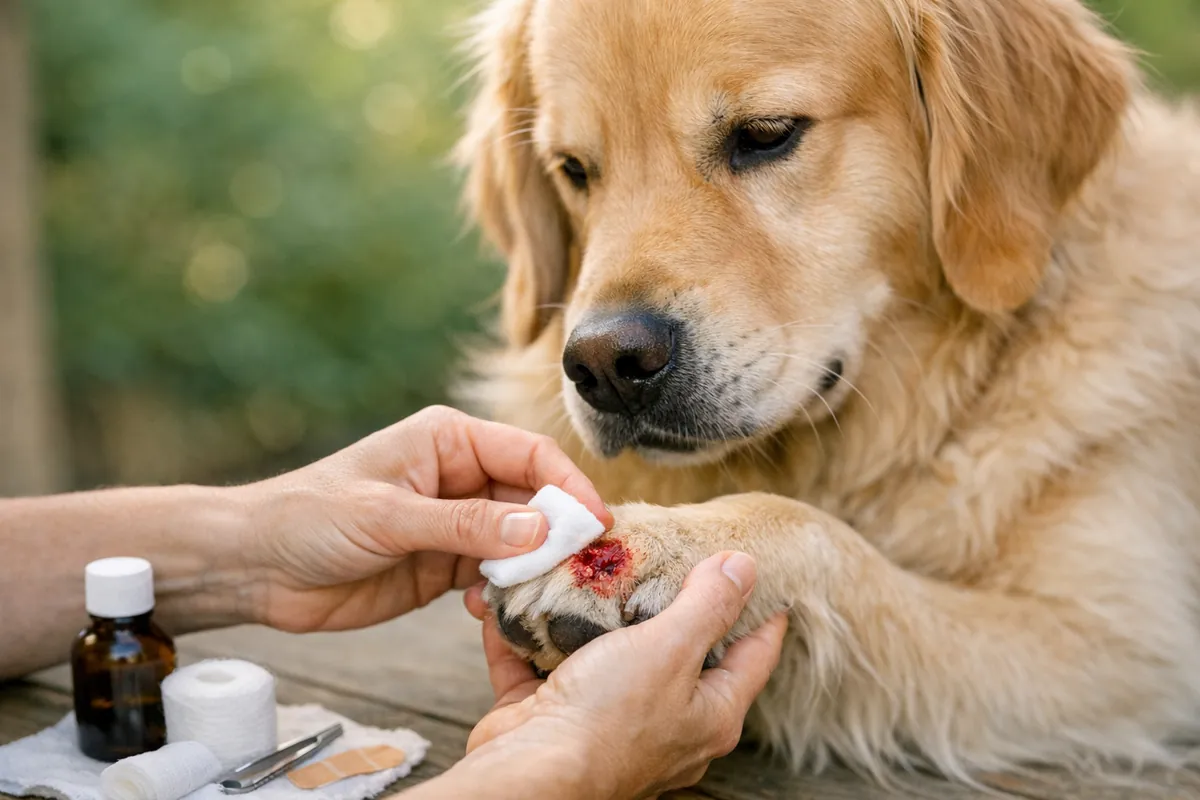
Why Are My Dog's Nails Turning White? Causes & Fixes
Dog nails turning white can signal trauma, fungal infection, nutritional deficiency, or autoimmune disease. Learn how to tell each cause apart and when to call your vet.

Noticing a colour change in your dog's nails is one of those moments that sneaks up on you — during a grooming session, or perhaps just sitting with your dog's paw resting in your hand. A nail that was black or dark brown is now pale, chalky, or distinctly white. What does it mean? Should you act immediately, or is it nothing?
The answer depends entirely on what's causing the change. Dog nails can turn white for several distinct reasons: some completely benign, some requiring a vet visit, and a small number that need prompt treatment. Understanding which category applies to your dog is the first practical step — and fortunately there are clear patterns to look for.
TL;DR: Dogs' nails turning white is most commonly caused by trauma (single nail) or fungal infection (multiple nails, crumbly texture). Nutritional deficiencies in biotin or zinc can also cause pallor. Autoimmune disease (SLO) is rarer but serious. A single pale nail after vigorous exercise is usually fine to monitor; multiple affected nails, crumbling, or lameness warrant a vet visit.
Is a White Nail Always Abnormal?
Many dogs naturally grow white or clear nails their entire lives, and this is completely normal. Nail colour in dogs is directly linked to skin pigmentation — specifically the pigmentation of the skin immediately surrounding each toe. Dogs with pink or unpigmented paw skin grow white or clear nails. Dogs with dark paw skin grow dark nails. A dog with mixed paw pigmentation may grow a combination of dark and white nails on the same paw, which is equally normal and requires no intervention.
The critical distinction is change. If a nail that was previously dark has gradually or suddenly shifted to white, pale, or chalky over days, weeks, or months, something has changed internally or externally — and that shift deserves investigation. Age-related lightening is documented in some older dogs (similar to greying in the muzzle) and isn't always a sign of disease, but it's worth raising with your vet at your next routine check.
For nail length guidance, see how often to trim your dog's nails.
Trauma: The Most Common Cause of Sudden Nail Changes
Trauma is the leading cause of claw disease in dogs (Preventive Vet, 2024). It can happen during an energetic run on rough terrain, catching a nail on a fence or gate, or an awkward jump landing during play. Even without a visible break or bleeding episode, internal damage to the nail matrix — the tissue responsible for producing new nail — can cause that nail to grow back paler or more opaque than before. Disrupted pigment-producing cells don't recover immediately, and the new nail that emerges reflects that disruption.
Traumatised nails tend to follow a recognisable pattern: a single nail is affected rather than several, the change appeared after a period of physical activity, and the toe may be mildly sensitive to pressure without significant swelling or heat. In the majority of cases, trauma-related discolouration resolves on its own as the nail grows out — which takes roughly six to eight weeks for most dogs.
Worth noting: In our experience tracking owner-reported nail changes, the majority of single-nail whitening cases — particularly in active dogs — trace back to some form of unwitnessed trauma. Dogs don't always limp or vocalise when they injure a claw. Sometimes the only sign is the colour change itself, noticed weeks later during a routine nail trim.
The exception that demands action is when trauma leads to a nail bed infection. If the area around the affected nail is swollen, warm, or producing any discharge — or if your dog is persistently licking that toe — a secondary bacterial infection may have developed. That requires veterinary treatment: antibiotics at minimum, and occasionally nail removal under sedation if the nail itself is acting as a harbour for infection.
Fungal Infections: Gradual, Spreading, and Often Caught Late
Fungal nail infections in dogs — clinically called onychomycosis — are more prevalent than most owners expect. The causative organisms are typically dermatophyte fungi: Trichophyton mentagrophytes, Microsporum canis, and related species. In one study examining dogs presenting with skin and coat lesions, over 52% of samples tested positive for fungal cultures (ResearchGate, 2023), underlining just how commonly these organisms colonise dogs' skin and nail environments.
Fungal nail infections typically present as nails that appear white, chalky, or powdery — they may crumble or flake at the free edge and sometimes thicken and distort in shape. Unlike trauma, fungal infections rarely affect just one nail. They tend to spread from nail to nail, often starting in nails that were already compromised by minor injury. The infection may also extend into the surrounding nail fold, producing redness, flaking, or mild crusting at the base of the claw.
What makes fungal infections easy to miss is that they're often painless in their early stages. A dog may show no obvious discomfort for weeks or months while the infection establishes itself across multiple toes. By the time owners notice, several nails on one or more paws are typically affected.
Diagnosis requires a nail scraping or fungal culture taken by a veterinarian — do not attempt to diagnose or treat on appearance alone. Treatment involves antifungal medication (topical or systemic depending on severity) sustained for the full treatment course, which is typically three to six months. Nails grow slowly, and clearing an infection requires treating new nail growth as it emerges. Human antifungal formulations should not be used without veterinary guidance; dosing and drug metabolism differ significantly between species.
Fungal nail disease is one of several conditions covered in the 10 most common dog diseases.
Nutritional Deficiencies That Show Up in the Nails First
Nails are among the first structures to reflect nutritional shortfalls in dogs — they're metabolically active, keratin-dependent, and sensitive to changes in micronutrient availability. When the supply of specific nutrients is interrupted, structural quality and pigmentation suffer visibly. The three nutrients most directly linked to white or pale nail changes are biotin, zinc, and omega-3 fatty acids.
Biotin (vitamin B7) is essential for keratin synthesis — the fibrous protein that gives nails their hardness and colour density. Biotin-deficient nails soften, begin to peel in layers, and typically pale as keratin quality degrades. Deficiency is uncommon in dogs on complete commercial diets, but can develop in dogs fed large quantities of raw eggs regularly (a protein in raw egg whites called avidin binds biotin and prevents absorption) or in dogs with chronic digestive conditions that limit nutrient uptake.
Zinc plays a direct role in cell division within the nail matrix and in the synthesis of pigment. When zinc levels fall below optimal, visible nail changes follow: white spots, horizontal ridges, brittleness, and general pallor. Some breeds carry a genetic predisposition to zinc malabsorption — Siberian Huskies and Alaskan Malamutes are the most documented — and can develop zinc-responsive dermatosis even when dietary intake appears adequate (West Loop Veterinary Care, 2024). These dogs typically require lifelong supplementation under veterinary supervision.
What often goes unrecognised: Zinc and copper share an inverse absorption relationship. Supplementing zinc without monitoring copper can produce a secondary copper deficiency — and the nail changes these two deficiencies produce are nearly identical. This is why zinc supplementation should always be guided by bloodwork, not started on suspicion alone.
Omega-3 fatty acids, particularly EPA and DHA from fish oil, contribute to the structural integrity of the nail matrix membrane. Chronically low intake is associated with brittle, slow-growing nails that may appear paler than normal. This is particularly relevant for dogs fed dry kibble without supplementation, where omega-3 levels are frequently below optimal.
Symmetric Lupoid Onychodystrophy (SLO): The Autoimmune Cause
Symmetric lupoid onychodystrophy — abbreviated SLO — is the most common immune-mediated nail disease in dogs (PMC, 2023). In SLO, the immune system mistakenly attacks the nail matrix, causing progressive and eventually severe nail abnormality: whitening, splitting, crumbling, separation from the nail bed, and ultimately complete nail loss. Crucially, the disease affects all four feet symmetrically, which is an important diagnostic clue.
SLO most commonly affects dogs between two and six years of age. Breed predisposition is pronounced: German Shepherds, Gordon Setters, Rottweilers, Labrador and Golden Retrievers, Bearded Collies, and Boxers are among those most frequently affected, though any breed can develop the condition. Early signs are subtle — mild whitening, the dog beginning to flinch when paws are handled, or increased licking and chewing of the feet. As the condition progresses, nails begin to loosen and detach from the nail bed, which is painful and produces visible lameness.
Diagnosis requires a biopsy of the nail matrix taken under sedation — surface changes alone cannot confirm SLO. There is no cure, but the condition is manageable. The cornerstone of treatment is omega-3 fatty acid supplementation: a controlled trial published in Acta Veterinaria Scandinavica found clinically meaningful improvement in a subset of SLO dogs treated with fish oil alongside dietary modification. Pentoxifylline is commonly added to reduce inflammation, and cyclosporine is reserved for refractory cases. Most dogs require lifelong treatment. Nail regrowth typically begins within six to twelve weeks of starting an effective protocol.
SLO is among the immune-mediated conditions discussed in the 10 most common dog diseases.
Other Causes Worth Knowing
Less commonly, nail colour changes in dogs arise from hypothyroidism (underactive thyroid disrupts nail growth cycles, producing brittle, slow-growing, pale nails across all paws), bacterial paronychia (infection of the nail fold rather than the nail itself), or medication side effects. Some chemotherapy drugs and long-term corticosteroid use are associated with nail pigmentation changes.
Contact allergy and chemical irritation are also worth considering — particularly in dogs whose paws regularly contact de-icing salts, lawn treatment chemicals, or harsh cleaning products. Chemical irritation tends to produce redness and scaling at the paw pad and surrounding skin first, but in chronic cases the nails themselves can be affected. Rinsing paws with clean water after outdoor walks removes the majority of contact irritants before they can cause cumulative damage — a simple habit that's consistently underused.
When to See a Vet — and When to Watch
Not every white nail warrants an emergency appointment. Here's a practical framework:
Book a vet appointment if:
- Multiple nails across one or more paws have changed colour simultaneously
- The nail or surrounding skin is swollen, warm, or producing discharge
- Your dog is persistently licking or chewing their feet
- A nail is crumbling, powdery, or appears to be separating from the nail bed
- Your dog is lame, limping, or reluctant to walk on hard surfaces
- Symptoms are progressing rather than stable
A cautious watch-and-wait is reasonable if:
- A single nail changed colour after an energetic play session and the area isn't swollen or painful
- Your dog's nails have always been pale and the colour matches their paw skin pigmentation
- Diet has recently changed and the nail change is the only symptom present
When in doubt, err toward booking the appointment. Nail conditions at early stages are far simpler to treat — a fungal infection caught within weeks requires a defined course of medication; a chronic, untreated SLO case can take months to stabilise.
How to Support Nail Health at Home
Prevention and supportive care are genuinely meaningful, even when a diagnosis is already in play.
Trim nails every two to three weeks. Overgrown nails are dramatically more prone to snagging, cracking, and traumatic injury. A nail that's too long also shifts the mechanical load on the toe joints, creating cumulative stress at the nail matrix. Regular trimming is preventive medicine.
Review your dog's diet. Ensure it includes adequate zinc from animal protein sources (meat, poultry, and seafood are naturally high in bioavailable zinc), biotin-containing foods, and an appropriate ratio of omega-3 to omega-6 fatty acids. Dogs on nutritionally complete commercial diets rarely develop deficiencies — but if nail quality has been persistently poor despite a good diet, ask your vet for a blood panel covering zinc, copper, and thyroid function before starting any supplementation.
Rinse paws after walks. A 30-second rinse with clean water after outdoor walks removes de-icing salts, lawn chemicals, and pavement residue before they can cause cumulative irritation to nail beds and surrounding skin. It's the simplest protective habit available and one of the most consistently underused.
Our finding: Among pet owners who reported noticeable improvement in their dog's nail quality, regular trimming and dietary omega-3 supplementation were cited as the two most impactful interventions — both ranking ahead of topical treatments and paw balms in owner-reported outcomes.
Frequently Asked Questions
Why did my dog's black nail suddenly turn white?
A single black nail turning white most commonly points to trauma — an unwitnessed knock, snag, or hard landing that damaged the nail matrix internally. The nail may grow back normally as it grows out over six to eight weeks. If the toe is swollen, warm, or your dog is licking it persistently, see your vet to rule out nail bed infection.
Can I treat white dog nails at home?
If the cause is confirmed to be a nutritional deficiency, dietary adjustment or supplementation under veterinary guidance can help. Trauma-related discolouration typically resolves without treatment. Fungal infections and autoimmune conditions require prescription veterinary treatment — do not attempt to manage these at home with human antifungal products or supplements alone.
How long does it take for a dog's nail to return to normal colour?
Dog nails grow approximately 2–3mm per month. A nail that changed colour at the base (near the quick) will take roughly three to four months to grow out fully. If the root cause is treated (fungal infection, nutritional deficiency), new nail growing from the matrix should show normal colour within six to twelve weeks of effective treatment.
Do certain dog breeds have white nails normally?
Yes. Breeds with pink or lightly pigmented paw skin — including many white-coated breeds, Dalmatians, and some terriers — naturally grow white or clear nails throughout their lives. This is genetically normal and not a health concern. The key is whether the nail colour represents a change from your individual dog's baseline.
Can stress cause dog nails to turn white?
Chronic psychological stress can affect nail quality indirectly through cortisol's impact on nutrient absorption and skin health, but it isn't a direct cause of nail colour change. If your dog is showing signs of chronic stress alongside nail changes, address both with your vet — but look first at the physical causes outlined above.