Can Dog Eat Popcorn? Safe or Not?
Can dog eat popcorn safely? Plain, air-popped popcorn is usually fine in small amounts, but butter, salt, kernels, and toppings can cause real problems.
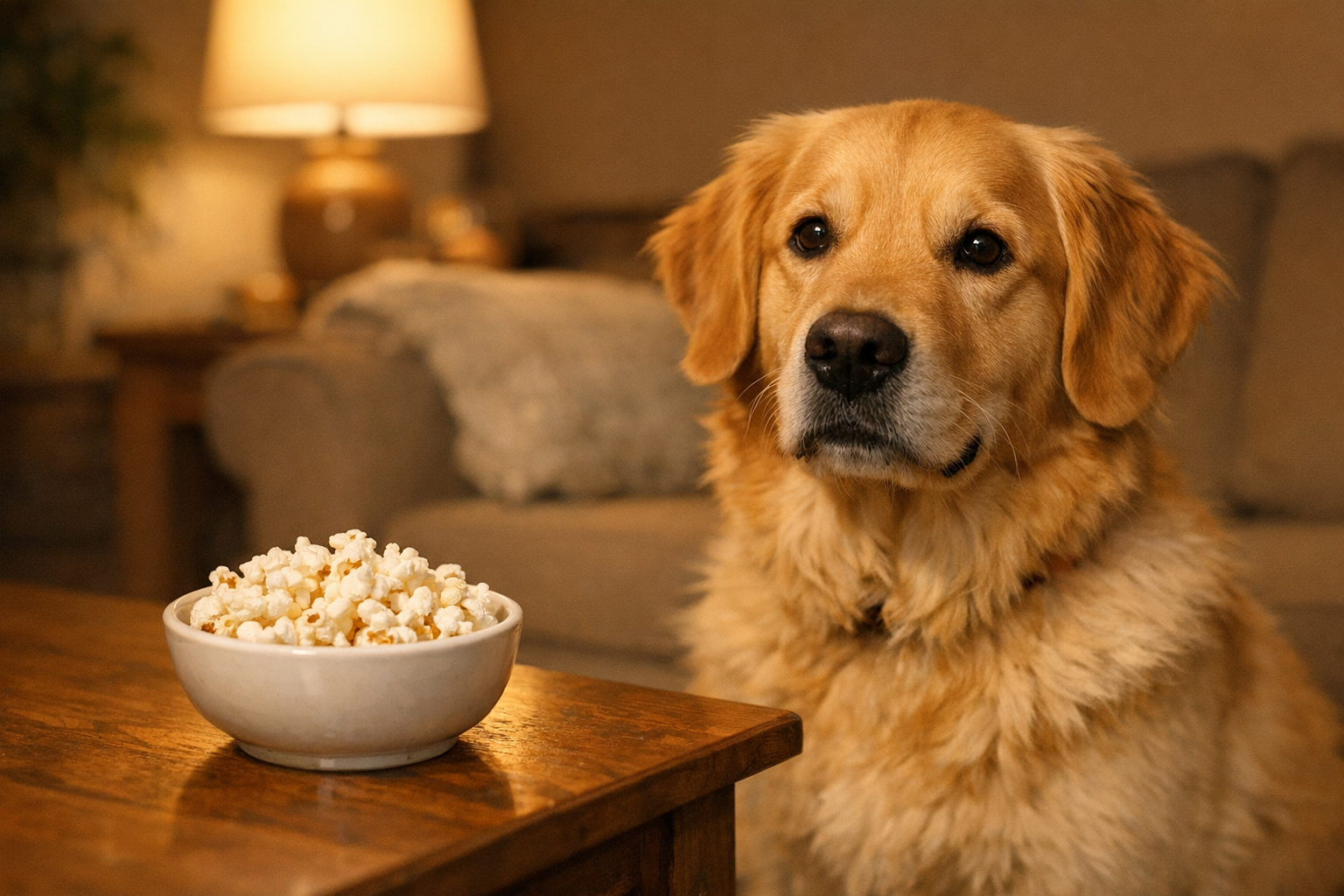
Yes, dogs can eat popcorn, but only the boring kind. Plain, air-popped popcorn in a small amount is usually safe for healthy dogs. The buttery movie version, cheese-coated popcorn, caramel corn, and half-popped kernels are where things go sideways.
If you want the short answer, here it is. A few pieces of plain popped popcorn once in a while is fine for most dogs. A bowl full, or popcorn loaded with salt, oil, or sweet toppings, is not a good idea.
What kind of popcorn is safe?
Safe popcorn for dogs has three rules. It should be plain, fully popped, and given in a small amount.
That means no butter, no salt, no caramel, no chocolate drizzle, no spicy seasoning, and no artificial sweeteners. If you would call it "movie snack" popcorn, your dog probably should not have it.
Air-popped popcorn is best because it keeps the fat and salt low. Even then, I would treat it like a novelty snack, not a regular treat. It has some fiber, sure, but it is not bringing much to the table nutritionally.
Fully popped matters more than people think. Those hard unpopped kernels and sharp hulls can crack teeth, get stuck between teeth, or irritate the throat. If you are handing your dog a piece, check it first.
Why popcorn gets risky fast
Kernels and hulls
The biggest problem is not plain popcorn itself. It is the hard bits that come with it.
Unpopped kernels are a choking risk, especially for small dogs and greedy gulpers. Hulls can wedge between teeth or stick near the gums, which leads to pawing at the mouth, drooling, and a dog who suddenly does not want to eat.
Big dogs are not immune. A giant dog can crunch through more, but that does not make sharp pieces harmless. If you live with a giant breed, our Irish Wolfhound feeding guide gives a good reminder that size changes portion needs, not basic food safety.
Butter, salt, and oil
This is where "just one handful" becomes a bad call. Butter and oil add a lot of fat very quickly, and some dogs handle fatty foods terribly.
A healthy dog might just get loose stool after rich popcorn. A dog with a sensitive stomach, a history of pancreatitis, or a tendency to scavenge greasy food can end up vomiting, acting painful, and needing a same-day vet visit.
Salt is another issue. A few lightly salted pieces are unlikely to poison a large dog, but salted popcorn still is not smart. It can increase thirst, upset the stomach, and add sodium your dog does not need.
Sweet and flavored popcorn
This is the part I do not mess around with. Sweet popcorn can hide ingredients that are genuinely dangerous.
Chocolate is toxic to dogs. Xylitol, sometimes found in sugar-free flavorings, is an emergency. Onion and garlic powder in savory mixes can also be a problem, and some cheese powders are just salt and fat bombs with a dog-friendly label slapped on by wishful thinking.
Microwave popcorn is not great either. The popcorn itself may be plain enough, but the coating in the bag often means extra fat, salt, and artificial flavoring. It is not worth trying to sort out which pieces are safe.
How much popcorn can a dog eat?
For most dogs, popcorn should stay in the "a few pieces" category. Treats should make up no more than about 10 percent of your dog's daily calories, and popcorn is not valuable enough to spend much of that budget.
A practical guide works better than perfect math here. A toy dog might have 1 to 2 fully popped pieces. A small dog can have 2 to 4 pieces. A medium dog can have a small pinch, maybe 4 to 8 pieces. A large dog can have a small handful, and even that should be occasional.
I would not offer it daily. Once in a while during movie night is reasonable. Every evening because your dog stares at you is how tiny extras turn into weight gain.
Food-driven dogs need extra caution because they inhale first and think later. If you have a fast, athletic scavenger, our Weimaraner feeding guide covers the kind of appetite and impulsive food stealing that makes snacks like popcorn harder to manage.
What to do if your dog stole popcorn
First, figure out what kind it was. Plain air-popped popcorn is very different from extra-butter microwave popcorn or caramel corn.
If your dog ate a small amount of plain popcorn and is acting normal, you can usually monitor at home. Offer water, skip more treats that day, and watch for vomiting, diarrhea, coughing, or mouth discomfort over the next 24 hours.
If your dog ate heavily buttered or salty popcorn, the most likely outcome is stomach upset and a lot of thirst. Keep an eye out for vomiting, diarrhea, restlessness, or signs of belly pain. Call your vet if your dog has a history of pancreatitis, kidney disease, heart disease, or sodium restrictions, because those dogs get less wiggle room.
If the popcorn had chocolate, xylitol, raisins, or a mystery flavoring, call your vet or a pet poison helpline right away. Do not wait for symptoms. Some toxins move fast.
If your dog is coughing, pawing at the mouth, gagging, or seems unable to swallow, that is more urgent. Check the mouth only if you can do it safely, do not push anything deeper, and head to an emergency vet if the problem is not instantly obvious and fixable. If your dog is already coughing or retching, make sure your dog collar fits and is not adding neck pressure.
Signs popcorn caused a problem
Some dogs show trouble right away. Others look fine for an hour, then start acting uncomfortable.
The big red flags are choking, repeated gagging, trouble breathing, collapse, or a swollen-looking belly with distress. Those are same-day, often immediate, vet issues.
Milder but still important signs include repeated swallowing, lip licking, drooling, pawing at the mouth, chewing on one side, vomiting, diarrhea, and refusing food. A hull stuck in the gums can make a dog act weirdly dramatic over something small, and honestly, I do not blame them.
Pain can look subtle. Your dog may get quiet, avoid you, hide, or give you that flat, uncomfortable expression people describe as sad. If you are not sure what that looks like, our piece on why a dog looks sad can help you spot the difference between mood and actual discomfort.
One note for mixed-pet homes. Cats sometimes sneak the same snacks, and the signs overlap. If your cat raids the bowl and then cat keeps swallowing, do not brush that off as a quirky habit.
Which dogs should skip popcorn entirely?
Some dogs are better off not having any. That is not me being strict, it is just easier than dealing with avoidable problems.
I would skip popcorn for dogs with a history of pancreatitis, chronic stomach issues, poor teeth, frequent choking on treats, and dogs who bolt food without chewing. Puppies also are not great candidates, because they tend to grab, gulp, and learn bad begging habits fast.
Brachycephalic dogs deserve caution too. If your dog already snores, snorts, or struggles a bit with airway noise, a crunchy, irregular snack is not the treat I would pick.
Overweight dogs should get something more useful for the calories. Popcorn feels light to us, but extras add up, especially when everyone on the couch starts tossing pieces.
Also, do not blame popcorn for health changes that have clearly been building over time. If your dog eats one piece and you are also noticing white dog nails, that is probably a separate issue, not a popcorn side effect.
Better movie-night options
If your dog wants to be part of the ritual, you have safer choices. Tiny bits of carrot, cucumber, green beans, or your dog's regular kibble are easier to control and usually less irritating than popcorn.
You can also make the whole thing less about handouts. A stuffed toy, lick mat, or snuffle setup keeps your dog busy without teaching them that every rustle of a snack bag earns a treat. If you need ideas, these dog enrichment toys work much better than random couch snacks.
If you really want to share popcorn, set aside a few plain, fully popped pieces before seasoning the rest. Then give them one at a time, not by the fistful. That simple habit prevents most of the trouble people run into.
The bottom line
So, can dog eat popcorn? Yes, if it is plain, air-popped, fully popped, and given in a small amount.
For most healthy dogs, a few pieces now and then is fine. The danger comes from kernels, hulls, butter, salt, and flavored toppings, not the plain popcorn itself. When in doubt, skip it and give a safer treat instead. Your dog will recover from that disappointment in about six seconds.