Why Does My Dog Have a Runny Nose? Causes
Wondering why does my dog have a runny nose? Learn common causes, when clear discharge is normal, and the red flags that mean call your vet.
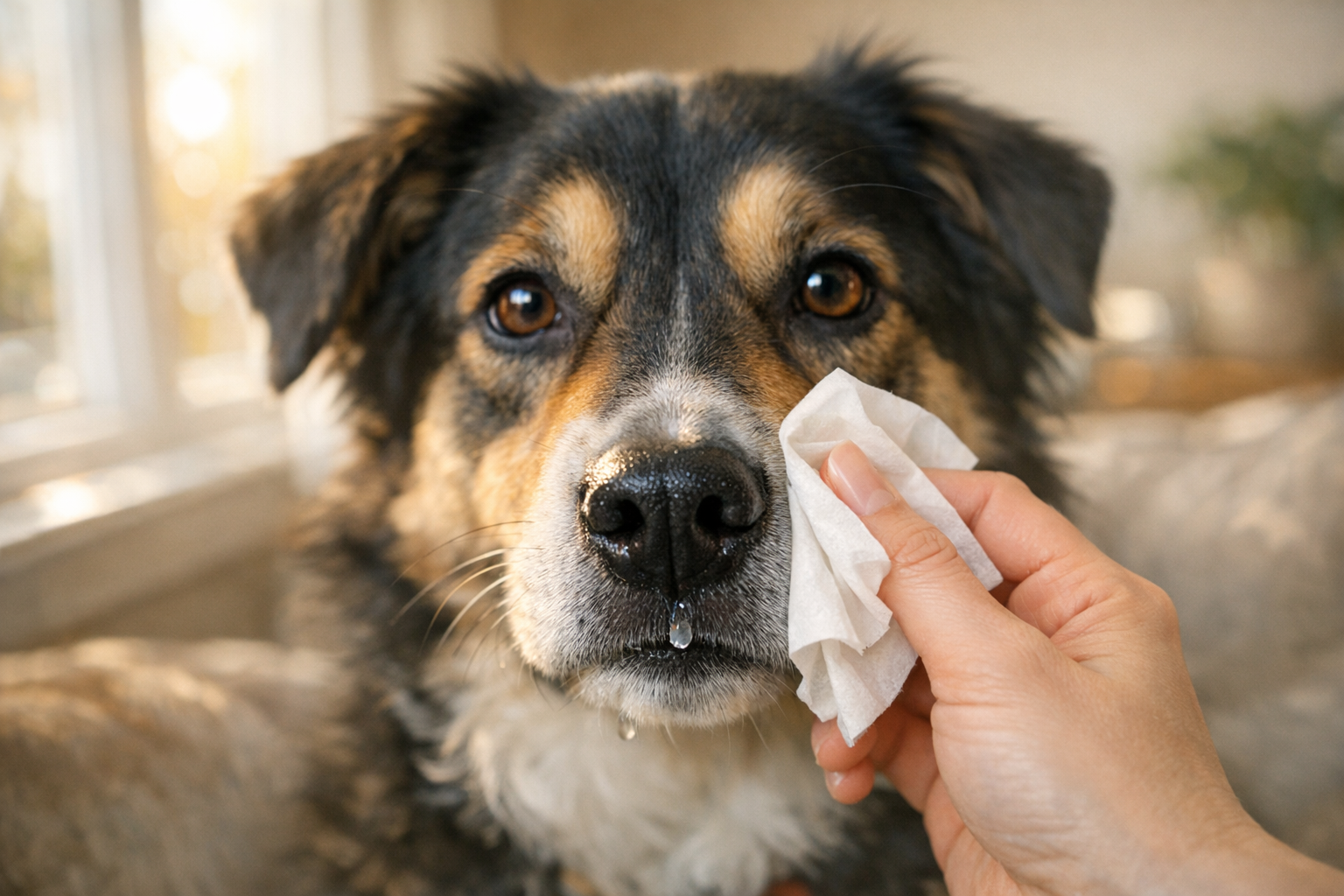
If you're asking why does my dog have a runny nose, start with this. A moist nose is normal. A nose that is actively dripping, crusting, or pushing out mucus is different.
Some runny noses are minor and pass on their own. Others mean you should call your vet the same day, especially if the discharge is thick, bloody, foul-smelling, or only coming from one nostril.
What a normal dog nose looks like
Most dogs have a cool or slightly damp nose part of the day. That comes from normal nasal secretions, licking, and the way dogs move air while sniffing.
A little clear moisture after exercise, heavy sniffing, or coming in from cold air can be normal. I usually worry more when the discharge keeps returning, leaves wet spots, or comes with sneezing, coughing, pawing at the face, or a drop in appetite.
On dogs with long facial hair, the problem can hide in the coat. If you live with a Standard Schnauzer, a Russian Bolonka, or a Löwchen dog, check the hair under the nostrils because dried discharge can sit there before you notice it.
Common reasons a dog gets a runny nose
Mild irritation and normal sniffing
Dogs put their noses in everything. Dust, garden mulch, perfume, cooking smoke, cleaning sprays, and even a windy day can irritate the lining of the nose and cause a clear drip.
This kind of discharge is usually light, clear, and short-lived. Your dog otherwise acts normal, breathes normally, and is still ready for dinner.
Cold weather can do it too. I've seen a little clear drip in active dogs after winter walks, including hardy breeds like a Yakutian Laika.
Allergies
Allergies often cause clear discharge from both nostrils, along with itchy skin, watery eyes, ear problems, or face rubbing. Any breed can deal with this, from an Australian Terrier to an Eurasier dog.
Seasonal pollen is one cause. Indoor triggers matter too, especially dust, scented laundry products, smoke, and aerosol cleaners.
If your dog also has itchy skin or patchy coat changes, that gives your vet more to work with. It can help to look at patterns like your dog losing hair, because skin and nose issues often travel together in allergic dogs.
And yes, home surfaces can matter. If your dog's symptoms flare after naps on a dusty or heavily sprayed sofa, keeping them off the couch for a few days can be a simple way to test whether upholstery, detergent, or fabric spray is part of the problem.
Upper respiratory infections
Dogs get colds in the broad sense, though not always the exact viruses people get. Kennel cough, canine influenza, and other respiratory infections can cause nasal discharge, sneezing, coughing, low energy, and fever.
The discharge may start clear and turn cloudy. If your dog has been boarded, groomed, at daycare, or around many dogs recently, infection moves higher on the list.
Some of these illnesses are among the common dog diseases owners should know. A playful dog with a little clear drip is one thing. A dog with a runny nose plus cough, fever, or labored breathing needs a vet sooner.
Something stuck in the nose
A sudden runny nose from one side after a walk makes me think foreign body right away. Grass seeds, foxtails, tiny bits of plant material, and dirt can lodge in the nasal passage and cause frantic sneezing.
This is especially worth thinking about in outdoorsy dogs that charge through tall grass, like a Small Munsterlander. Signs include repeated sneezing fits, pawing at the nose, bleeding from one nostril, and a discharge that keeps coming back on the same side.
Dental disease
This one surprises people. The roots of the upper teeth sit close to the nasal passages, so a tooth root infection can lead to nasal discharge, often from one nostril.
Look for bad breath, trouble chewing, face sensitivity, drooling, or a preference for softer food. In older dogs, dental disease is a very common reason for chronic nasal problems.
More serious causes
Fungal infections, nasal mites, polyps, and tumors are less common, but they matter. They are more likely when the discharge is one-sided, bloody, foul-smelling, or linked with facial swelling, noisy breathing, or a change in the shape of the nose.
These cases are not wait-and-see situations for long. A day or two of observation can be reasonable for mild clear discharge in an otherwise happy dog. Persistent or worsening symptoms need a workup.
What the color and pattern can tell you
Clear discharge
Clear discharge is often the least alarming. It fits mild irritation, cold air, excitement, early allergies, or the start of an infection.
Still, clear does not always mean harmless. If it lasts more than a couple of days, or your dog is sneezing hard, rubbing the face, or acting off, get it checked.
Yellow, green, or cloudy mucus
This usually means inflammation, and often infection. It can come from the nose itself, the sinuses, or sometimes from a dental problem that has broken into the nasal passage.
If the mucus is thick or sticky, I would not sit on it. Book a vet visit within 24 to 48 hours.
Bloody discharge
Blood can come from rough sneezing, dry irritated tissue, trauma, a foreign body, clotting problems, fungal disease, or a nasal growth. A streak once after a sneezing fit is different from repeated bleeding.
If your dog has frequent nosebleeds, one-sided blood, pale gums, weakness, or bruising elsewhere, call your vet the same day.
One nostril or both
Both nostrils points more toward allergies, irritation, or viral infection. One nostril points more toward a stuck object, tooth root problem, fungal infection, or mass.
That isn't a perfect rule, but it's a useful one. Owners who notice this detail make their vet's job much easier.
What you can do at home right now
First, watch your dog, not just the nose. Are they eating, sleeping, playing, and breathing normally, or do they seem tired, nauseated, or uncomfortable?
You can gently wipe discharge away with a soft damp cloth. Keep the skin under the nostrils clean and dry, especially in long-haired dogs, so the area does not get sore.
Use a humidifier if the air is dry. Skip scented candles, smoke, essential oil diffusers, and strong cleaning sprays around your dog for a few days.
Do not give human cold medicine. Many products are unsafe for dogs, and even the ones that are not outright toxic can muddy the picture before your vet sees them.
If the runny nose shows up with vomiting, lip licking, or stomach upset after meals, that may be a second issue rather than the cause of the nasal discharge. It helps to know how dogs digest food so you can tell your vet whether symptoms track closely with eating.
Also, look beyond the nose. If you notice crusting, changes in skin pigment, sore paw pads, or odd nail changes like white dog nails, mention it at the appointment. Small clues outside the nose can point to a bigger health problem.
When your dog needs a vet quickly
Call your vet promptly if you see any of these:
- discharge from only one nostril
- yellow, green, or foul-smelling mucus
- blood from the nose
- trouble breathing, noisy breathing, or open-mouth breathing at rest
- repeated sneezing fits or pawing at the nose
- facial swelling or visible pain
- fever, lethargy, or refusing food
- symptoms lasting more than two or three days
Puppies, senior dogs, and dogs with heart or lung disease get less room for wait-and-see. They can go downhill faster.
What your vet will usually check
Your vet will start with the pattern. How long has it been happening, one side or both, what color is it, and did it start after boarding, grooming, hiking, dental trouble, or a change at home?
Then comes the exam. Your vet will listen to the chest, look in the mouth, check the teeth, feel the face, inspect the eyes, and assess the airflow from each nostril.
From there, testing depends on what they suspect. Some dogs need a simple exam and medication. Others need skull or dental X-rays, nasal imaging, a sedated exam, cultures, or rhinoscopy to look for a foreign body or mass.
If the cause is a grass awn, tooth root infection, or tumor, home remedies will not fix it. That is why the pattern matters so much.
The bottom line on a runny nose in dogs
A little clear moisture can be normal. Persistent discharge, thick mucus, bad smell, blood, or one-sided dripping is not something to brush off.
If your dog seems bright and the discharge is mild and clear, you can watch closely for a day or two while reducing irritants. If anything worsens, or if the discharge is anything but mild and clear, book the vet visit.
Most runny noses end up being irritation, allergies, or infection. Some are dental disease or a foreign body. A few are more serious. The trick is catching the red flags early, before your dog turns a sniffly nose into a much bigger problem.