What Can You Give a Dog for Upset Stomach?
What can you give a dog for upset stomach? Learn safe home remedies, what to avoid, and the red flags that mean your dog needs a vet fast.
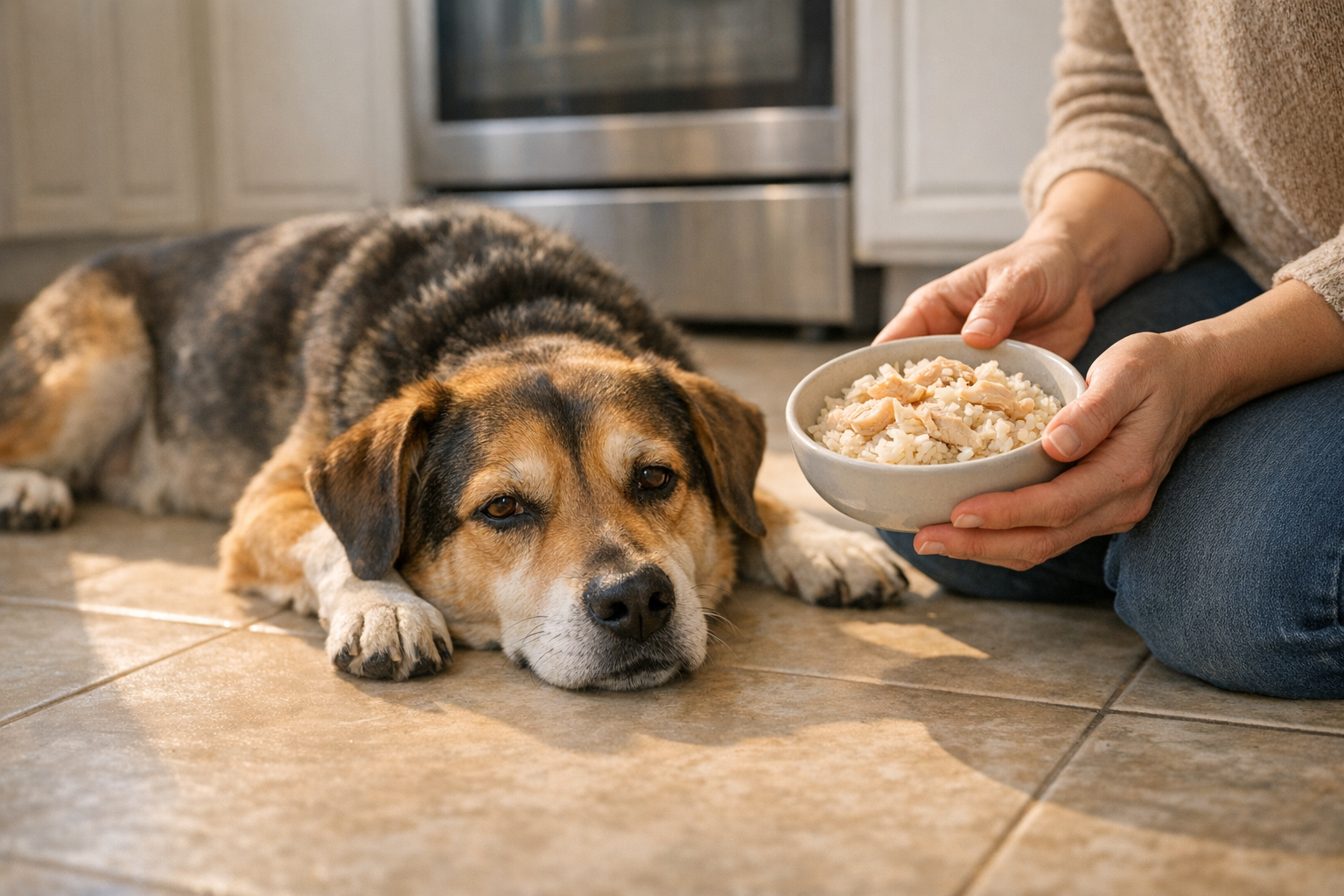
If you are wondering what can you give a dog for upset stomach, the safest answer for most healthy adult dogs is simple: small amounts of water, a little stomach rest, then small meals of bland food such as plain boiled chicken or turkey with white rice, or a vet-formulated sensitive stomach diet if you already have one.
Some dogs also do well with a plain dog probiotic and a spoonful of plain canned pumpkin. Not pumpkin pie filling. Not buttered toast. Not random medicine from your bathroom cabinet.
The big catch is this. A mild upset stomach is common. A dangerous one can look similar at first. So home care is fine only when your dog is otherwise bright, can keep water down, and is not showing red-flag symptoms.
What you can safely give at home
For a dog with one or two soft stools, mild nausea, or a single vomiting episode, I usually think in terms of hydration first, food second.
Start with water. Offer a few small drinks rather than letting your dog gulp a whole bowl at once. If they drink too fast and vomit again, pull the bowl for 30 to 60 minutes, then try ice cubes or a few tablespoons of water at a time.
For food, a bland meal is the standard first step. Good options include:
- plain boiled skinless chicken or turkey
- plain white rice
- plain scrambled egg with no butter or oil, for dogs that tolerate eggs well
- a prescription gastrointestinal diet, if your vet has recommended one before
Feed a small portion first. Think a few bites for a small dog, or a couple of tablespoons for a bigger one. If that stays down for a few hours, give another small meal.
This works for most dogs, but not all. Some dogs do not do great with rice, and some get loose stool from chicken if it is a new protein for them. If you know your dog has done well on a particular bland combo before, use that.
Plain canned pumpkin can help some cases of mild diarrhea. A teaspoon for a small dog or a tablespoon for a large dog is plenty to start. Too much can backfire and make the stool messier.
A dog-specific probiotic is another good option, especially for diarrhea after stress, a diet slip, or antibiotics. I like this more than a pile of home remedies because it is low risk and often genuinely helpful.
If your dog vomited once and now seems hungry, you do not need to starve them all day. A short break from food for a few hours is fine for a healthy adult, but long fasting tends to leave dogs feeling worse, not better.
What not to give
This is where people get into trouble.
Do not give ibuprofen, naproxen, acetaminophen, or leftover antibiotics. Ever. Those are not stomach remedies for dogs, and some are outright toxic.
Be careful with bismuth products like Pepto-Bismol and with anti-diarrhea drugs like Imodium. Vets do use them in some cases, but the right dose depends on your dog's size, age, breed, other medications, and what is actually causing the stomach upset. Guessing is not worth it.
Skip rich foods, fatty treats, table scraps, cheese, bacon, sausage, bones, and milk. A dog with an irritated gut does not need a snack test.
Popcorn is not a good fix either, even if it is plain. If you are not sure why, read this quick guide on is popcorn safe.
One more overlooked problem is topical products. Dogs lick. If you put ointment on a hot spot or scrape and your dog licks it off, that can irritate the stomach. If that situation sounds familiar, check using Polysporin safely.
When an upset stomach needs a vet, not home treatment
Here is the short, useful version. Call your vet the same day if your dog has repeated vomiting, repeated diarrhea, blood in vomit or stool, obvious belly pain, fever, weakness, or cannot keep water down.
Go to an emergency vet now if your dog is trying to vomit but nothing comes up, the abdomen looks swollen, breathing seems hard, or your dog collapses. That can be bloat, and bloat kills fast.
This matters even more in large, deep-chested dogs. If you live with a giant breed like the Tosa breed guide describes, do not wait around with a distended belly and unproductive retching.
Pay attention to the whole dog, not just the stool. If your dog seems withdrawn and seems sad lately, pain or nausea can be part of the picture.
And if stomach upset comes with drooling and shaking, I would not call that routine indigestion. That combination can point to pain, toxin exposure, or something more serious.
A good rule is 24 hours. If mild diarrhea or nausea is not clearly improving within a day, book the vet visit.
Common reasons dogs get an upset stomach
Sometimes the cause is obvious. Your dog stole half a sandwich, raided the trash, or inhaled a new treat in ten seconds.
Some dogs are professional scavengers. Fast, curious dogs, including some in the German Pinscher guide, can get themselves into trouble before you even realize the pantry door was open.
Diet change is another big one. A new food can be perfectly decent and still upset your dog's stomach if the switch happened too fast. If the problem started right after a brand change, compare ingredients, fat level, and fiber, and take a look at this Kirkland food review for the kind of things worth checking.
Consistency matters more than people think. I have seen dogs do fine for years, then get diarrhea after one rich chew, one sudden food switch, or one weekend of too many treats. Even hardy dogs, including some in the Finnish Lapphund guide, often do best when meals stay boring and predictable.
Grass eating can be part of the picture too. Some dogs nibble grass when they feel queasy, though it is not always a sign of illness. If your dog does this a lot, read more about why dogs eat grass.
Then there are the less obvious causes. Parasites, pancreatitis, stress, food intolerance, swallowed toys, sudden access to human medication, and viral or bacterial infections can all start with an upset stomach.
That is why pattern matters. One bad poop after scavenging is one thing. Two days of vomiting with no clear reason is something else.
Special cases where I would be more cautious
Puppies are at the top of this list. They get dehydrated quickly, and they are more likely to have parasites, blood sugar dips, or infections that turn serious fast. A vomiting or diarrhea puppy usually deserves a vet call sooner rather than later.
Senior dogs also get less benefit from watch-and-wait care. Kidney disease, liver disease, pancreatitis, and medication side effects are more common with age.
Pregnant dogs are another group I would not treat casually at home. If your dog might be expecting, use this dog pregnancy timeline as a reference, and call your vet if vomiting is frequent, severe, or paired with low appetite.
Dogs with diabetes, chronic kidney disease, a history of pancreatitis, or a known sensitive stomach should also get a lower threshold for a professional opinion. What looks mild can go sideways faster in these dogs.
How to help your dog recover over the next 24 hours
Keep things quiet. No greasy treats, no big meals, no hard play right after eating.
Feed small bland meals every few hours if your dog is holding food down. If stools start to firm up and there is no more vomiting, you can slowly transition back to the regular diet over two to three days.
Do not flip straight from bland food back to a full bowl of normal kibble. That is one of the easiest ways to restart the whole mess.
Watch for hydration. Gums should feel moist, not sticky. Your dog should still want to get up, look around, and interact with you.
Call the vet if your dog gets worse, not better. That includes more vomiting, more frequent diarrhea, black or bloody stool, a painful belly, or just that gut feeling that your dog is off in a bigger way than simple indigestion.
The bottom line
So, what can you give a dog for upset stomach? For a mild case in an otherwise healthy adult dog, give small amounts of water, then small bland meals, and consider plain pumpkin or a dog probiotic.
What you should not give is just as important. Skip human pain meds, be careful with over-the-counter stomach remedies, and avoid rich food.
If your dog cannot keep water down, seems painful, has blood in vomit or stool, or is acting weak or distressed, stop the home treatment and call a vet. That is the point where the right answer is not a kitchen remedy. It is an exam.