Why Do Dogs Eat Grass? Causes and Vet Signs
Why do dogs eat grass? Learn the most common reasons, when it is normal, when it is risky, how to help safely, and when to call your vet.
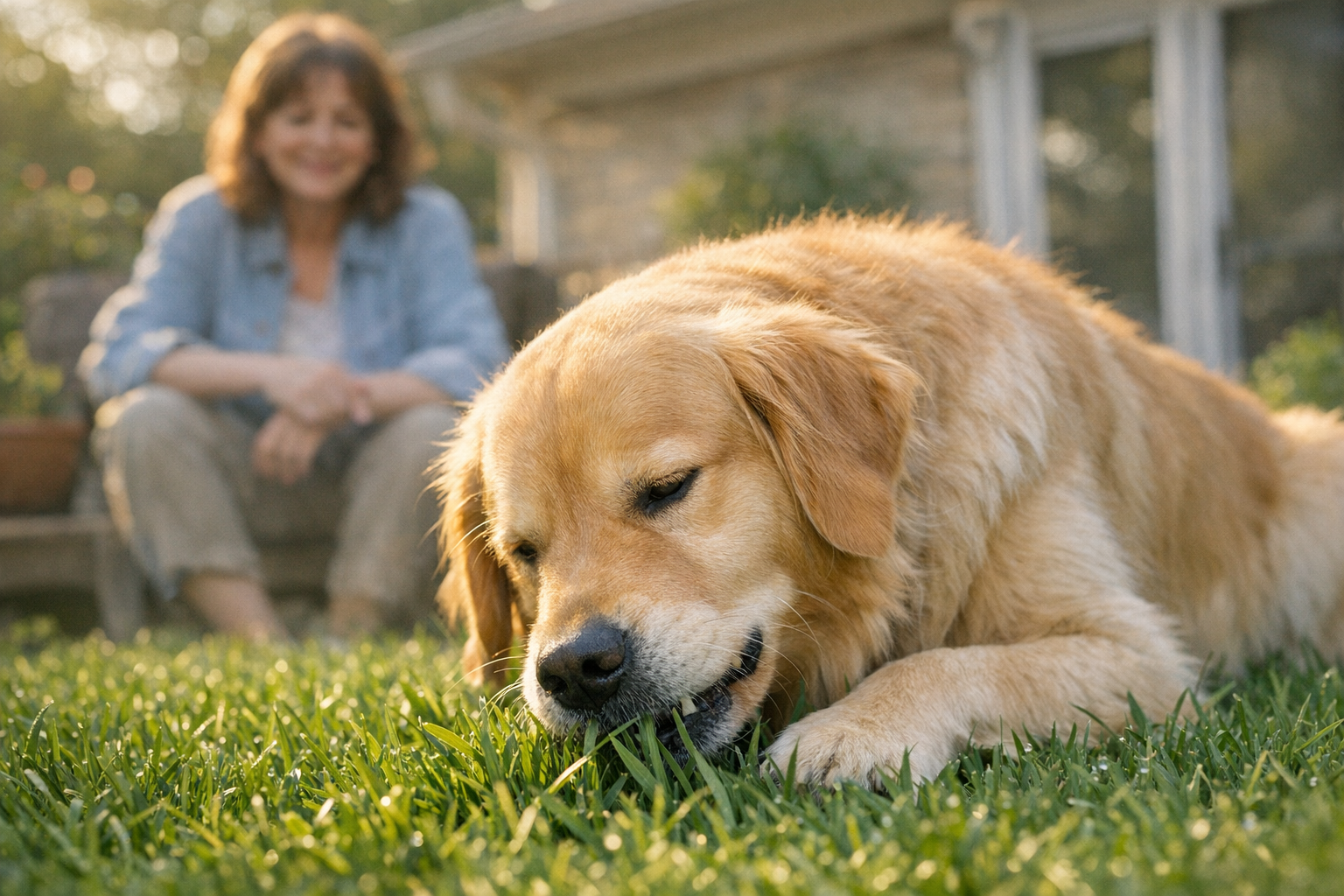
Seeing your dog stop on a walk to nibble a few blades of grass can look strange, but it is actually very common. Many healthy dogs do it now and then, and in most cases it is not a sign of anything serious.
If you have been asking why do dogs eat grass, the short answer is that there is no single reason. Some dogs like the taste or texture, some do it out of boredom, and some seem to look for grass when their stomach feels a little off. What matters most is the full picture, not the grass eating by itself.
Why do dogs eat grass?
Most dogs eat grass for one or more simple reasons:
- They are curious and exploring with their mouths
- They enjoy the taste, smell, or texture
- They are bored, stressed, or under-stimulated
- They feel mild nausea or stomach discomfort
- They like the extra roughage
The reassuring part is this, occasional grass eating is often normal. A dog who grabs a few blades, keeps playing, eats dinner, and acts like themselves is usually not having an emergency.
The concern goes up when grass eating becomes sudden, intense, or paired with other symptoms like vomiting, diarrhea, drooling, pain, or low energy.
Common reasons dogs eat grass
Curiosity and instinct
Dogs explore the world with their noses and mouths. Grass is everywhere, it smells interesting, and it changes with the weather, soil, and season.
Puppies especially may sample grass just because they are learning about their environment. Adult dogs do this too, especially on walks where new smells are exciting.
Some experts think grass eating may also be a leftover instinct from wild canine behavior. That does not mean your dog is trying to act like a wolf. It just means nibbling plants is not as unusual in a canine brain as it looks to us.
They like the taste or texture
Some dogs simply enjoy chewing grass. Tender spring grass, damp grass after rain, or certain long blades may be especially appealing.
This is a lot like dogs preferring one chew toy over another. The texture, crunch, or smell may be rewarding all on its own.
Boredom and lack of mental stimulation
A bored dog will often create their own activity. For some dogs, that means digging. For others, it means barking, chewing, or grazing on the lawn.
If your dog seems to eat grass most when they are standing around in the yard, waiting for attention, or missing regular walks, boredom may be a big part of the habit. Adding more sniffy walks, training games, and dog enrichment toys that keep bored dogs busy can make a real difference.
Stress can play a role too. Some dogs lick, chew, pace, or eat grass when they feel unsettled. Changes in routine, moving house, guests, loud noises, or being left alone longer than usual can all show up in little behavior changes.
Mild stomach upset or nausea
This is the reason most people think of first, and sometimes it is true. Some dogs seem to seek out grass when they feel nauseous or uncomfortable in their stomach.
You might notice a pattern like lip licking, drooling, swallowing, restlessness, then frantic grass eating. In those moments, the grass may be part of a nausea response rather than the original problem.
Repeated swallowing, lip smacking, and gaggy behavior can happen in dogs as well, and the pattern may remind you of the signs covered in this guide to frequent swallowing episodes in cats. Even though that article focuses on cats, the nausea clues are similar.
They may want extra roughage
Some dogs seem to like the fiber-like texture of grass. Grass is not a balanced source of nutrition, but a few dogs may still be drawn to it if their digestion feels sluggish.
That does not automatically mean their food is poor quality. It simply means some dogs like plant matter more than others. If your dog is a frequent grazer, it is worth talking to your vet about diet, stool quality, and whether a food adjustment could help.
Is eating grass normal for dogs?
Yes, occasional grass eating can be normal. Plenty of healthy dogs nibble grass and never develop any illness from it.
A dog who eats a little grass once in a while, then goes right back to their usual energy, appetite, and bathroom habits is usually fine to monitor at home. Many dogs do this for years without it becoming a medical problem.
It is also common for dogs to copy each other. If one dog in the family samples the lawn, another may decide it looks interesting. Puppies often learn by imitation, and that includes odd habits.
Normal does not mean you should ignore a change, though. If your dog never used to eat grass and suddenly starts gulping it every day, that is different from an occasional casual nibble.
Why do dogs eat grass and then throw up?
This is where things get confusing. Some dogs eat grass, vomit, and then look completely fine. It is easy to assume the grass was used on purpose to make themselves throw up.
Sometimes that may happen, especially if a dog already feels nauseated. But often the vomiting happens because they swallowed grass too fast, on an empty stomach, or in long strands that irritate the throat and stomach.
So the grass may not be the cure. It may just be part of the same upset stomach episode.
If your dog vomits once after eating grass but quickly returns to normal, you can usually watch closely. If the vomiting repeats, if your dog cannot keep water down, or if they seem painful or weak, call your vet.
When grass eating is a red flag
Grass eating becomes more concerning when it comes with other symptoms or a big behavior change. Reach out to your vet if you notice any of the following:
- Suddenly eating large amounts of grass every day
- Vomiting more than once, especially if it continues
- Diarrhea, constipation, or blood in vomit or stool
- Drooling, repeated swallowing, lip smacking, or retching
- Loss of appetite or refusing treats
- Lethargy, shakiness, or obvious discomfort
- A bloated belly or signs of abdominal pain
- Known exposure to fertilizer, weed killer, or toxic plants
If your dog feels warm, sleepy, or just not like themselves, it helps to know how to check for a fever at home. A fever plus grass eating can point to something bigger than a passing stomach wobble.
Also pay attention to skin and coat changes. If your dog is itchy, chewing at their paws, or developing bald patches along with odd grazing behavior, allergies may be part of the story. Our guide to common causes of hair loss in dogs can help you spot patterns worth mentioning to your vet.
Is grass safe for dogs to eat?
The grass itself is not always the biggest problem. What is on the grass is often the real concern.
Lawns may be treated with:
- Fertilizers
- Weed killers
- Insect control products
- Mold or fungus after wet weather
- Parasites from other animals' stool
Public areas can be especially unpredictable. Dog parks, apartment lawns, and roadside patches may look harmless while hiding chemicals or contamination.
Long, sharp grasses can also irritate the mouth and throat. In some areas, foxtails and similar seed heads are a bigger risk than the grass nibbling itself because they can lodge in the nose, ears, skin, or throat.
If you do allow some grazing, choose clean areas you know have not been treated. Supervision matters, especially for dogs who gulp mouthfuls instead of calmly chewing a few blades.
How to stop a dog from eating grass
If your dog is obsessed with grass, you do not need to panic, but it is worth addressing the habit. The goal is not just to say no. It is to figure out why it is happening.
Start with the basics
Ask yourself a few questions:
- Is my dog getting enough exercise?
- Do they seem bored in the yard?
- Did the behavior start suddenly?
- Is there any vomiting, drooling, or stomach noise?
- Has their food or schedule changed?
A simple pattern can tell you a lot. For example, a dog who only eats grass first thing in the morning may be dealing with an empty stomach. A dog who does it after being left alone outside may be bored or stressed.
Give better outlets
Many dogs stop grazing so much when their day gets more interesting. Longer sniff walks, short training sessions, food puzzles, and rotating chew options can all help.
If your dog needs more to do, start with a few enrichment toy ideas for active dogs and use them during the times grass eating usually happens.
Teach a gentle leave it
If your dog lunges for grass on walks, practice a calm leave it cue using treats and praise. Reward them for checking in with you and moving past the tempting patch.
Try not to yank the leash or scold. That can create more stress and make walks less enjoyable for both of you.
Review diet with your vet
If the habit is frequent, your vet may want to talk about meal timing, portion size, digestive sensitivity, or a diet change. Some dogs do better with smaller, more regular meals.
This is especially true if your dog eats grass when their stomach is empty, then throws up yellow foam.
Does breed matter?
There is no single breed that explains why dogs eat grass, but personality and energy level can shape the habit. High-drive, outdoorsy, or under-stimulated dogs may be more likely to turn grass into an activity.
For example, a strong working breed like the Rottweiler may start grazing when physical exercise is fine but mental exercise is lacking. A curious sight hound like the Afghan Hound may sample plants while exploring because the outside world is so stimulating.
Breed can influence routine, energy needs, and stress responses. It usually does not change the core advice, which is to look at the whole dog, not just the grass.
When to call your vet
Call your vet sooner rather than later if your dog is frantically eating grass, vomiting repeatedly, acting painful, or seems unusually quiet. The same goes for any possible toxin exposure.
You should also make an appointment if the behavior is new, frequent, or comes with weight loss, appetite changes, swallowing issues, or ongoing stomach upset. Grass eating itself is often harmless. A sudden change in behavior deserves a closer look.
Frequently asked questions
Should I let my dog eat grass on walks?
Occasional nibbling in a clean, untreated area is often not a problem. Still, it is best not to encourage it, especially if you do not know whether the area has been sprayed or contaminated.
If your dog gulps grass, vomits after, or becomes fixated on it, redirect them and bring it up with your vet.
Does eating grass mean my dog's food is missing nutrients?
Not usually. Most dogs who eat grass are already eating a complete diet.
That said, frequent grazing can be worth a diet review, especially if your dog also has loose stool, gas, or signs of digestive sensitivity.
Do dogs eat grass when they have worms?
They can, but grass eating alone does not mean worms are present. Parasites usually come with other clues like diarrhea, weight loss, a pot belly, poor coat quality, or scooting.
If you are concerned, a fecal test is the best way to check rather than guessing from the grass eating.
What if my dog suddenly started eating lots of grass?
A sudden change matters more than an occasional habit. Think about recent diet changes, missed meals, stress, toxin exposure, or signs of nausea.
If the behavior is intense or comes with vomiting, drooling, diarrhea, or low energy, call your vet.
Most of the time, the answer to why do dogs eat grass is simple and not alarming. Dogs are curious, sometimes bored, sometimes a little nauseous, and often just being dogs.
The safest approach is to watch the pattern. A few blades here and there is usually no big deal. Repeated gulping, vomiting, or any other unusual symptom is your sign to dig deeper and get your vet involved.