Can You Use Dog Shampoo on Cats?
Can you use dog shampoo on cats? Usually no. Learn the risks, safer alternatives, and the warning signs that mean your cat needs a vet fast.
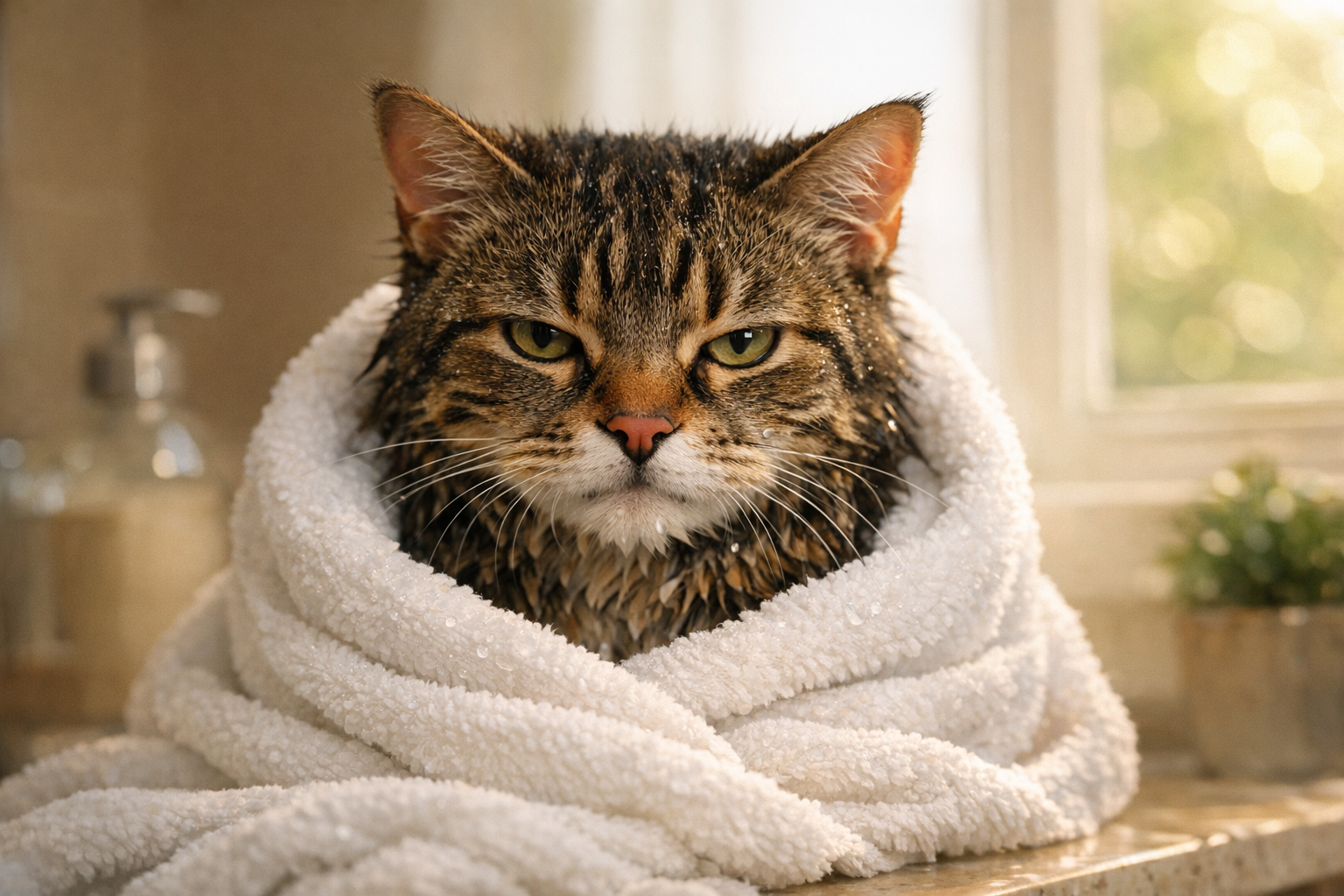
Can you use dog shampoo on cats? In most cases, no.
That is the short answer, and honestly, it is the one most cat owners need. Dog shampoo is made for dogs, tested for dogs, and often contains ingredients that are too harsh or flat-out unsafe for cats. Even when a dog shampoo looks mild, your cat has one habit that changes the whole equation. Cats lick themselves. A lot.
So the residue does not just sit on the coat. It often ends up in the mouth and stomach, and sometimes in the bloodstream too.
If your cat is dirty and you only have dog shampoo in the house, the safer move is usually plain lukewarm water, or waiting until you can get a cat-specific product. If the mess is serious, like oil, paint, flea product exposure, or diarrhea all over the back end, call your vet before improvising.
Why dog shampoo is risky for cats
A dog and a cat are both furry pets, but their skin, grooming habits, and tolerance for ingredients are not the same.
Many dog shampoos are perfectly fine for a dog and still a bad choice for a cat. That is especially true for medicated, flea, deodorizing, whitening, oatmeal-fragrance, or essential-oil formulas.
Cats lick whatever you put on them
This is the biggest issue.
A dog may shake off after a bath and move on. A cat will usually spend the next hour trying to undo your work with its tongue. If the shampoo leaves behind fragrance, insecticides, antifungal drugs, tea tree oil, or even a lot of detergent residue, your cat may ingest it.
That is why a product does not need to burn the skin to be a problem. It only needs to be something your cat should not swallow.
Some dog shampoo ingredients are dangerous for cats
The worst offenders are flea and tick products made for dogs.
Many dog flea shampoos or topical products contain permethrin or related insecticides. Permethrin is a real emergency in cats. Exposure can cause drooling, twitching, tremors, seizures, and dangerously high body temperature. This is one of those situations where you do not wait to see if your cat improves.
Tea tree oil is another ingredient that gets people into trouble. So do some other essential oils. Even "natural" products can be toxic to cats.
Medicated dog shampoos can be risky too. Ingredients meant for a dog's yeast, bacterial, or seborrheic skin problem are not automatically safe for feline skin or safe to ingest during grooming.
Cat skin is easily irritated
Even when a dog shampoo is not toxic, it may still be too harsh.
Cats can react with dry skin, itching, dandruff, redness, greasy rebound, or overgrooming after the bath. Fragrance is a common problem. Strong cleansers are another. If your cat already has allergies or sensitive skin, the odds of irritation go up fast.
And here is something people miss. If a cat starts overgrooming after an irritating bath, the problem can get worse for days. More licking means more exposure.
Are there any times dog shampoo is okay on a cat?
Very rarely, and only with a lot of caution.
If your veterinarian specifically tells you to use a certain dog shampoo on your cat, follow that advice. Vets sometimes do this with very particular medical products or ingredient lists. But that is not the same as grabbing any dog shampoo from the cabinet and hoping it is close enough.
For an ordinary bath at home, I would not use dog shampoo on a cat.
If you are stuck in a one-time emergency, plain lukewarm water is usually safer than using the wrong shampoo. If the cat has something greasy or sticky on the coat and you are not sure what to do, call your vet or a pet poison line first. The right response depends on what got on the fur.
Dog shampoos that are especially unsafe for cats
If the label mentions any of these, put it away.
- Flea or tick control
- Permethrin or pyrethroid insecticides
- Tea tree oil or strong essential oils
- Medicated antifungal or antibacterial ingredients unless your vet prescribed them
- Whitening formulas
- Heavy fragrance or deodorizing formulas
- Coal tar, salicylic acid, or strong anti-dandruff ingredients
This is where people get tripped up. A bottle can look gentle, smell clean, and still be a bad idea.
Dog shampoos also vary a lot by coat type. A conditioning formula made for dense coats in Briards, curls in Miniature Poodles, or sensitive exposed skin in the Peruvian Inca Orchid is still not a cat product. Breed-specific dog grooming needs do not make the formula feline-safe.
What to use instead
Most cats do not need regular baths at all.
A healthy cat is usually a better groomer than any shampoo. If your cat just has a bit of dirt or dust, a damp washcloth and a good brushing are often enough.
Safer options include:
- Cat-specific shampoo
- Kitten shampoo for very young or sensitive cats
- Fragrance-free pet wipes labeled for cats
- A damp cloth for small messy spots
- Plain lukewarm water for minor dirt
If your cat has fleas, skip the dog flea shampoo and ask your vet for a cat-safe flea treatment. This matters more than people think. Cats are not small dogs, and flea products are one of the clearest examples.
If your cat has dandruff, greasy fur, hair loss, sores, or a bad smell, a bath may not be the answer anyway. Those signs usually mean you need to figure out the cause.
Signs your cat needs a vet after dog shampoo exposure
Sometimes nothing happens. Sometimes you see mild skin irritation. And sometimes it is an emergency.
Call a vet right away if your cat has been washed with dog shampoo and shows any of these signs:
- Drooling
- Vomiting
- Tremors or twitching
- Trouble walking
- Weakness
- Seizures
- Agitation or unusual hiding
- Red, painful, or swollen skin
- Trouble breathing
- Collapse
If the shampoo was a flea or tick product for dogs, I would treat that as urgent even before symptoms appear.
Do not try to fix suspected toxicity by making your cat vomit. That can make things worse.
What to do if you already used dog shampoo
First, do not panic. The next step depends on what kind of product it was and how your cat looks right now.
If it was a plain dog shampoo with no flea treatment, no medicated ingredients, and no essential oils, rinse your cat very thoroughly with lukewarm water. Really thoroughly. You are trying to remove as much residue as possible.
Then dry your cat and watch closely for the next 24 hours. Look for skin irritation, drooling, vomiting, or odd behavior.
If it was a flea shampoo, tick shampoo, medicated shampoo, or anything with tea tree oil, call your vet immediately. Do not wait for symptoms. The same goes for any cat that seems weak, twitchy, or distressed.
How to bathe a cat safely
If your cat truly needs a bath, the process matters almost as much as the product.
Use a cat shampoo. Gather towels before you start. Keep the room warm, keep the bath short, and use lukewarm water. Not hot. Not cold.
Wet the coat lightly, avoiding the face. Lather a small amount of shampoo over the dirty areas and rinse until the water runs clear. Then rinse one more time. Leftover shampoo is one of the biggest reasons cats start licking and reacting afterward.
Dry with a towel and keep your cat indoors and warm until fully dry.
Do not use human shampoo, dish soap for routine bathing, or dog products unless your vet told you to. Dish soap is one of those internet fixes that people reach for too quickly. It has a narrow use, mostly for specific contaminants and under guidance, and it can dry the skin badly.
If your cat is always dirty, there may be a bigger issue
A healthy adult cat usually stays pretty clean.
If your cat keeps getting stool stuck to the fur, has greasy skin, smells sour, or stops grooming, I would look beyond the shampoo question. Overweight cats may struggle to reach the rear end. Senior cats may have arthritis. Long-haired cats may need sanitary trims. Dental pain, skin disease, stress, and illness can also reduce grooming.
This is where species-specific care really matters. If you live with both dogs and cats, you already know one symptom can mean very different things in each animal. People ask about why dogs eat grass or what a runny nose in dogs means because dog advice is not interchangeable. Shampoo is the same. Close enough is not always safe enough.
Common questions owners ask
What if the dog shampoo says "gentle" or "puppy"?
Still not my first choice.
Puppy shampoo may be milder than adult dog shampoo, but it is still made for dogs unless the label clearly says it is safe for cats too. I would not assume cross-species safety from the word "gentle."
Can you use dog oatmeal shampoo on cats?
Not routinely.
Oatmeal itself is not the main worry. The problem is everything else in the formula, fragrance, preservatives, detergents, medicated ingredients, or oils. A cat-specific oatmeal shampoo is a better bet if your vet thinks oatmeal is appropriate.
What about dog shampoo once, just this one time?
One-time use lowers the odds of a problem, but it does not erase the risk.
If you already did it and the product was plain, rinse well and monitor. If you have not done it yet, I would still choose water or wait for a cat product instead.
Can I use a dog dry shampoo on my cat?
No, I would avoid it.
Dry shampoos, foams, and sprays are even more likely to sit on the coat and get licked off. For cats, that is a poor setup.
The bottom line
Can you use dog shampoo on cats? Usually no.
The risk is not just skin irritation. It is also what your cat will lick off afterward. Some dog shampoos are merely too harsh. Others, especially flea and tick products, can be dangerous or life-threatening.
If your cat needs cleaning, use a cat-specific shampoo or plain lukewarm water for a minor mess. If your cat was exposed to dog shampoo and seems unwell, or if the product contained flea medication, call your vet right away.