Why Does My Dog Nibble on Me? Causes and Fixes
Why does my dog nibble on me? Learn the common reasons behind gentle dog nibbling, when it is harmless, and when to call your vet.
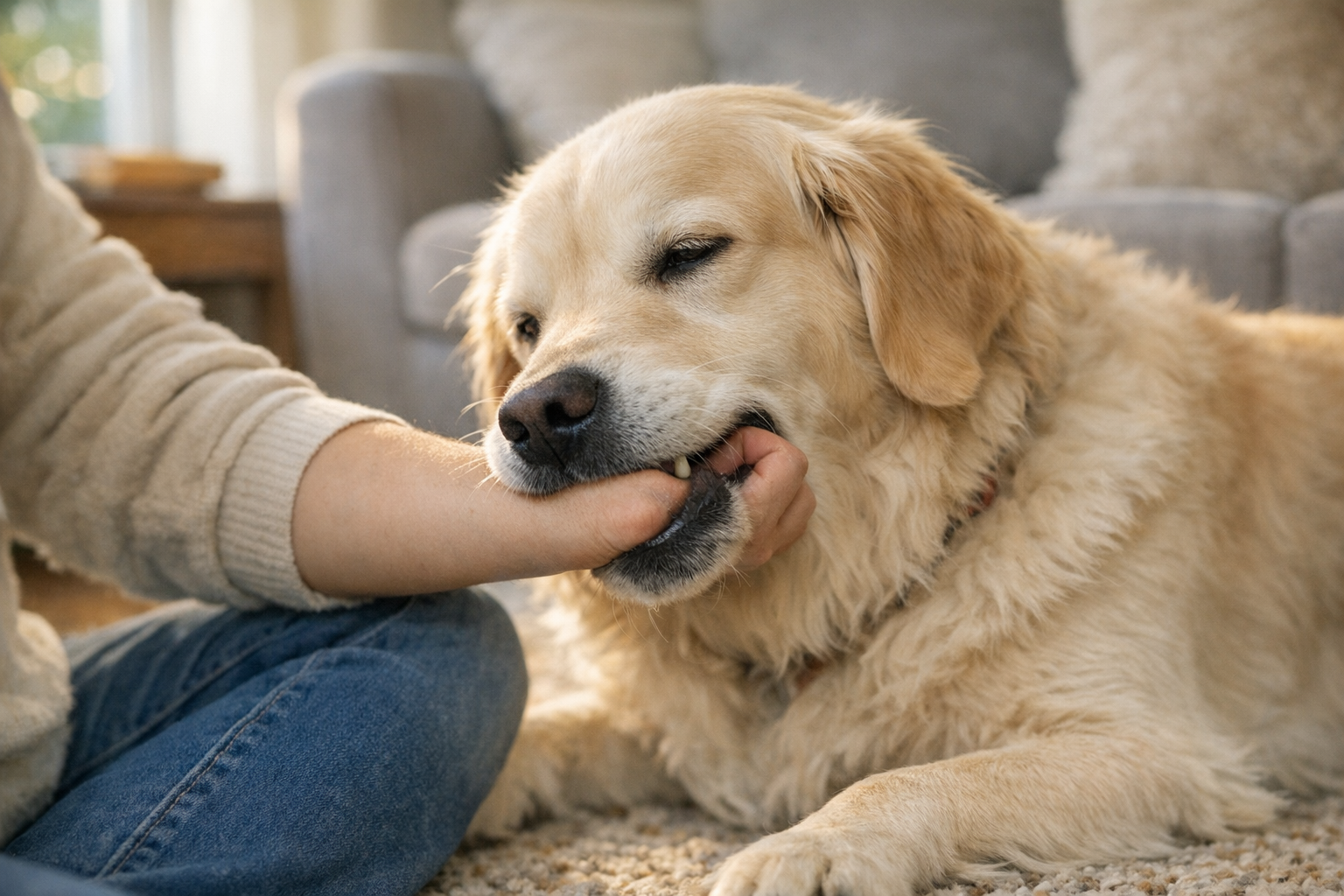
If your dog gently nibbles your hand, arm, or sleeve, the good news is that this is usually normal dog behavior. It often looks odd to us, but to many dogs it is a mix of affection, play, grooming, and plain old habit.
The key word is gently. A soft little front-teeth nibble is very different from hard mouthing, pinching, or biting. Once you know which one you are dealing with, it gets a lot easier to decide whether to laugh it off, redirect it, or put a stop to it.
What dog nibbling usually means
Most owners are talking about a behavior people call cobbing. It looks like tiny, fast nibbles with the front teeth, almost like your dog is trying to groom you like another dog.
In a lot of cases, that is basically what is happening. Dogs use their mouths the way we use hands. They explore, communicate, ask for attention, and soothe themselves with gentle mouth contact.
A relaxed dog who nibbles you for a few seconds, then settles down, is usually not trying to dominate you or send some secret message. Most of the time, it is much simpler than that.
Common reasons your dog nibbles on you
Affection and social grooming
This is the big one. Dogs groom each other with licking and gentle mouthing, especially around the neck, ears, and face. When your dog nibbles your arm while cuddling, they may be treating you like part of the social group.
You will often see this when your dog is sleepy, leaning into you, or lying beside you. Their body looks loose. Their ears are soft. There is no tension in the jaw.
Some dogs also do it right after petting. You scratch their chest or shoulders, they get a little blissed out, and the nibbling starts. That is not weird. It is pretty classic dog behavior.
Attention seeking
Dogs repeat what works. If your dog nibbles you and you laugh, pet them, talk to them, or start a game, they just learned that nibbling is a very effective button.
I have seen this a lot with smart, social dogs. They are not anxious or aggressive. They have just figured out that tiny teeth get a response faster than sitting quietly.
This matters because even a harmless habit can become annoying fast. What starts as cute puppy behavior can turn into a daily demand for interaction.
Play and overexcitement
Some dogs get mouthy when they are revved up. Not mean, just excited. The nibbling shows up during wrestling on the floor, when guests arrive, or when your dog has not had enough exercise and their brain is buzzing.
These dogs often pair nibbling with pawing, zoomies, barking, or grabbing sleeves. The mouth is part of the whole excitement package.
Puppy teething and normal juvenile behavior
Puppies nibble everything. You, the leash, furniture, blankets, their own feet. They are exploring the world and dealing with teething discomfort.
If your puppy is under six months, nibbling on you may be less about affection and more about a mouth that is always looking for something to do. That is normal, but it still needs boundaries.
Self-soothing or mild stress
Some dogs nibble when they feel conflicted or wound up. Maybe they want attention but are not sure how to ask. Maybe they are tired and overstimulated. Maybe guests are over and they are trying to settle themselves.
This kind of nibbling often looks a little repetitive. It may happen at the same time every evening, or after a lot of activity. If your dog also yawns, licks their lips, turns their head away, or paces, I start thinking stress rather than affection.
Your skin tastes interesting
Dogs are honest creatures. Sometimes they nibble because your skin is salty, your lotion smells good, or your sleeve has food on it.
This is especially common after workouts, after cooking, or when kids have sticky hands. Not glamorous, but true.
Habit linked to boredom
A dog with too little to do will make up hobbies. Nibbling can become one of them.
Dogs that nibble from boredom often have other outlet problems too. They may chew household items, patrol windows, demand bark, or dig in the yard. If that sounds familiar, more daily outlets matter, and so do simple ways to stop digging.
When nibbling is not normal
Gentle nibbling is one thing. A sudden change in behavior is another.
I would pay closer attention if your dog starts nibbling you more often, harder, or in a very fixated way. That can point to discomfort, stress, or a behavior problem that is growing.
Watch for these signs:
- the nibbling hurts or leaves red marks
- your dog seems tense, glassy-eyed, or hard to interrupt
- it happens along with growling, guarding, or snapping
- your dog is licking or chewing their own body a lot too
- the behavior started suddenly in an adult dog
- your dog seems unwell, tired, clingy, or irritable
A dog who feels bad can get weird in subtle ways before the obvious symptoms show up. If your dog seems off overall, check for other illness clues, including signs of fever.
Pain can also lower a dog's patience. Dogs with dental pain, skin irritation, joint soreness, or stomach upset do not always act dramatic. Sometimes they just become more mouthy, more restless, or less tolerant of handling.
How to stop dog nibbling without making it worse
If you do not mind the nibbling and it is truly gentle, you may not need to stop it. Plenty of owners are fine with a little cobbing during cuddle time.
If you do want it to stop, the best approach is boring, consistent, and effective. Do not punish it. Do not yank your hand away and turn it into a game.
Remove the reward
The second the nibbling starts, get still and quiet. No laughing. No eye contact. No petting.
When your dog stops, even for two seconds, reward that pause with attention or a treat. You are teaching, nibbling makes the fun stop, calm behavior makes it come back.
That timing matters more than people think.
Give your dog something else to do
Redirection works well, especially for puppies and excitable adults. Offer a chew toy, lick mat, stuffed food toy, or simple cue like sit.
If the behavior happens during couch cuddles, be clear about the rules. A dog who uses nibbling to negotiate for more access often does better when the household is consistent about boundaries, including time spent off the couch.
Lower arousal before it starts
A lot of unwanted nibbling is predictable. It shows up at 8 p.m., when guests come over, or right after rough play.
That gives you a chance to get ahead of it. Short training sessions, sniff walks, chew time, and calmer greetings can make a big difference.
This is one of those places where owners sometimes overfocus on the teeth and miss the real issue. The teeth are not the root problem. The dog's state of mind is.
Teach gentle mouth manners
If your dog gets too rough, end interaction right away. Stand up, turn away, or calmly leave for a few seconds.
Then try again when your dog is calmer. You are not scaring them. You are being clear.
For puppies, this takes repetition. A lot of repetition. Most of them improve quickly when every person in the house responds the same way.
Breed and age can change the picture
Not all dogs use their mouths in the same way. Some breeds are naturally more physical in play, more clingy with people, or more likely to develop little attention-seeking rituals.
A sturdy working breed like the Bouvier des Flandres may be more mouthy in play than a laid-back companion dog, especially when under-exercised. On the other end, a Russian Toy dog may do tiny, delicate nibbles that look almost like grooming because the breed tends to be very people-focused and physically close.
Hairless and sensitive-skinned breeds can make owners more aware of mouth behavior too. With the Xoloitzcuintli breed, close body contact is common and skin care is already part of daily life, so any licking or nibbling tends to get noticed early.
And then there are playful hounds and larger, goofy dogs who use their mouths because that is part of how they interact with the world. The Otterhound breed, for example, can be boisterous and tactile, so gentle mouthing during play would not surprise me.
Age matters too. Puppies and adolescents are usually the mouthiest. Adult dogs often settle down unless the behavior keeps getting reinforced.
Senior dogs are a different story. If an older dog suddenly starts nibbling more, I would think less about training and more about discomfort, anxiety, or cognitive changes.
How to tell affection from a problem
Here is my quick test. Look at the whole dog, not just the mouth.
Affectionate nibbling usually comes with soft eyes, loose muscles, wiggly body language, and easy interruption. You can ask for a sit or move your hand away and the dog shifts gears without frustration.
Problem nibbling looks more intense. The dog may fixate, follow your hands, clamp harder, or get annoyed when interrupted. Their body may be stiff, their pupils may look large, and the behavior feels less like cuddling and more like compulsion.
Your own reaction matters too. If you are starting to dread petting your dog because you know the nibbling will begin, that is enough reason to address it. A behavior does not need to be dangerous before it becomes a problem in a home.
When to call a vet or trainer
Call your vet if the nibbling is new, your dog seems uncomfortable, or you notice any other changes in appetite, sleep, mood, mobility, or skin. I would also book a visit if your dog is chewing themselves, scratching more, or reacting oddly to touch.
Get help from a qualified trainer or behavior professional if the nibbling is escalating into biting, happens during handling, or seems tied to fear, guarding, or rough overarousal. That is not a wait-and-see situation.
A good trainer will not just tell you to correct the behavior. They will help you figure out why it is happening and what your dog needs instead.
The short answer
If you have been asking, why does my dog nibble on me, the answer is usually affection, attention seeking, play, teething, or stress relief. Most gentle nibbling is normal.
What matters is context. If your dog is relaxed and easy to redirect, it is probably harmless. If the behavior is intense, sudden, painful, or paired with other changes, it usually means a vet visit or behavior plan is worth doing soon.
Trust the full picture, not one cute habit by itself. Your dog is telling you something. The trick is figuring out whether they are saying, I love you, play with me, or I do not feel quite right.