How Long to Microwave Hot Dog Safely
Wondering how long to microwave hot dog? Get exact times, easy steps, and what pet owners should know before sharing any with a dog.
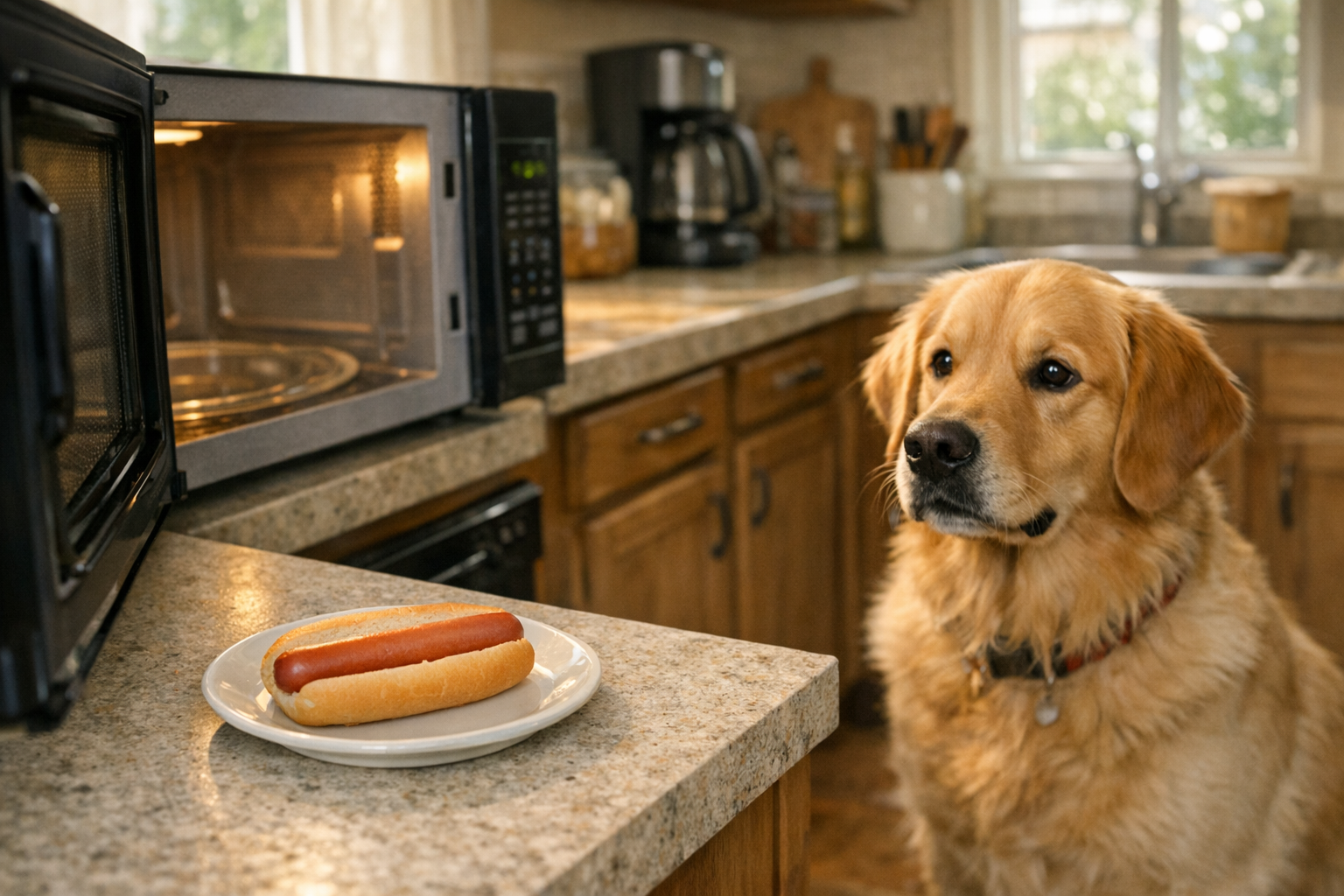
For one refrigerated hot dog, start with 30 to 40 seconds on high. If it still feels cool in the middle, add 10 seconds at a time. That is the short kitchen answer.
For pet owners, there is a second answer that matters just as much. Yes, you can microwave a hot dog fast, but that does not mean it is a great thing to share with your dog. A tiny plain piece is usually fine for a healthy dog. A whole hot dog, or one covered in toppings, is another story.
Quick answer
Most hot dogs are already cooked, so you are reheating them, not cooking them from raw. That is why they heat so fast in the microwave.
A good starting point is:
- 1 hot dog: 30 to 40 seconds
- 2 hot dogs: 45 to 60 seconds
- 4 hot dogs: 1 to 1 1/2 minutes
If the hot dog came straight from the freezer, thaw it first or use defrost for 30 to 60 seconds before heating on high. If you skip that step, the outside can get rubbery while the center stays cold.
Microwaves are wildly inconsistent. Some blast food into lava. Others barely wake it up. So check early, then keep going in short bursts.
If you are making it for yourself and you know your dog will be hovering nearby, keep it plain from the start. Onions, garlic, chili, spicy sauces, and heavy cheese toppings make a bad snack even worse for dogs.
The best way to microwave a hot dog
You do not need anything fancy here. The goal is even heat, no weird dry edges, and no split-open hot dog coating the microwave walls.
Step by step
- Put the hot dog on a microwave-safe plate.
- Cover it loosely with a paper towel.
- Heat for 30 seconds.
- Check it, turn it if needed, then heat in 10-second bursts until hot.
- Let it sit for about 30 seconds before eating or cutting any off for your dog.
That paper towel helps more than people think. It traps some moisture and cuts down on splatter.
If you want to slice the hot dog into coins first, that is fine too. It heats faster and more evenly, especially if you are cutting tiny training pieces. Just shorten the time a bit and check at 20 seconds.
If you are heating the bun too, do it separately. A bun usually needs only 8 to 12 seconds. If you microwave the bun and hot dog together for too long, the bun gets chewy and the hot dog gets weird.
How to tell when it is done
A hot dog is ready when it is hot all the way through and lightly steaming. You do not need to blast it until it wrinkles, bursts, or squeaks when you cut it.
If you want the careful version, especially for leftovers from an opened package, reheating to 165 F is a solid target. For most people, though, steaming hot is the practical standard.
Is a microwaved hot dog safe for dogs?
Safe is not the same as smart.
A plain hot dog is not usually toxic to dogs by itself, but I do not love it as a regular treat. It is processed meat, usually high in sodium, often high in fat, and easy to overfeed because dogs act like it is the greatest thing on earth.
And yes, they will act devastated if you do not share. Plenty of dogs can pull off that dog looks sad expression when you are eating something good. That face is powerful. It is not medical evidence that they need your lunch.
The biggest risks
The first problem is salt. Many hot dogs pack a lot of sodium into a very small piece of food. One bite for a big healthy dog usually is not a big deal. A whole hot dog for a small dog can be enough to trigger thirst, stomach upset, or a rough night.
The second problem is fat. Rich, fatty foods can cause vomiting and diarrhea. In some dogs, especially those with a history of pancreatitis, they can do a lot more than that.
The third problem is ingredients around the hot dog. Onion, garlic, chili, relish, spicy mustard, and greasy toppings push it from junk food into bad idea territory fast.
Then there is the choking issue. A dog that gulps food can swallow a chunk that is too large, especially if someone tosses it whole or in thick rounds.
And finally, temperature matters. Microwaved food can have hot spots. If you are offering even a tiny piece, let it cool first.
Does breed or size change the answer?
Absolutely.
A thumbnail-sized piece is very different for a toy or small dog than it is for a medium or large dog. Weight, body shape, and health history all matter here.
That is one reason I would be extra stingy when feeding a Pug. Small, compact dogs can gain weight fast, and salty, fatty extras do them no favors. Bigger, active dogs can handle a little more food volume, but that does not make hot dogs healthy for them.
If you live with active Hamiltonstovare dogs, are choosing treats for a Wetterhoun, or are thinking about your Stabyhoun's diet, the same basic rule still applies. A tiny plain piece once in a while is one thing. Making processed meat a habit is another.
If your dog ate a hot dog
Most healthy dogs that steal one plain hot dog will be fine, especially if they are medium or large and the hot dog was not loaded with toppings. What you will usually see, if anything, is extra thirst, mild gas, soft stool, or one episode of vomiting.
Here is when I would watch at home:
- your dog ate one plain hot dog
- no wrapper, skewer, or packaging went with it
- your dog is acting normal
- there is no history of pancreatitis, kidney disease, or heart disease
Give water. Skip extra treats for the rest of the day. Feed the next meal as usual unless your dog seems nauseous, then a bland meal may be better if your vet has already told you that is okay for your dog.
Here is when I would call a vet the same day:
- your dog is very small and ate a whole hot dog
- your dog ate several hot dogs
- there were onions, chili, spicy toppings, or greasy extras on it
- your dog has pancreatitis or a sensitive stomach
- the wrapper or any stick, foil, or packaging was swallowed
And here is when I would treat it as urgent:
- repeated vomiting
- a swollen or painful belly
- trouble swallowing
- repeated retching with little coming up
- weakness or collapse
- heavy breathing at rest
One more thing. If the hot dog came from a party plate or cookout table, think about what else was there. If your dog eats chocolate, that problem moves ahead of the hot dog in a hurry.
What about cats?
Cats steal weird food too. A tiny bite of plain hot dog is usually not a disaster, but it is still too salty and fatty to be a good treat for them.
If your cat got a piece and now seems uncomfortable, drools, gags, or cat keeps swallowing, it is worth a closer look. Cats are less forgiving than many dogs when it comes to rich people food.
Better options if you want a high-value dog treat
Hot dogs are popular for a reason. They are soft, smelly, and easy to cut into tiny pieces. Dogs go nuts for them.
I still think they are best kept as an occasional last-resort reward, not a regular snack. If you need something special for recall work, vet visits, or teaching calm handling, they can be useful in very small amounts.
That includes fussy moments like trying to spot dog fleas or getting through a stressful grooming session. A dog will often tolerate a lot more if the payment is good. Even then, I would rather use plain cooked chicken, turkey, freeze-dried single-ingredient treats, or a soft commercial training treat with less salt.
A good rule is that extras should stay small, really small. Think pea-sized pieces, not chunks. Most dogs care more about getting many rewards than getting big rewards.
If you are sharing snacks during movie night, hot dogs are not the only thing worth checking. The same goes for dogs and popcorn. Some people foods are fine in tiny plain amounts. Some stop being safe the second butter, salt, or seasonings show up.
Common microwave mistakes
A few things go wrong over and over.
Do not microwave a hot dog in metal packaging, foil, or anything that is not microwave-safe. That sounds obvious, but tired people do strange things at lunch.
Do not overheat it. When a hot dog splits open and dries out, it is not ruined, but it is less pleasant to eat and harder to cut into clean little pieces if you planned to use a tiny bit for training.
Do not hand a dog a whole hot dog straight from the microwave. It is too hot, too easy to gulp, and too much food for many dogs at once.
And if it is frozen solid, do not try to cook it all the way through on high in one shot. Thaw first, then heat.
The bottom line
If you are wondering how long to microwave hot dog, the answer for one refrigerated hot dog is usually 30 to 40 seconds, then 10-second checks until it is hot through.
If you are wondering whether your dog should share it, my honest answer is this. A tiny plain bite for a healthy dog is usually okay. A whole hot dog, or one with toppings, is usually not worth the stomach upset, the extra salt, or the vet call that can follow.